
The Corporation and the Market

By |2016-07-17T10:01:46-05:00April 13th, 2012|Categories: Communio, Economics, Featured, Political Economy, Stratford Caldecott|

In a recent series of articles Michael Black argued that the Corporation can only be understood theologically – further, that the modern economic crisis is a crisis of the Corporation. But what about the “Market”, which is the other big player in the economic game, along with the State and the Corporation? In economic theory the corporation [...]

Toward a Conservative Conservation Movement

By |2014-01-09T12:16:58-06:00April 13th, 2012|Categories: Books, Conservation, Conservatism|Tags: |

  Why Conservation Is Failing and How It Can Regain Ground, by Eric T. Freyfogle. Yale University Press Environmental conservation has moved from the margin to the political mainstream in recent decades. However, despite the high profile and widespread public support of environmental issues, conservation policy has failed to achieve many of its goals. Eric Freyfogle, environmental [...]

Liberal Learning and Testing for (PC) Truth

By |2013-12-26T22:31:35-06:00April 12th, 2012|Categories: Education, John Willson, Liberal Learning|

Idiot, n.  A member of a large and powerful tribe whose influence in human affairs has always been dominant and controlling.  The Idiot’s activity is not confined to any special field of thought or action, but ‘pervades and regulates the whole.’  He has the last word in everything; his decision is unappealable.  He sets the fashion of opinion and [...]

Revolution Defined

By |2014-03-24T11:29:17-05:00April 12th, 2012|Categories: American Republic, Revolution, Russell Kirk|Tags: |

The following excerpts are from the chapter A Revolution Not Made, but Prevented in Kirk’s book Rights & Duties: Reflections on Our Conservative Constitution. Our excerpter, Darrin Moore, suggests—like a sommelier—that the reader might find The Beatles counter-revolutionary tune Revolution a perfect pairing to this article if one hopes for Kirk’s ideas to “ferment in the mind.” [...]

The Tragedy of Democracy Without Authority: A Reflection on Maritain and Thucydides

By |2018-08-19T21:25:25-05:00April 11th, 2012|Categories: Classics, Democracy, Jean-Jacques Rousseau, Politics, Thucydides|Tags: , |

Scrupulous fear of the gods is the very thing which keeps the Roman Commonwealth together. To such an extraordinary height is this carried among them, both in private and public business, that nothing could exceed it. –Histories, Polybius Infirmity doth still neglect all office Whereto our health is bound; we are not ourselves When nature, [...]

Why Mortimer Adler Would Have Been the Best Academic Dean Ever

By |2023-06-28T22:07:01-05:00April 11th, 2012|Categories: Liberal Learning, Mortimer Adler, Robert M. Woods|

In the university where Adler would be Dean, all courses would at some point and in some way have the Socratic method as a dominant part of instruction. There would be no textbooks. There are little to no written exams, there are only verbal exams. Imagine every class, every day as an oral exam. The [...]

Russell Kirk and Ideology

By |2018-10-11T17:08:42-05:00April 10th, 2012|Categories: Christianity, Gerhart Niemeyer, Ideology, Philosophy, Russell Kirk|Tags: |

“Philosophy”—love of wisdom—is a word first used by Heraclitus. “Sophia” as listed in the dictionary means “perfect scientific knowledge, wisdom,” but a “sophist” is “a quibbler, a cheat.” And Plato made a sharp distinction between sophistes, philosophos, and the sophos, the sophistes being a person who, claiming that he possesses wisdom, takes money for teaching it. The philosophos, by contrast, knowing [...]

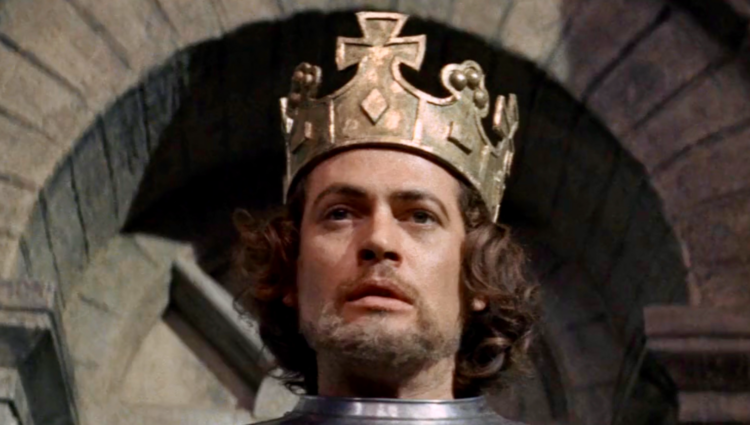
Shakespearean Masterpiece: Roman Polanski’s “Macbeth”

By |2022-08-15T11:37:12-05:00April 9th, 2012|Categories: Culture, Featured, Film, Joseph Sobran, Literature, William Shakespeare|

In “Macbeth,” Roman Polanski shows that even fidelity to Shakespeare can leave plenty of room for surprise. The film’s images capture the story’s paradoxes. April 12 was Shakespeare’s birthday. The real Shakespeare, I mean: Edward de Vere, Earl of Oxford. I thought a little celebrating was in order, so I watched one of the best [...]

Chairman Bernanke Buries the Phillips Curve: Bravo!

By |2013-12-20T11:22:34-06:00April 9th, 2012|Categories: Brian Domitrovic, Economics, Federal Reserve, Political Economy|

Federal Reserve Chairman Ben Bernanke has been taking a lot of flak for his series of speeches at George Washington University over the last few weeks. Commentators have marveled at his mischaracterization of the gold standard and his defensiveness at the suggestion that loose Fed monetary policy of the early and mid-2000s played a role [...]

Poetry: Donald Davidson’s “Aunt Maria and the Gourds”

By |2014-01-23T12:55:33-06:00April 8th, 2012|Categories: Donald Davidson, John Crowe Ransom, Literature, M. E. Bradford, Moral Imagination|Tags: |

While studying at the University of Dallas in the early ’90’s, I was taught and influenced by a few notable professors, such as Janet Smith, Frederick Wilhelmsen, Wayne Ambler, Leo Paul de Alvarez, along with a few others. Following Prof. Wilhelmsen after many class lectures back to his office or at least to the university mall, I [...]

Reinvigorating Culture

By |2018-10-16T20:25:07-05:00April 7th, 2012|Categories: Culture, Education, Liberal Learning, RAK, Russell Kirk|Tags: |

Anyone who pushes the buttons of a television set nowadays [written in 1994, Ed.] may be tempted to reflect that genuine culture came to an end during the latter half of the twentieth century. The television set is an immense accomplishment of reason and imagination: the victory of technology. But the gross images produced by [...]

Russell Kirk On the American and French Revolutions

By |2016-07-26T15:27:56-05:00April 6th, 2012|Categories: American Republic, Revolution, Russell Kirk|Tags: |

The long heritage of ideas, principles, norms and traditions that conservatives have sought to conserve since the age of Edmund Burke were magnificently chronicled in the groundbreaking book The Conservative Mind by Russell Kirk. In his book The Roots of American Order, Kirk traced the rich heritage of Western Civilization farther back through London to ancient Rome, Athens [...]

The War of the Three Humanisms: Irving Babbitt and the Recovery of Classical Learning

By |2016-07-26T15:39:50-05:00April 5th, 2012|Categories: Classical Education, Classical Learning, Irving Babbitt, Liberal Learning|Tags: |

Irving Babbitt Where is the wisdom we have lost in knowledge? Where is the knowledge we have lost in information?—T.S. Eliot, Choruses from the Rock Irving Babbitt (1865–1933) is not much remembered today, except perhaps through Sinclair Lewis’s snarky naming of the eponymous villain of the satire of mid-American manners and mores, Babbitt, after [...]

Go to Top