When Greeks Bear Gifts: On Economy, Philosophy and Freedom

By |2014-01-26T16:07:39-06:00May 13th, 2012|Categories: Economics, Political Economy|Tags: , , |

“To say that private men have nothing to do with government is to say that private men have nothing to do with their own happiness or misery; that people ought not to concern themselves whether they be naked or clothed, fed or starved, deceived or instructed, protected or destroyed.”—Marcus Cato The Elder “Didst thou forget [...]

Pat Buchanan on Suicide of a Superpower

By |2019-11-14T15:25:53-06:00May 12th, 2012|Categories: Audio/Video, Books, Pat Buchanan, Politics|

Below is an excellent interview with Pat Buchanan on his 2011 book Suicide of a Superpower. Peter Robinson sits with author, journalist and former presidential candidate, Patrick J Buchanan to discuss the death of Western Civilization. For more on America’s Future and History visit The Imaginative Conservative Bookstore.  Books related to the topic of this video may be found [...]

The Inspired Wisdom of Burke

By |2021-04-13T16:24:37-05:00May 11th, 2012|Categories: Books, Edmund Burke, Featured, George A. Panichas, Russell Kirk, Wisdom|Tags: |

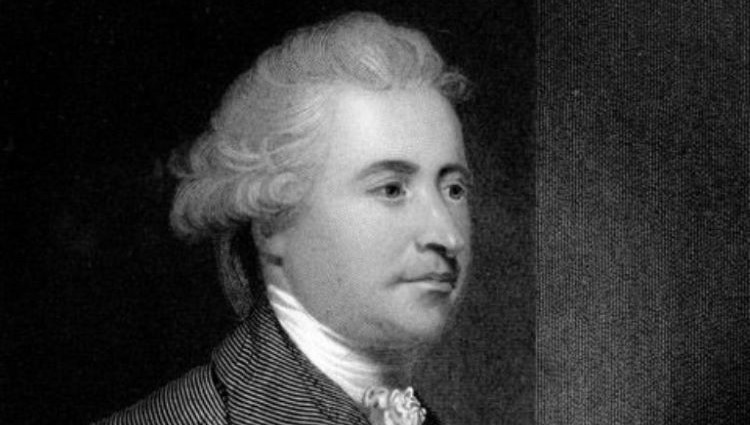
  Edmund Burke: A Genius Reconsidered, by Russell Kirk, with a Foreword by Roger Scruton, Wilmington, Delaware: Intercollegiate Studies Institute, 1997. Russell Kirk’s book on Edmund Burke, first published in 1967, now revised and handsomely re-issued, testifies not only to the “enduring Burke,” but also to the enduring Kirk. As a British statesman and political [...]

Beauty in the Word: Retrieving the Liberal Arts

By |2016-07-17T10:01:39-05:00May 11th, 2012|Categories: Books, Catholicism, Communio, Featured, Liberal Learning, Stratford Caldecott|

The sequel to Beauty for Truth’s Sake has been published by Angelico Press. Called Beauty in the Word, it completes the retrieval of the seven liberal arts begun in the earlier book by examining the first three, the “Trivium”, which Dorothy L. Sayers made the basis of Classical Education in her famous essay, “The Lost Tools of [...]

After the Revolution

By |2014-01-15T14:23:49-06:00May 10th, 2012|Categories: American Founding, Democracy, Foreign Affairs, Pat Buchanan|

“Democracy … arises out of the notion that those who are equal in any respect are equal in all respects,” said Aristotle. But if the Philosopher disliked the form of government that arose out of the fallacy of human equality, the Founding Fathers detested it. “A democracy is nothing more than mob rule,” said Thomas [...]

The Christian Humanist View of Being Human in the Renaissance

By |2016-02-12T15:28:39-06:00May 10th, 2012|Categories: Christian Humanism, Christianity, Robert M. Woods|

In the history of ideas, there are ideas that need to be rescued from those who should know better, but simply do not. For example, all the false views about the Middle Ages. Way too many to even get started in this blog. Interestingly, even the Renaissance has its share of misreadings. There are some Christians who [...]

G.K. Chesterton on Mr. Shakespeare’s Plays

By |2026-04-19T12:29:53-05:00May 8th, 2012|Categories: Christianity, Fr. James Schall, Literature, William Shakespeare|Tags: |

Under the listings of Shakespeare, the Internet abounds in essays, reviews, texts, and comments, almost anything one can imagine about his works and about works explaining his works. My Viking Edition of Shakespeare comes to 1,471 pages. I suspect that at least that number of pages of new materials about Shakespeare appears almost every month. [...]

Conservative?

By |2016-07-17T10:01:43-05:00May 8th, 2012|Categories: Christianity, Communio, Conservatism, Featured, G.K. Chesterton, Stratford Caldecott|

G.K. Chesterton was once described as a “Conservative” thinker. He responded as follows: Because I want almost anything that doesn’t yet exist; because I want to turn a silent people into a singing people; because I would rejoice if a wineless country could be a wine-growing country; because I would change a world of wage-slaves [...]

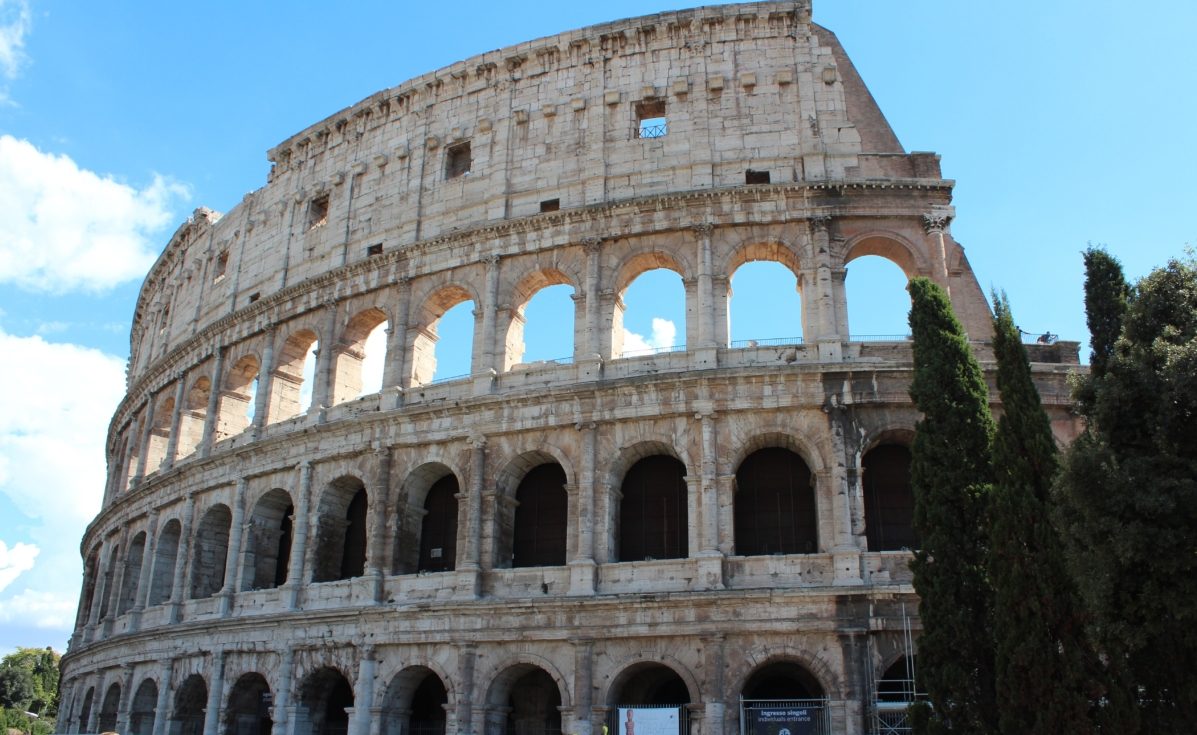
A Teaching for Republicans: Roman History and the Nation’s First Identity

By |2019-09-19T13:10:16-05:00May 7th, 2012|Categories: American Founding, American Republic, M. E. Bradford, Republicanism, Rome|Tags: |

The Federal District of Columbia, both in its formal character as a capital and also in its self-conscious attempt at a certain visual splendor, is, for every visitor from the somewhat sovereign states, a reminder that the analogy of ancient Rome had a formative effect upon those who conceived and designed it as their one [...]

“The Power Under the Constitution Will Always Be in the People”

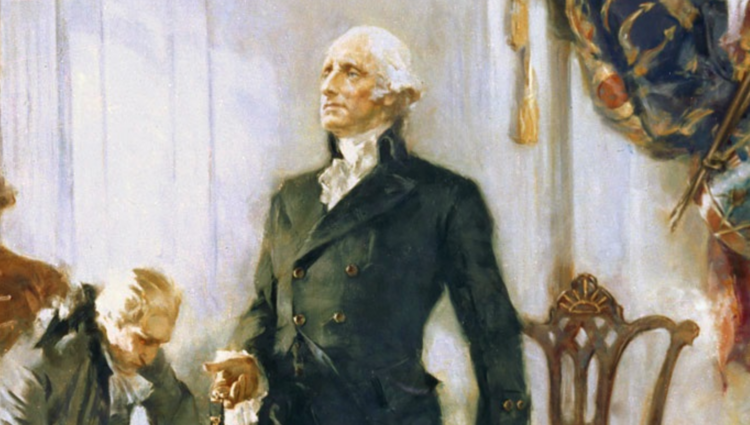
By |2022-09-13T09:21:24-05:00May 7th, 2012|Categories: American Republic, Constitution, George Washington, Quotation|

The power under the Constitution will always be in the People. It is entrusted for certain defined purposes, and for a certain limited period, to representatives of their own chusing; and whenever it is executed contrary to their Interest, or not agreeable to their wishes, their Servants can, and undoubtedly will be, recalled. — to Bushrod Washington, 9 [...]

Peace: A Friendly Relationship

By |2016-11-26T09:52:16-06:00May 5th, 2012|Categories: American Founding, American Republic, Quotation, Republicanism, Thomas Jefferson|

“Always a friend to peace, and believing it to promote eminently the happiness and prosperity of nations, I am ever unwilling that it should be disturbed, until greater and more important interests call for an appeal to force. Whenever that shall take place, I feel a perfect confidence that the energy and enterprise displayed by [...]

M.E. Bradford’s Constitutional Theory: A Southern Conservative’s Affirmation of The Rule of Law

By |2016-07-04T01:03:01-05:00May 4th, 2012|Categories: American Founding, Constitution, Declaration of Independence, Featured, M. E. Bradford, Political Science Reviewer, Republicanism, Southern Agrarians|

A Better Guide Than Reason: Studies in the American Revolution. (La Salle, IL: Sherwood Sugden & Company Publishers, 1979). Cited in the text as Guide. Remembering Who We Are: Observations of a Southern Conservative. (Athens, GA: The University of Georgia Press, 1985). Cited in the text as Remembering. A Worthy Company: The Dramatic Story of [...]

Go to Top