
T.S Eliot’s Christianity and Culture: the Problem of Establishment

By |2016-08-03T10:37:29-05:00June 11th, 2012|Categories: Books, Bruce Frohnen, Christendom, Political Science Reviewer, T.S. Eliot|

T.S. Eliot T. S. Eliot indisputably was, and remains, in the first rank of poets of any era and any culture.[1] Eliot is almost as well known among literate persons as a critic and literary theorist. His journal, The Criterion, despite its short lifespan, remains the standard of high modernism. Continuing interest in [...]
Strategy for a New Dark Age?

By |2014-02-28T14:29:18-06:00June 11th, 2012|Categories: Conservatism, Stephen Masty|

Recently on these pages, I wrote exploring the notion that true conservatives may further weaken Western culture by supporting a popular but materialist political agenda; that the free-market economics which enrich a nation may encourage more selfishness and social breakdown; and at best we may be merely fighting a temporary, rear-guard action in defence of [...]

Ray Bradbury R.I.P.

By |2013-12-30T15:41:24-06:00June 10th, 2012|Categories: Books, Literature, Ray Bradbury, Robert M. Woods|

I begin my lectures and presentations about Ray Bradbury with a confession. The confession is simple and one of which I express a deep sense of loss and a degree of shame. I did not start reading Ray Bradbury until a few years ago. I did not read him because I judged a book by [...]

Plato’s Republic: Impossible Polity

By |2023-05-21T11:32:15-05:00June 8th, 2012|Categories: Books, Classics, E.B., Eva Brann, Plato, Senior Contributors, St. John's College, Wisdom|

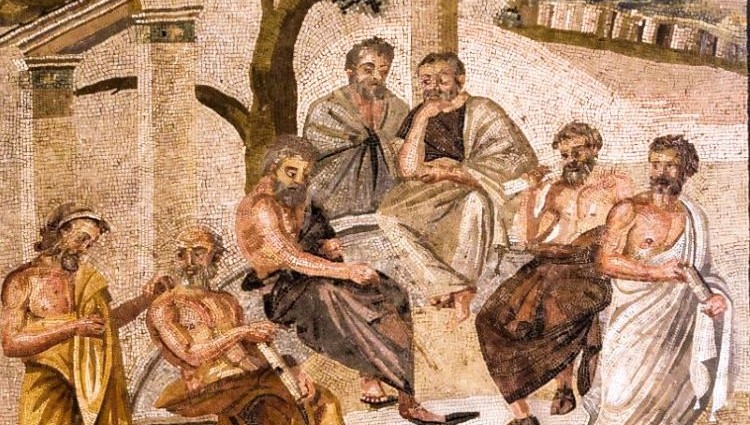
Plato’s Republic: A Study, by Stanley Rosen Plato’s Republic, Stanley Rosen says at the beginning of his book, is “both excessively familiar and inexhaustibly mysterious.” Thus it invites ever more interpretations, not, I think, by reason of any willful indeterminacy or woolly grandeur on Plato’s part, but because a false sense of knowing the work [...]

The Permanent Things & Imaginative Conservatism (pt III)

By |2019-11-14T15:24:01-06:00June 8th, 2012|Categories: Audio/Video, Conservatism, W. Winston Elliott III|Tags: |

by Winston Elliott III & Darrin Moore This is the third and final video segment (see part I here, part II here) of “The Permanent Things & Imaginative Conservatism”, the recent discussion of conservatism and the American Republic with host Darrin Moore & editor of The Imaginative Conservative, Winston Elliott, on WAAM Radio Talk1600 in Ann Arbor, Michigan. [...]

Christopher Dawson on Liberalism

By |2016-08-03T10:37:30-05:00June 7th, 2012|Categories: Bradley J. Birzer, Christendom, Christian Humanism, Christianity, Christopher Dawson, Featured, Liberalism|

Christopher Dawson Part III: Contending Against Liberalism (click on links to go to Part I or Part II) As Dawson attempted to discover the sources of the ideological disruptions of the twentieth-century as well as solutions to the death and terror they caused, he often produced some of his most impassioned work. The forerunner to such [...]

It’s Time For Europe To Learn From Its Past

By |2014-01-13T17:38:05-06:00June 7th, 2012|Categories: Brian Domitrovic, Economics, Europe, Political Economy|

As NATO leaders gathered in Chicago, and as France settled in with its new socialist leadership, the word was that to get out of crisis, Europe has to choose between growth and austerity. On its face, this is a false choice. As Milton Friedman always taught, the greatest deadweight drag on economic development is government [...]

The World of Ray Bradbury

By |2018-10-16T20:25:03-05:00June 6th, 2012|Categories: Books, Literature, Moral Imagination, RAK, Ray Bradbury, Russell Kirk|

To commence as a writer for the pulp-magazines is no advantage; nor is writing film scripts in Hollywood, decade after decade, generally to be recommended for those who would be men of letters. Such was Ray Bradbury’s background. He had the advantage, however, of never attending college—which salutary neglect preserved him from many winds of [...]

Gamesmanship for a New Dark Age?

By |2014-01-21T14:00:24-06:00June 6th, 2012|Categories: Conservatism, Politics, Stephen Masty|

(An Inadequate Response to Dr. Brad Birzer) There is probably a board-game (and some of you may identify one) in which opponents are given different capabilities and limitations. Unlike chess, where opponents have identical numbers of pieces that are the same for each side and are played to one common set of rules, there may [...]

T. S. Eliot, Poetry and Propaganda

By |2016-11-26T09:52:14-06:00June 6th, 2012|Categories: Poetry, Quotation, T.S. Eliot|Tags: |

“First of all no art, and particularly and especially no literary art, can exist in a vacuum. We are , in in practice, creatures of divers interests, and in many of our ordinary interests there is not obvious coherence.” (598) “I do not suppose that there ever has been, or will be, a critic of [...]

The End of Learning

By |2018-10-16T20:25:03-05:00June 5th, 2012|Categories: Books, Christian Humanism, Christianity, Education, Liberal Learning, RAK, Russell Kirk|Tags: |

Russell Kirk Anyone who turns the dial of a television set nowadays may be tempted to remark that genuine learning came to an end during the latter half of the twentieth century. For the moment, however, I employ the word “end” not to suggest termination, but in the sense of “purpose” or “object.” [...]

The Permanent Things & Imaginative Conservatism (pt II)

By |2019-11-14T15:22:54-06:00June 5th, 2012|Categories: Audio/Video, Conservatism, Russell Kirk, W. Winston Elliott III|Tags: |

by Winston Elliott III & Darrin Moore Below is the second of three video segments (see part I here and part III here) of “The Permanent Things & Imaginative Conservatism”, the recent discussion of conservatism and the American Republic with host Darrin Moore & editor of The Imaginative Conservative, Winston Elliott, on WAAM Radio Talk1600 [...]

Christopher Dawson on Liberalism

By |2016-08-03T10:37:32-05:00June 4th, 2012|Categories: Bradley J. Birzer, Christendom, Christian Humanism, Christianity, Christopher Dawson, Liberalism|

Christopher Dawson Part II: The Fulfillment of Liberalism (find Part I) In the end, Dawson believed, liberalism destroyed far more than it created. By the end of the eighteenth century, he feared, little of traditional western culture—beyond the Protestant Americans and the Lutheran and Catholic peasants of Europe—remained religious. The dominant political philosophy of that [...]

Go to Top