We Won: Burke and De Tocqueville

By |2014-01-18T15:59:53-06:00May 24th, 2013|Categories: Alexis de Tocqueville, Bradley J. Birzer, Conservatism, Edmund Burke, Peter Stanlis, Russell Kirk|

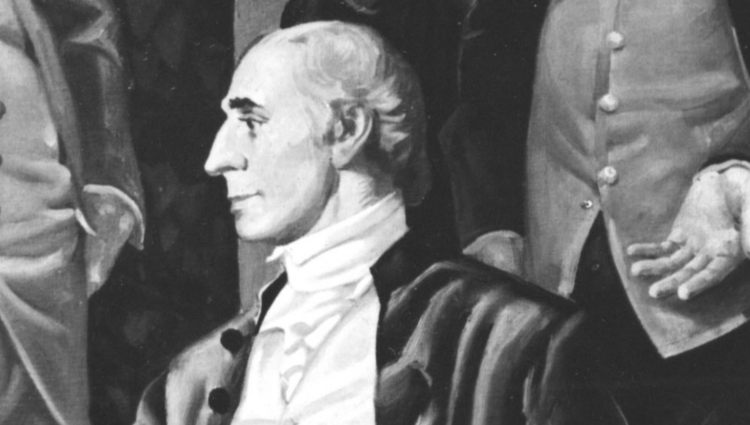
Figureheads Coming and Going For any of us interested in the history of post-war American conservatism (and, I assume you must be, or you wouldn’t be reading The Imaginative Conservative), we owe an immense debt to several historical figures and personalities—most immediately to Edmund Burke and Alexis de Tocqueville, but also to Cicero, St. Augustine [...]
“Poetry” as Political Concern: Aristotelian Tragedy

By |2019-11-08T16:01:20-06:00May 24th, 2013|Categories: Aristotle, Classics, Daniel McInerny, Philosophy, Tragedy|

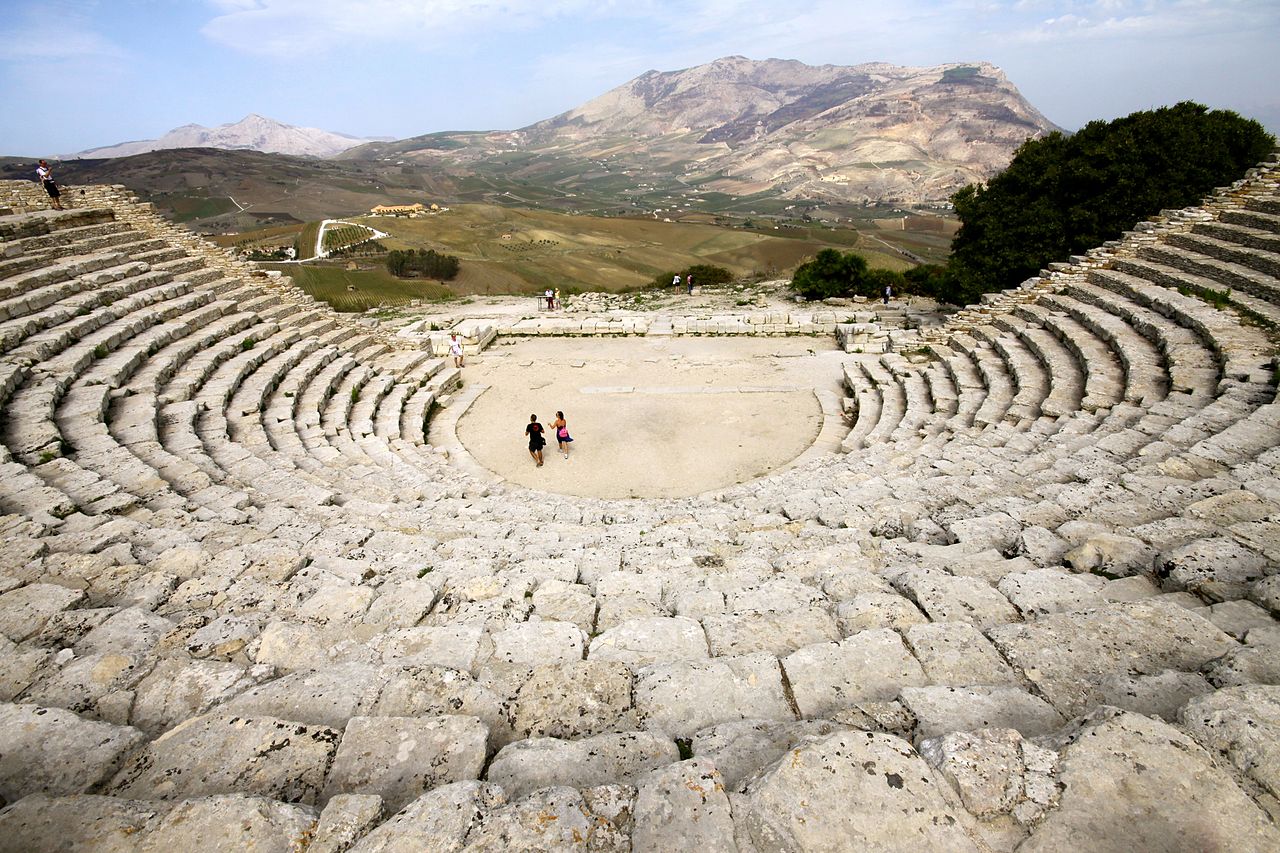
Greek tragedy grew up and was cultivated within the context of religious festival, but these play-festivals of Dionysus, as Paul Cartledge has written in The Cambridge Companion to Greek Tragedy, “served further as a device for defining Athenian civic identity…exploring and confirming but also questioning what it was to be a citizen of a democracy.” [...]

Our Hero: Socrates in the Underworld

By |2019-11-07T11:40:32-06:00May 23rd, 2013|Categories: Aleksandr Solzhenitsyn, Books, Classics, Featured, Peter A. Lawler, Philosophy, Socrates|Tags: , |

It is my pleasure to be able to introduce Nalin Ranasinghe’s Socrates in the Underworld: On Plato’s Gorgias to you as one of the most able, eloquent, noble, profound, and loving books ever written on Socrates. Ranasinghe restores for us the example of a moral hero who inaugurated a moral revolution in opposition to his [...]

The Dalai, the Dinosaur, and the Tao

By |2021-08-28T09:26:55-05:00May 23rd, 2013|Categories: C.S. Lewis, Christianity, Eastern Thought, Moral Imagination, Morality|Tags: , |

In his inaugural lecture at Cambridge University, C. S. Lewis referred to himself as a type of dinosaur; a species of “Old Western man” that was about to go extinct in the mid-20th century. Today I had the extraordinary opportunity to spend some time watching a man who I fear might also be one of the [...]

Great Books, Higher Education, and the Logos

By |2018-10-20T10:01:25-05:00May 22nd, 2013|Categories: Christendom, Education, Featured, Liberal Learning|Tags: , |

Generally speaking, there are two major philosophies of education: an older model which addresses moral and spiritual concerns of the mind and heart of man, and a newer one which trains us to manipulate and control the material world for the good of the body. The older model prevailed in higher education from around 400 [...]

Why “Value” Families?

By |2014-12-30T11:49:17-06:00May 21st, 2013|Categories: Bruce Frohnen, Culture|

In responding to a post of mine criticizing our liberal culture for its hostility toward the traditional family, a commenter wrote: “I do not know a single liberal who…does not value (and participate in) both traditional and non-traditional families.” I think it is important to examine this liberal response to conservative criticism, not because the [...]

Agrarianism Reborn: On the Curious Return of the Small Family Farm

By |2014-01-31T16:06:59-06:00May 21st, 2013|Categories: Agrarianism, Culture|Tags: , , |

In 1941 the Prairie Farmer, America’s oldest farm periodical, celebrated its one hundredth anniversary. The centennial cover features a drawing of the iconic twentieth-century “new” farmer: tall, young, and slender. Bulky overalls have given way to tailored city clothes; the straw hat to a fedora. In the artist’s words, he is “a strong, virile, keen, [...]

The Ballad of King Canute

By |2013-12-22T15:55:34-06:00May 19th, 2013|Categories: Poetry, Stephen Masty|Tags: |

King Canute by Stephen Masty Canute, the king of Englishmen, Norwegians and the Danes, Had glib courtiers, you may be sure, Who soothed for every sinecure Or privilege they might procure, And caused him royal pains.   He bade them all take up his throne Despite the morning damp, And carry it into [...]

The Humane and The Inhumane

By |2019-02-07T12:40:02-06:00May 18th, 2013|Categories: Aldous Huxley, Books, Robert M. Woods, Truth|Tags: |

Over the years I’ve seen countless book lists and there are two books on “must read lists” that speak to the modern world insightfully, but in differing manners. As dystopian works, people have tended to see them both as “prophetic” and yet, of the two, most think that the one literary vision was closer to [...]

The Political Thought of Gouverneur Morris

By |2021-12-02T11:56:42-06:00May 18th, 2013|Categories: American Founding, Constitution, Forrest McDonald, Political Philosophy|

Gouverneur Morris believed that God gives every man the right to liberty (hence his regarding slavery as an abomination), and he believed that legitimate government derives its authority from the consent of the governed. As is well known, Gouverneur Morris, the New York aristocrat who represented Pennsylvania in the Philadelphia Convention of 1787, wrote the [...]

Progressives & Conservatives: Is There Common Ground?

By |2017-03-08T13:36:10-06:00May 17th, 2013|Categories: Conservatism, Gleaves Whitney, Liberalism, Political Philosophy, Politics, Progressivism|

Common Ground between Whom? A lot of people are skeptical about what the Hauenstein Center is trying to do. Seriously now: common ground between conservatives and progressives? Each camp has been telling me how much it can’t stand the other. In popular culture, conservatives regard progressives as arrogant, woolly-minded, and un-American; progressives see conservatives as [...]

Teaching in an Age of Ideology: Harvey Mansfield

By |2014-05-15T10:01:36-05:00May 17th, 2013|Categories: Education, Ideology, Liberal Learning|Tags: , |

Harvey Mansfield In my last post, I wrote about Leo Strauss’ defense of liberal education as a possible antidote to the narrowness of specialization of knowledge and the moral aimlessness of positivist ideology. One way to teach liberal education is to have students read the great thinkers of one’s tradition. In his chapter [...]

The Imaginative Conjurors: The Turkish Delight of Beauty

By |2014-01-21T11:10:42-06:00May 16th, 2013|Categories: Beauty, Politics, Theology|Tags: |

Not long after Bob Dylan’s conversion, I heard him give a radio interview. For obvious reasons, I always considered him a tough challenge in such settings. He can be moody, unpredictable, combative, and cryptic. In this discussion, he was true to form. That, and Dylan continually strummed his guitar in the background, muffling both the [...]

Marcus Aurelius and Barack Obama

By |2018-12-09T08:42:16-06:00May 15th, 2013|Categories: Barack Obama, Louis Markos, Politics|Tags: |

After weathering such mad and depraved emperors as Tiberius, Caligula, Nero, and Domitian, Rome was blessed by a succession of five good emperors who brought stability and prosperity to the empire from 96-180: Nerva, Trajan, Hadrian, Antoninus Pius, and Marcus Aurelius. The last of these emperors was not only a good general, efficient administrator, and [...]

Go to Top