Physicians and the Culture of Death

By |2014-12-30T11:53:18-06:00May 6th, 2013|Categories: Abortion, Bruce Frohnen, Culture|Tags: |

Even during an age in which acts of callous brutality have become common, the case of Dr. Kermit Gosnell shocks.  It was Gosnell who ran the filthy abortion clinic in which live babies were murdered, women were subjected to “treatment” by unlicensed assistants (including massive and even deadly doses of drugs), and fetal remains were [...]

“Education by Poetry”

By |2021-11-10T08:18:48-06:00May 6th, 2013|Categories: Education, Featured, Liberal Learning, Poetry, Robert Frost|Tags: |

Education by poetry is education by metaphor. We like to talk in parables and in hints and in indirections. Poetry provides the one permissible way of saying one thing and meaning another. “Education by Poetry” was a talk delivered at Amherst College and subsequently revised for publication in the Amherst Graduates’ Quarterly of February 1931. [...]

The Three Kinds of Hope: The Radiance of Being

By |2019-07-13T08:12:38-05:00May 5th, 2013|Categories: Books, Caritas in Veritate, Christianity, Communio, Featured, Pope Benedict XVI, Stratford Caldecott|Tags: , , |

The Radiance of Being: Dimensions of Cosmic Christianity (Angelico Press, 2013) Probably the majority in the environmental movement do not see the relevance of mysticism, or personal virtue and morality, to the great issues of our day. To them it is merely a technological or political challenge. They will try to get their hands on the [...]

Russell Kirk, Conservatism & Christian Humanism

By |2019-09-28T09:25:56-05:00May 5th, 2013|Categories: Books, Christian Humanism, Christianity, Conservatism, Russell Kirk|Tags: , |

The following is an excerpt from The Common Mind: Politics, Society and Christian Humanism from Thomas More to Russell Kirk by André Gushurst-Moore. All the super-added ideas, furnished from the wardrobe of a moral imagination, which the heart owns, and the understanding ratifies, as necessary to cover the defects of our naked shivering nature, and to raise it to [...]

Restoring the Meaning of Conservatism: A Review

By |2019-04-07T10:51:51-05:00May 4th, 2013|Categories: Books, Conservatism, Featured, George A. Panichas|Tags: |

Restoring the Meaning of Conservatism: Writings from Modern Age, by George A. Panichas. Wilmington: ISI Books, 2008. This collection of writings by George A. Panichas, all of which appeared in the pages of Modern Age between 1965 and 2007, is a testament to the author’s major contribution to conservatism for over four decades. During this [...]

Gulliver’s Final Voyages

By |2019-02-07T11:14:54-06:00May 4th, 2013|Categories: Books, Literature, Moral Imagination|Tags: , , |

Samuel Johnson famously said of Gulliver’s Travels: “When once you have thought of big men and little men, it is very easy to do the rest.” It is a flippant verdict, yet it’s true that most people lose interest in Swift’s tale after the first and second voyages (to Lilliput, land of small people, and [...]

Oh, He’s Just a Biographer

By |2014-01-04T22:01:03-06:00May 3rd, 2013|Categories: Bradley J. Birzer, History|Tags: |

“In every age, society has been relieved only by the endeavors of a few people moved by the grace of God.”—Russell Kirk, Roots Of American Order (1974) As I approach my fifteenth year teaching history at Hillsdale, and my seventeenth (or so) year of teaching at the college level over all, I find myself more [...]

Is It Fair to Bring a Child Into a World With Such a Low Birth Rate?

By |2014-01-08T23:09:41-06:00May 3rd, 2013|Categories: Culture, Marriage, Nature|Tags: |

Imagine a world where a brave array of new technologies has proliferated to meet our human needs by taming nature—yielding a vast increase in wealth, leisure and education. Instead of scrimping like our ancestors at the mercy of forces beyond their ken, we have attained a noble’s sovereignty. Vast swathes of our lives are planted [...]

The Blackstonian Causes of the American Revolution

By |2025-06-09T21:57:54-05:00May 2nd, 2013|Categories: American Founding, American Republic|Tags: , |

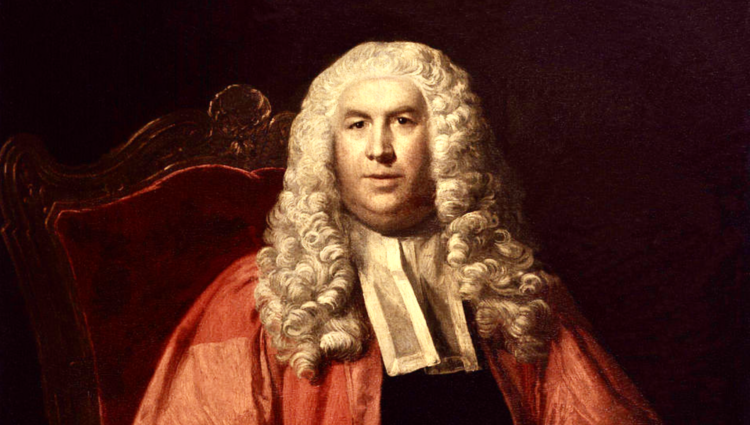
William Blackstone (1723-1780), the great English jurist, did not cause the American Revolution. Had he not published his Commentaries on the Laws of England in the late 1760s, the American Revolution would have taken place. Blackstone did, however, represent certain trends in the law and in British society that, when combined with the evolving colonial situation [...]

Reflections on Religious Liberty: Healthcare Mandates just the Beginning?

By |2018-12-12T16:24:33-06:00May 2nd, 2013|Categories: Andrew Seeley, Catholicism, Christianity, Politics, Religion|Tags: |

As I looked around the standing-room only board room filled with serious, somewhat anxious fellow faculty members, I could not help the surreal feeling that we were actors at the beginning of a movie about a persecution. Those who know the end will see all the little signs of the inevitable disaster as they watch [...]

Abraham Lincoln and the City on the Hill

By |2018-11-12T21:09:54-06:00May 1st, 2013|Categories: Abraham Lincoln, Christianity, Mark Malvasi|

Anyone who writes about Abraham Lincoln must confront the “Lincoln Myth.” To penetrate the legend that now surrounds Lincoln is a formidable task for, as M. E. Bradford noted, the events of Lincoln’s life and the circumstances of his death placed him “beyond the reach of ordinary historical inquiry and assessment.” He is, Bradford continued, [...]

Ayn Rand’s “Atlas Shrugged”: From Romantic Fallacy to Holocaustic Imagination

By |2019-12-06T03:28:24-06:00May 1st, 2013|Categories: Ayn Rand, Books, Christendom|Tags: , |

“The only authentic epochê is . . . victory over desire, victory over Promethean pride.”—René Girard[1] “When the SS torturer becomes the villain of the war film, he is turned into a sacrificial figure, a scapegoat, [he becomes the] structural equivalent of the Jud Süss in Nazi cinema.”—Eric Gans[2] No account of Ayn Rand’s (1905–1982) [...]

Go to Top