Avarice: Desiring More Wealth Than One’s Soul Can Support

By |2024-12-22T22:23:36-06:00October 25th, 2013|Categories: Quotation, RAK, Russell Kirk|

Avarice, rather, is desiring more wealth than one’s soul can support properly. Avarice sometimes produces present poverty: the miser, proverbially, is ragged and lean. And I am afraid that when our politicians and planners and sociologists talk of output and distribution and real wages, they are not so much intent upon relieving genuine poverty as [...]

A Review of Andy Catlett: Early Travels by Wendell Berry

By |2013-12-20T15:28:30-06:00October 25th, 2013|Categories: Books, Robert Cheeks, Wendell Berry|

Wendell Berry is a philosopher, and an important one in this postmodern era, who utilizes the essay, the poem, and, most importantly, the novel, to express his observations of concrete human beings and their life in community. It is in his novels, purposefully located in an agrarian setting, that he depicts the intrinsic interdependency of the [...]

The Conservative Mind’s Continuing Relevance at Sixty

By |2019-11-14T15:16:12-06:00October 24th, 2013|Categories: Audio/Video, Lee Cheek, The Conservative Mind|

The Conservative Mind by Dr. Russell Kirk, which celebrates its 60th anniversary this year, still exerts considerable influence over the intellectual elements of American Conservatism. Dr. H. Lee Cheek delivers a lecture on this book for The McConnell Center at the University of Louisville’s “Milestones of the 20th Century: Democracy in America” lecture series. This [...]

T.S. Eliot’s Dry Salvages: “I do not know much about gods”

By |2015-01-07T13:50:26-06:00October 24th, 2013|Categories: Books, Bradley J. Birzer, Poetry, T.S. Eliot|

The Dry Salvages. Photo by Hye Tyde. “I do not know much about gods.” So begins Eliot’s third of four quartets, “The Dry Salvages.” Many have argued that this is one of Eliot’s weakest poems and the least effective of the Four Quartets. I can’t write as a literary critic, but I can [...]

The Primacy of Persons in Politics

By |2014-01-09T09:30:22-06:00October 24th, 2013|Categories: Political Philosophy, Politics|Tags: |

Thomas Heilke’s and John von Heyking’s edited volume, The Primacy of Persons in Politics: Empiricism and Political Philosophy, explores the nature of political activity by German political scientist, Tilo Schabert. In an empirical study of François Mitterand and former Boston mayor Kevin White, Schabert examines the daily exercise of political power in two distinct contexts [...]

Should We Be More Epicurean (and Less Futurist)?

By |2019-04-04T12:47:44-05:00October 23rd, 2013|Categories: Environmentalism, Peter A. Lawler|Tags: |

Don’t worry. Be happy. Live in the present. The philosopher Rousseau said that was the natural condition of man, before he was screwed up by self-consciousness, time, awareness of death, and delayed gratification. So the key to happiness is to be really, really stupid. The Epicurean philosopher says the rational person can achieve the same [...]

Parties, Principles, and the Budget “Deal”

By |2014-12-29T17:44:33-06:00October 22nd, 2013|Categories: Bruce Frohnen, Government, Politics|

[A political party is] a body of men united, for promoting by their joint endeavours, the national interest, upon some particular principle in which they are all agreed.– Edmund Burke All too many people in the mainstream press, and even among the Republican Party faithful, have been expressing extreme relief that Republican Party leaders “compromised” [...]

The Opening of the Conservative Mind

By |2021-05-10T23:48:23-05:00October 21st, 2013|Categories: Books, The Conservative Mind|

When Russell Kirk’s Conservative Mind was published in 1953, conservatism was not yet a political or philosophical movement, and in fact the word conservatism was barely in the American lexicon. If not a movement, a few conservatives were beginning to be recognized as a growing political and intellectual force, largely because of their criticism of [...]

The “Fairy-Tale” Prince and the Five Surprises

By |2024-03-01T05:56:15-06:00October 21st, 2013|Categories: Catholicism, Culture, Europe, Stephen Masty|

He was a real prince but the fairy-tale elements are just as true. The five surprises unfolded as this exceptional man was swept from relative obscurity to legendary romance and glamour, from terrorist murder to military valour, from unrivalled power to daunting challenge, to heart-rending defeat and then glory beyond our dreams. You couldn’t make [...]

Howard Zinn & a Real People’s History of the United States

By |2024-07-07T17:23:05-05:00October 20th, 2013|Categories: American Republic, Books, History|

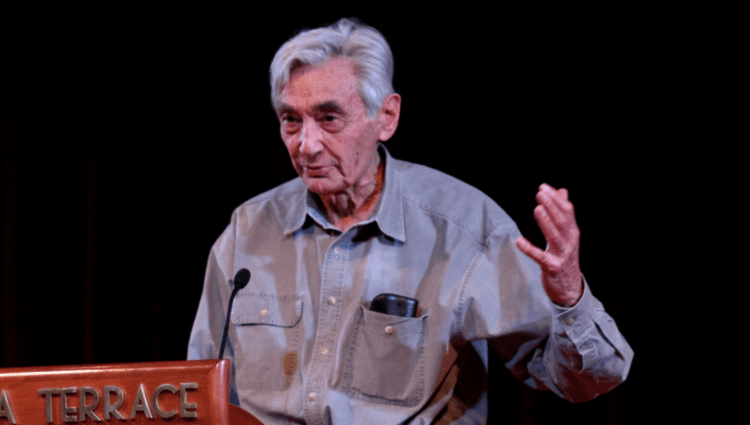
Countless examples of unacknowledged efforts of little platoons pulsate in U.S. history, waiting to be uncovered and lifted to eminence in Americans’ consciousness. And though Howard Zinn fails to place his finger on the genuine accomplishments of these little platoons, he has at least watered the seeds for a real people’s history of the United [...]

Novels by State: A Southern Reply

By |2023-01-15T12:32:21-06:00October 19th, 2013|Categories: Sean Busick, South|Tags: |

Business Insider caused a sensation with its list “The Most Famous Book Set In Every State.” And when we say “sensation,” we mean “shock and anger.” While some of their picks are obvious, The Wonderful Wizard of Oz for Kansas or To Kill a Mockingbird for Alabama, others provoked more consternation. Does Louisiana deserve to [...]

Counterfeiting Conservatism

By |2013-10-25T11:02:24-05:00October 19th, 2013|Categories: Conservatism, Michael Oakeshott|Tags: , |

Michael Oakeshott Conservatism is the “ism” that came into being to resist the existence of “isms.” This makes for potentially insurmountable challenges: How to evince a political belief that avoids the rigidity of ideology? Can one take a political position without becoming a political program? Can the principled stand against a politics based [...]

Go to Top