The Language of Lincoln

By |2020-10-26T00:11:04-05:00July 7th, 2016|Categories: Abraham Lincoln, Language, M. E. Bradford, The Imaginative Conservative|

As a promising young centralist, Abraham Lincoln played the role of champion for what Professor Michael Oakeshott has called the “enterprise associa­tion” theory of the state.[21] While serving as the elected representative of Sangamon (1834—1842), he first made a name for himself by enacting this part. Joining with other soon-to­-be forefathers of the Republican Party, [...]

The Myth of Abraham Lincoln

By |2020-10-26T00:16:43-05:00June 30th, 2016|Categories: Abraham Lincoln, M. E. Bradford|

After over one hundred years, it continues to be almost impossible for us to ask certain basic questions about the role of Abraham Lincoln in the formation of a characteristically American politics. At every appropriate point of inquiry, the Lincoln myth obtrudes. Since 1865 no one has denied the extraordinary purchase of that imaginative construct upon the idiom and [...]

What Lincoln’s Election Meant to South Carolina

By |2020-05-22T18:13:37-05:00June 6th, 2016|Categories: Abraham Lincoln, American Republic, Bradley J. Birzer, Featured, South|

Abraham Lincoln reflected the worst of northern excesses, South Carolinians believed. His election, one Charlestonian averred, “was simply a sign to us that we are in danger, and must provide for our own safety.” The finest of gentlemen founded South Carolina, informants assured the famous London Times correspondent, William Howard Russell, upon his arrival in [...]

Ten Things You Didn’t Know About the Lincoln Assassination

By |2022-09-01T13:53:24-05:00April 25th, 2016|Categories: Abraham Lincoln, Stephen M. Klugewicz|

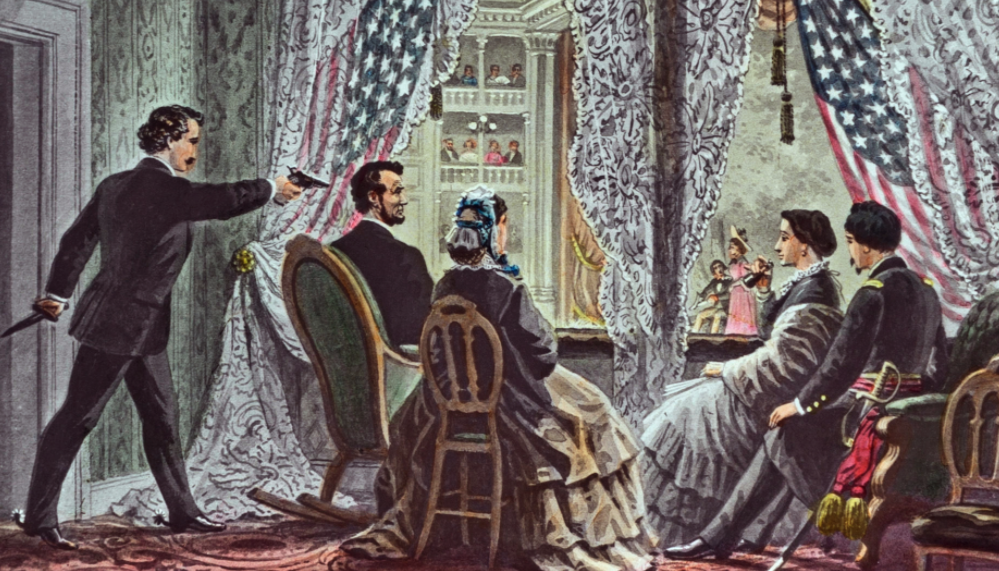
"There are two or three different people in every man's skin. Who shall draw a line and say here genius ends and madness begins?" —Clara Morris, actress and friend of John Wilkes Booth The assassination of Abraham Lincoln on Good Friday, April 14, 1865, at Ford's Theater in Washington, D.C., is one of the most [...]

How Equality Is Misleading

By |2022-07-06T10:21:14-05:00February 28th, 2016|Categories: Abraham Lincoln, Constitution, Declaration of Independence, Equality, Featured, History, M. E. Bradford, Slavery|

Equality as a moral or political imperative, pursued as an end in itself is the antonym of every legitimate conservative principle. Contrary to most Liberals, new and old, it is nothing less than sophistry to distinguish between equality of opportunity and equality of condition. I Let us have no foolishness, indeed.* Equality as a moral or [...]

“The Gettysburg Address”

By |2021-11-18T17:09:57-06:00November 19th, 2015|Categories: Abraham Lincoln, American Founding, Civil War|

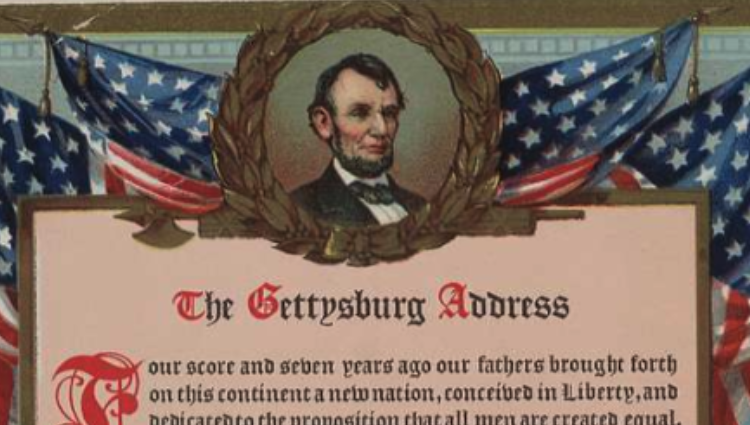
There exist at least five versions of the Gettysburg Address, all of which have slightly different wording. The first is known as the "Nicolay copy," as it was once owned by Lincoln's secretary, John Nicolay; this version is the only one which we know was written down by Lincoln prior to his delivering the speech. [...]

The Party of Lincoln AND Calhoun? The Right and the Civil War

By |2019-05-29T14:10:55-05:00November 3rd, 2015|Categories: Abraham Lincoln, Civil War, Conservatism, Featured, History|

“When the intellectual authors of the modern right created its doctrines in the 1950s,” wrote Sam Tanenhaus in The New Republic, “they drew on nineteenth-century political thought, borrowing explicitly from the great apologists for slavery, above all, the intellectually fierce South Carolinian John C. Calhoun…. The party of Lincoln… has become the party of Calhoun.” [...]

Was the Civil War a Fiscal Conflict?

By |2016-02-29T22:43:18-06:00July 16th, 2015|Categories: Abraham Lincoln, Civil War, History, South, Stephen M. Klugewicz|

When in the Course of Human Events: Arguing the Case for Southern Secession, by Charles Adams. Lanham, Maryland: Rowman and Littlefield, 2000. This work is a spirited polemic whose central aim is to condemn the North’s subjugation of the South between 1861 and 1865. Asserting that the Civil War was at its heart a “fiscal [...]

The Gospel of Lincoln

By |2020-11-19T10:01:19-06:00July 1st, 2015|Categories: Abraham Lincoln, Constitution, Declaration of Independence, Featured|Tags: |

Lincoln’s Gettysburg Address has achieved a status as American Scripture equaled only by the Declaration of Independence, the Constitution, and Washington’s Farewell Address. In merely 271 words, the wartime president fused his epoch’s most powerful and disruptive tendencies—nationalism, democratism, and German idealism—into a civil religion indebted to the language of Christianity, but devoid of its [...]

Inventing a New Nation at Gettysburg

By |2021-11-18T20:39:59-06:00May 18th, 2015|Categories: Abraham Lincoln, American Republic, Civil War, Clyde Wilson, Featured, War|

In the Gettysburg Address, Abraham Lincoln consolidated his base, and justified and sanctified the Northern cause and victory both as preservation of the hallowed old and a birth of the new. He created an image of the United States that has had and continues to have incalculable effects on American public life and, indeed, on [...]

Executive Power, the Constitution, and a Useful “Insurrection”

By |2015-04-22T07:49:24-05:00April 16th, 2015|Categories: Abraham Lincoln, Barack Obama, Featured, Government, Politics, Presidency|

Poor Mr. Obama. To hear Colbert King tell the story, the President is being put in the impossible position of one of his great predecessors, Abraham Lincoln. In a piece in the Washington Post provocatively titled “A Rising Insurrection Against Obama,” Mr. King paints a picture of looming disaster for America akin to the Civil [...]

Genius and Ambition: The Lyceum Address

By |2015-04-15T21:08:19-05:00April 14th, 2015|Categories: Abraham Lincoln, Featured, Government|

Abraham Lincoln, then a newly-minted young lawyer, delivered the following speech to the Young Men’s Lyceum of Springfield, Illinois. January 27, 1838 As a subject for the remarks of the evening, the perpetuation of our political institutions, is selected. In the great journal of things happening under the sun, we, the American People, find our [...]

American Brutus: What Motivated John Wilkes Booth?

By |2023-04-14T08:18:47-05:00April 14th, 2015|Categories: Abraham Lincoln, Stephen M. Klugewicz|Tags: |

“For John Wilkes Booth, sweeping, grand gestures were a way of life. It was how he navigated his way through this world. The bigger and bolder, the better.” —Jesse Johnson, who portrayed Booth in “Killing Lincoln” Americans tend to think of assassins as mentally-unbalanced individuals, who kill—or try to kill—for reasons that make little or [...]

Go to Top