The Hobbes-Bramhall Debate on Liberty and Necessity

By |2020-11-23T08:17:17-06:00February 28th, 2019|Categories: Civil Society, Government, Leviathan, Monarchy, Political Philosophy, Politics, Western Civilization|

Despite their contrasting metaphysics, Thomas Hobbes and John Bramhall were Royalist supporters during the English Civil War. Both men believed that monarchy was the best form of government despite their opposing perceptions of liberty. If philosophy influences politics, why then would two thinkers’ opposing philosophical views result in support for the same form of government? [...]
The Dangers of Russophobia

By |2022-02-15T00:11:31-06:00February 24th, 2019|Categories: Aleksandr Solzhenitsyn, Character, Communism, Government, Joseph Pearce, Political Philosophy, Politics, Russia, Senior Contributors|

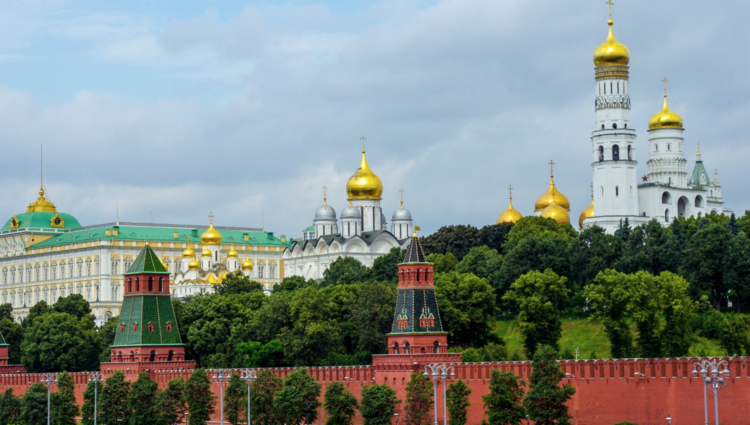
We should not confuse or conflate Russian President Vladimir Putin with Soviet leaders, such as Josef Stalin. They are as different as the proverbial chalk and cheese. Nowhere is this more evident than the way in which Mr. Putin has shown himself to be a great admirer of the anti-Soviet dissident, Aleksandr Solzhenitsyn. The Special [...]

Public Opinion in James Bryce’s “The American Commonwealth”

By |2019-11-21T19:44:26-06:00February 7th, 2019|Categories: Books, Community, Democracy, James Bryce, Political Philosophy|

We see that the creation of one’s own opinions is to a large degree a community affair. According to James Bryce, the individual has a powerful role in crafting a nation’s political discourse, but can only be involved in doing so if they act in concert with others. This neither denies the possibility of conflicting beliefs [...]

Leo Strauss vs. Edmund Burke

By |2019-07-30T15:56:42-05:00December 3rd, 2018|Categories: Books, Edmund Burke, History, Leo Strauss, Nature, Philosophy, Political Philosophy, Reason, Truth|

What ought to take primacy when carrying out research and interpreting seminal books: the text itself, or the context? A known critic of historicism and contextualism, Leo Strauss published his seminal essay, ‘What is Political Philosophy?’ in 1957 in the Journal of Politics and introduced a problem with the field: Modern academic obsessions over positivism [...]

Understanding Voegelin’s Critique of Locke

By |2019-11-21T19:44:32-06:00November 30th, 2018|Categories: American Republic, Books, Democracy, Eric Voegelin, John Locke, Philosophy, Political Philosophy|

No matter how conservative intellectuals try, they just do not seem able to escape John Locke. Jonah Goldberg’s well-received Suicide of the West proudly called America’s Declaration of Independence “echoes of” the great English Enlightenment philosopher John Locke, saying U.S. history was “more Locke than anything Locke imagined.”  He inspired “a government but not a state”: a government with power [...]

Virtue and the City

By |2022-09-29T11:28:33-05:00November 18th, 2018|Categories: Aristotle, Cicero, Featured, Great Books, Paul Krause, Philosophy, Political Philosophy, Politics, St. Augustine, St. Thomas Aquinas, Timeless Essays, Virtue|

Virtue is what the good city aims to achieve as part of the common good. Since humans are social animals and creatures of actions, the call to cultivate virtue within civil society is a fundamental aspect of the good society and the good regime... Today’s offering in our Timeless Essay series affords our readers the [...]

The Virtue of Nationalism

By |2020-06-14T17:03:22-05:00October 29th, 2018|Categories: Books, History, Nationalism, Political Philosophy, Politics|

Yoram Hazony’s "The Virtue of Nationalism" sees the world as composed of two “antithetical” types of government: universalist empires and free nation-states. The problem is that everything in the book is forced into that all-inclusive doctrinal dichotomy. The Virtue of Nationalism, by Yoram Hazony (305 pages, Basic Books, 2018) Yoram Hazony’s The Virtue of Nationalism has the [...]

The Road to Unfreedom

By |2020-07-07T10:14:11-05:00October 10th, 2018|Categories: American Republic, Benjamin Lockerd, Books, Government, Ideology, Political Philosophy, Senior Contributors|

After the shock of the 2016 election, liberals got a civics lesson on the electoral college established by the Constitution, and they didn’t like it. In "The Road to Unfreedom," Timothy Snyder speaks for them in bemoaning the fact that the founders created not a direct democracy but a republic. The Road to Unfreedom: Russia, [...]

Brett Kavanaugh and Originalism

By |2018-10-09T15:53:15-05:00October 9th, 2018|Categories: Congress, Justice, Political Philosophy, Politics, Supreme Court|

Even before the spectacle of Christine Balsey Ford's testimony before the Senate Judiciary Committee, the hearing for President Trump’s nominee to the U.S. Supreme Court, Brett Kavanaugh, was characterized not by political acumen, wit, cunning, or prudence, but by partisan obstruction, lawlessness, tantrums, hysteria, ignorance, frenzy, and anger. Protestors screamed vulgarities and trite slogans, proving [...]

The Problem of Theocracy in The Brothers Karamazov

By |2018-07-09T12:25:35-05:00July 5th, 2018|Categories: Books, Fiction, Fyodor Dostoevsky, Political Philosophy, Religion|

It is through Ivan’s representation of Soloviev in The Brothers Karamazov that Dostoevsky unearths the grave implications and outcomes of totalitarian politics… Fyodor Dostoevsky’s final novel, The Brothers Karamazov, has rightly earned its place among the greatest books of all time. It warrants this stature in no small part because it addresses questions and problems [...]

When Timeless Works Respond to the Folly of Their Age

By |2019-03-21T12:03:02-05:00June 2nd, 2018|Categories: Books, Culture, Literature, Philosophy, Political Philosophy, Politics|

The central goal of Fyodor Dostoevsky’s Crime and Punishment was to refute the ideas of a different book: a rote, poorly written, didactic, and wildly influential novel. And unless you’ve spent some time reading about Dostoevsky, you’ve probably never heard of it… Our seniors at The Saint Constantine School just completed reading and discussing one of Fyodor [...]

Did the Constitution Kill the Common Good?

By |2023-01-10T01:02:52-06:00January 29th, 2018|Categories: American Republic, Catholicism, Constitution, Featured, Political Philosophy, Politics, Timeless Essays|

Why did the centralization of power occur so quickly in America? Why have those genuinely common-good communities that were supposed to have worked hand-in-glove with the federal government suffered so much under the American Regime?… Today’s offering in our Timeless Essay series affords our readers the opportunity to join Thaddeus Kozinski as he explores the [...]

The Elements of Leadership: Might, Measure, & Meaning

By |2019-06-06T12:18:22-05:00January 17th, 2018|Categories: Eric Voegelin, Featured, Leadership, Political Philosophy|Tags: |

Not only is a leader an agent of force and something of a philosopher, but he must also be a kind of corporate prophet… The philosopher Eric Voegelin labored for many years in relative obscurity until his death in 1985. Even now his disciples are drawn largely from conservative academe, which is so marginal as [...]

Virtue and the City

By |2019-06-11T16:09:36-05:00October 26th, 2017|Categories: Cicero, Featured, Philosophy, Political Philosophy, Politics, St. Augustine, St. Thomas Aquinas, Virtue|

To attain virtue in solitude defeats the communitarian instincts of human nature. The avenue of politics is one of the mediums by which moral excellence can, and should, be practiced—for there are tremendous benefits wrought to the rest of society as a result… “We see that every city is some sort of community, and that [...]

Go to Top