The Key to John Adams’ Political Principles

By |2020-10-29T23:06:14-05:00August 6th, 2017|Categories: American Founding, American Republic, Featured, John Adams, Liberty, Political Philosophy, Political Science Reviewer, Politics, Timeless Essays|

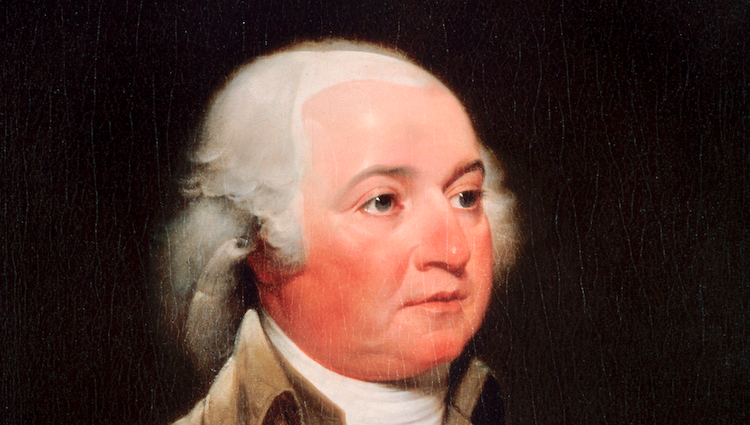
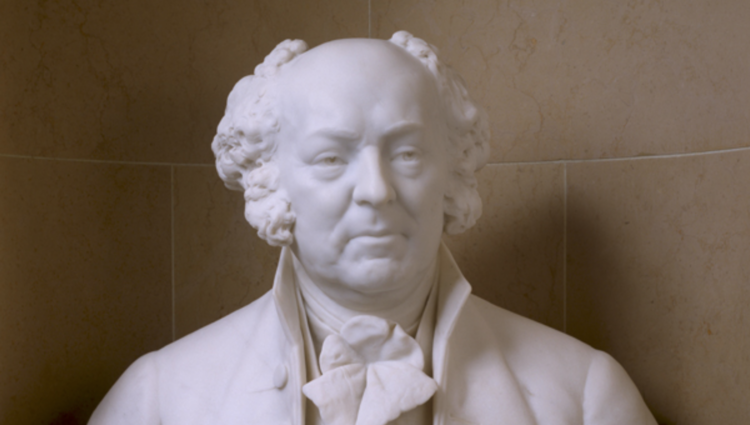
Of all John Adams' published writings, two works provide an especially fruitful resource for an inquiry into his deepest political reflection: his "Defence of the Constitutions of Government of the United States of America" and "Discourses on Davila." As a political writer, John Adams is most remembered today for the constitutional prescriptions by which he [...]

Augustine and Limited Government

By |2019-08-22T15:21:41-05:00July 29th, 2017|Categories: Catholicism, Christianity, Civilization, Featured, Government, Order, Philosophy, Political Philosophy, St. Augustine|

Augustine recognized that the flaws of human nature precluded perfection on earth, and he concluded that government cannot save souls by coercing virtuous conduct… Since Augustine’s death in 430 A.D., the world has changed so much that this irreplaceable figure of Christianity would likely find difficult it to recognize. The advent of extraordinary technological advances [...]

The High Tory Tradition: An Alternative Future for America?

By |2017-01-20T23:02:56-06:00December 7th, 2016|Categories: Democracy, Featured, Foreign Affairs, Government, Political Philosophy|

The current generation may always consider itself to be the wisest of all, but High Tory politics strives to avoid the perennial folly of this prejudice... “The next wave of American ‘conservatism’ is not likely to base its appeal on such unsuccessful slogans as the Constitution and free enterprise. Its leader will not be a [...]

Can We Heal the Divisions of this Election?

By |2016-12-05T09:03:40-06:00November 11th, 2016|Categories: Donald Trump, Featured, Political Philosophy, Politics, Rhetoric, Social Order, Western Civilization|

How could anyone vote for him?” “How could anyone vote for her?” In a contentious election between candidates with historically high disapproval ratings, voters across the country were asking such questions, incredulous that their fellow Americans could be on the other side this time. These questions were encouraged by the rhetorical strategies of both campaigns, which focused on establishing [...]

A New Political Party for Conservatives?

By |2024-03-14T14:59:08-05:00August 28th, 2016|Categories: Economics, Joseph Pearce, Political Philosophy, Politics|

The policies of the American Solidarity Party come as a breath of much-needed fresh air in the stale and suffocating atmosphere of contemporary politics. I was greatly heartened to read Paul Gottfried’s excellent essay in The Imaginative Conservative in which he lambasts so-called “conservatives” for their abandonment of all that has always been meant by [...]

The Key to John Adams’ Political Principles

By |2021-10-29T12:09:44-05:00August 25th, 2016|Categories: American Founding, American Republic, John Adams, Liberty, Philosophy, Political Philosophy, Politics|

Of all John Adams' published writings, two works provide an especially fruitful resource for an inquiry into his deepest political reflection. Imacon Color Scanner As a political writer, John Adams is most remembered today for the constitutional prescriptions by which he helped to solidify the American Revolution. His Thoughts on Government was widely circulated [...]

Alasdair MacIntyre: From Socratic Subverter to Supporter of the State

By |2020-05-20T16:23:46-05:00April 7th, 2016|Categories: Foreign Affairs, Government, Liberalism, Political Philosophy, Politics, Socrates, War|

What Alasdair MacIntyre used to know is that the modern nation-state cannot do anything truly good for its citizens. So how can we explain his recent call for the strong use of nation-state power in the realms of health, education, military service, and public speech? I. What Alasdair MacIntyre Knows What Alasdair MacIntyre used to [...]

Who Has the Right to Rule Us?

By |2023-05-06T09:13:32-05:00February 29th, 2016|Categories: Christendom, Civilization, Democracy, Featured, Monarchy, Political Philosophy|

Our responsibility is not to eliminate power, but to find ways to serve ends higher than its own appetites. Since there cannot be a right to rule, we’d best make sure that those who rule, rule well. There’s an old joke that goes, “The definition of a gentleman is someone who knows how to play [...]

Did the Constitution Kill the Common Good?

By |2017-06-28T21:15:48-05:00November 30th, 2015|Categories: Aristotle, Featured, Philosophy, Political Philosophy, Politics, Wyoming Catholic College|

Michael Hannon and Robert George are both orthodox Catholic thinkers who subscribe to a personalist anthropology and Aristotelian/Thomistic social philosophy, one that interprets the character of the modern, autonomous individual as an evil fiction, one that recognizes the existence and priority of intrinsic, common goods, and one that posits the indispensability of social communities ordered [...]

The Myth of Our National Innocence

By |2015-01-04T16:15:09-06:00January 4th, 2015|Categories: Foreign Affairs, Government, History, Political Philosophy|Tags: |

Since the 1990s, the teaching and advocacy of “grand strategy” has become something of a cottage industry. Degree programs and courses are on offer at Duke, the University of Wisconsin at Madison, the City University of New York, Temple University, Columbia University, Bard College, MIT, Georgetown, and Johns Hopkins’ School of Advanced International Studies (SAIS). [...]

Washington Puzzled as Putin Doesn’t Back Down

By |2020-08-24T15:26:39-05:00September 6th, 2014|Categories: Foreign Affairs, Political Philosophy, Russia|Tags: |

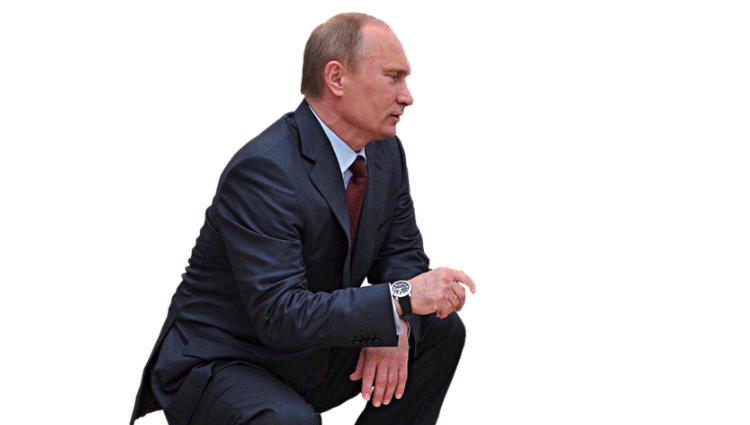
What is most striking about the Ukraine crisis is how much the Washington debate lacks any sense of how the issue might look to other interested parties, particularly Russia. Putin is analysed of course—is he, as Hillary Clinton suggested, following Hitler’s playbook? Consider an analogy to get a sense of how Russia might perceive America’s [...]

Alexander Hamilton: Conservative Statesman?

By |2023-07-12T00:38:48-05:00May 8th, 2014|Categories: Alexander Hamilton, American Republic, Books, Featured, George W. Carey, Political Philosophy|Tags: |

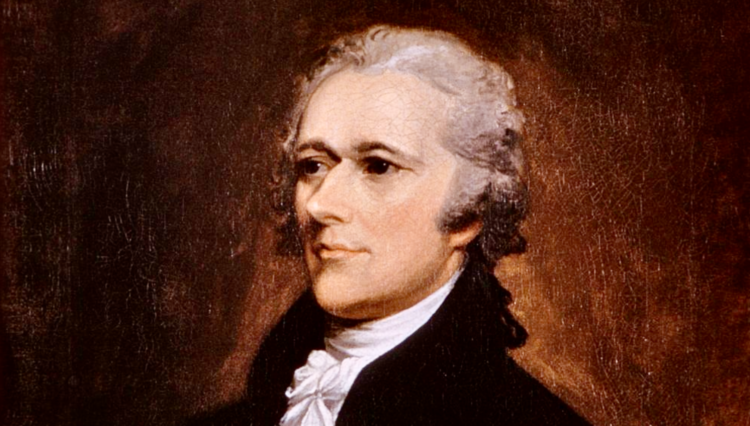
Alexander Hamilton never espoused the kind of extensive, intrusive governmental powers that most of the American people today, including many “conservatives,” have willingly accepted. The Political Philosophy of Alexander Hamilton, by Michael P. Federici (The John Hopkins University Press, 291 pages) Toward the end of his work, Michael Federici writes, “It is rare to find [...]

Barry Cooper: Political Philosophy and Empiricism

By |2014-02-10T17:09:16-06:00November 1st, 2013|Categories: Political Philosophy, Politics|Tags: , |

Barry Cooper Thomas Heilke’s and John von Heyking’s edited volume, Hunting and Weaving: Empiricism and Political Philosophy, is a festschrift to Barry Cooper, a political scientist at the University of Calgary. The themes of hunting and weaving are ones illuminated in Cooper’s own career as he brings together political philosophy and empiricism in [...]

The Primacy of Persons in Politics

By |2014-01-09T09:30:22-06:00October 24th, 2013|Categories: Political Philosophy, Politics|Tags: |

Thomas Heilke’s and John von Heyking’s edited volume, The Primacy of Persons in Politics: Empiricism and Political Philosophy, explores the nature of political activity by German political scientist, Tilo Schabert. In an empirical study of François Mitterand and former Boston mayor Kevin White, Schabert examines the daily exercise of political power in two distinct contexts [...]

Go to Top