A New History of Political Ideas

By |2013-11-23T11:52:40-06:00October 4th, 2013|Categories: Lee Cheek, Political Philosophy|

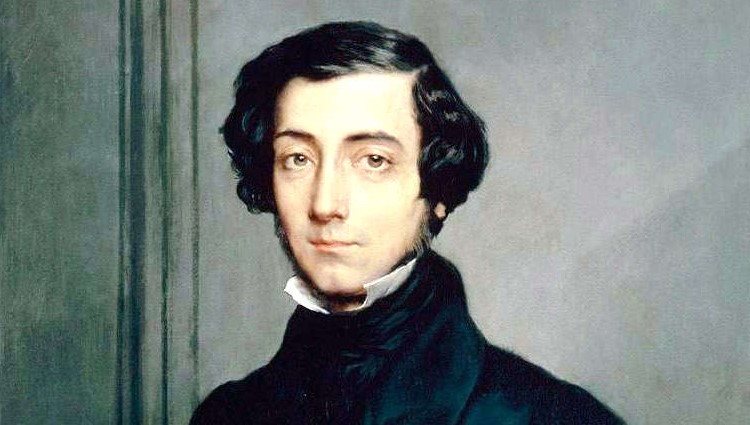
A History of Political Ideas from Antiquity to the Middle Ages by Philippe Nemo As the first part of a two volume survey of political thought, Philippe Nemo approaches the field of study in a manner different from many American texts. Appealing to readers with “little prior knowledge” of political thought, the author provides a lucid, [...]
The Political Relevance of St. Augustine

By |2021-03-31T13:13:36-05:00September 21st, 2013|Categories: Christendom, Christianity, Political Philosophy, St. Augustine, St. Thomas Aquinas|Tags: |

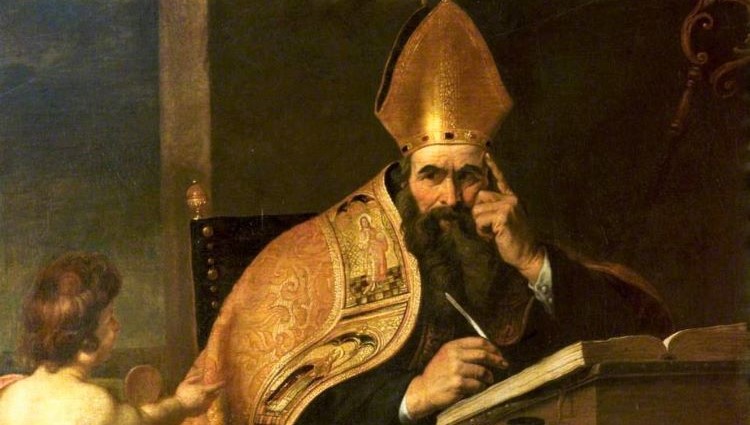
It is surprising that contemporary political thinking has paid relatively scant attention to St. Augustine, the Bishop of Hippo. It may be true, as some say, that we live in the post-Christian era. It certainly cannot be gainsaid that we live in an age of pervasive secularism in which a name such as Augustine seems [...]

On the Place of Augustine in Political Philosophy

By |2019-10-30T12:32:16-05:00August 28th, 2013|Categories: Christianity, Fr. James Schall, Literature, Political Philosophy, Political Science Reviewer, St. Augustine|

“Shall it (the happy life) be that of the philosophers, who put forward as the chief good, the good which is in ourselves? Is this the true good? Have they found the remedy for our ills? Is man’s pride cured by placing him on an equality with God?”— Pascal, Pensēes, #430. “Salvation, such as it shall [...]

Edmund Burke’s Legal Erudition and Practical Politics: Ireland and the American Revolution

By |2014-04-25T07:35:23-05:00August 22nd, 2013|Categories: Edmund Burke, Peter Stanlis, Political Philosophy|Tags: |

I. Burke’s Legal Erudition Edmund Burke (1729–1797), was born and grew up in Dublin, Ireland, and even before he graduated from Trinity College in 1749, his father, Richard Burke, registered him as a student of law in the Middle Temple in London. At age twenty-one, in 1750, Burke went to London to study law. At [...]

A Masterpiece of Political Thought: James Bryce’s “The American Commonwealth”

By |2019-06-13T12:23:19-05:00July 1st, 2013|Categories: American Republic, James Bryce, Mark Malvasi, Political Philosophy|Tags: , |

The best that E. L. Godkin, the editor of the liberal journal The Nation, could say about United States congressmen in 1874 was that “we underrate their honesty, but we overrate their intelligence.” Henry Adams, another patrician critic of late nineteenth-century American politics, remarked that to disprove Darwin’s theory of evolution one need only study [...]

The Political Thought of Gouverneur Morris

By |2021-12-02T11:56:42-06:00May 18th, 2013|Categories: American Founding, Constitution, Forrest McDonald, Political Philosophy|

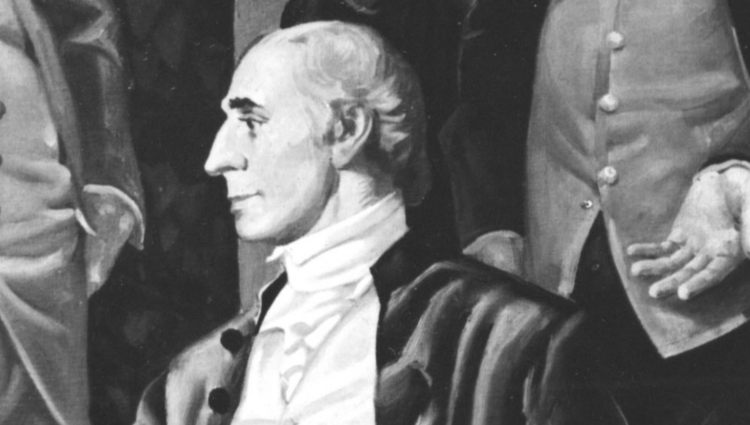
Gouverneur Morris believed that God gives every man the right to liberty (hence his regarding slavery as an abomination), and he believed that legitimate government derives its authority from the consent of the governed. As is well known, Gouverneur Morris, the New York aristocrat who represented Pennsylvania in the Philadelphia Convention of 1787, wrote the [...]

Progressives & Conservatives: Is There Common Ground?

By |2017-03-08T13:36:10-06:00May 17th, 2013|Categories: Conservatism, Gleaves Whitney, Liberalism, Political Philosophy, Politics, Progressivism|

Common Ground between Whom? A lot of people are skeptical about what the Hauenstein Center is trying to do. Seriously now: common ground between conservatives and progressives? Each camp has been telling me how much it can’t stand the other. In popular culture, conservatives regard progressives as arrogant, woolly-minded, and un-American; progressives see conservatives as [...]

An Exemplary Study of Nietzsche & His Political Thought

By |2014-05-29T17:33:51-05:00February 26th, 2013|Categories: Books, Communism, Friedrich Nietzsche, Lee Cheek, Political Philosophy|Tags: |

A Review of William H. F. Altman’s Friedrich Wilhelm Nietzsche: The Philosopher of the Second Reich (Lanham, Maryland: Lexington Books, 2013). In this imaginative and refined commentary on Nietzsche’s political thought, Altman provides an incisive critique of the achievement of Nietzsche, as well as his limitations. The work is the third volume of a trilogy on German [...]

Faith and Freedom

By |2019-12-05T11:39:22-06:00February 26th, 2013|Categories: Christendom, Christianity, Faith, Joseph Pearce, Political Philosophy, StAR|

Liberty itself must be limited in order to be possessed.—Edmund Burke Anarchy, Freedom’s own Judas, the vile prodigal License who steals the gold of liberty.—Oscar Wilde In an age that seems to believe that Christianity is an obstacle to liberty, it will prove provocative to insist, contrary to such belief, that Christian faith is essential to liberty’s [...]

Crusades for Democracy & American Foreign Policy

By |2016-07-26T15:21:37-05:00January 28th, 2013|Categories: Claes Ryn, Foreign Affairs, Leo Strauss, Neoconservatism, Paul Gottfried, Political Philosophy|Tags: |

In recent years a heated debate has erupted about American foreign policy and about what moral purpose should inform our conduct of international relations. While analysts Robert Kagan, Michael Mandelbaum, and Stephen Schwartz insist the United States should use its power, where possible, on behalf of “democracy,” other commentators have rejected this approach. James Kurth, [...]

“Giving up” on the Constitution?

By |2014-12-30T14:45:27-06:00January 14th, 2013|Categories: Bruce Frohnen, Constitution, Political Philosophy, Politics|

In a recent editorial in the New York Times, Louis Michael Seidman, a professor of constitutional law at Georgetown Law School, argues that our political system is broken because of “our insistence on obedience to the Constitution, with all its archaic, idiosyncratic and downright evil provisions.” Dr. Seidman asks why anyone should care about procedural provisions [...]

The Federal Idea

By |2021-05-05T13:12:50-05:00January 5th, 2013|Categories: Alexis de Tocqueville, Democracy in America, Federalist Papers, Political Philosophy, Politics, St. John's College, Wilfred McClay|

The concept of federalism has been one of the principal casualties of modern American history. One has to look far and wide to find American historians and political scientists who do not believe, with the smugness and tenacity of dogma, that our federal institutions are lumbering relics of a past we outgrew over a century [...]

Plato’s Apology and the Gorgias: Yearning for Political and Spiritual Regeneration

By |2015-05-19T23:10:18-05:00December 29th, 2012|Categories: Apology, Classics, Lee Cheek, Plato, Political Philosophy|

The purpose of this essay is to elucidate the importance of Plato’s commitment to rational discourse in the Apology and Gorgias. Both dialogues chronicle the transfer of authority from the destructive world of Athens to the philosophers. The organization of politics and society, according to Plato, is determined by the orderliness of the souls of its citizens. The central [...]

Go to Top