
What really made me love New York City was the discovery of some of those conscious forces G.K. Chesterton talked about. I discovered that not only were the famous five boroughs their own conscious forces, but within the boroughs were smaller forces—neighborhoods just as homey and parochial as any small town anywhere.
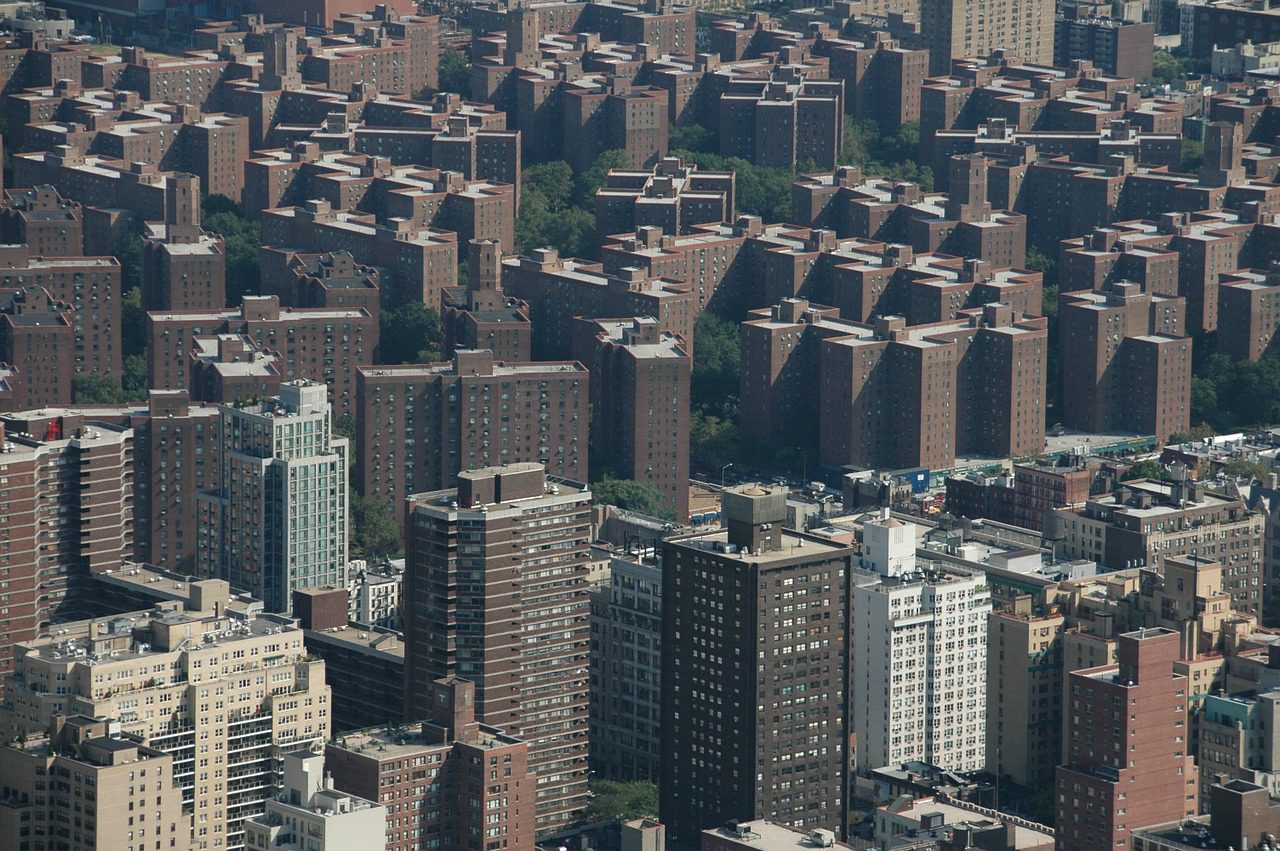 Though I grew up in a small Indiana town, I love cities. Always have. The current destruction so many of them are undergoing depresses me. The different people, the energy, the infinite array of restaurants, shows, bars, shops, museums, and things to discover have always been romantic to me. “A city is,” Chesterton wrote, “properly speaking, more poetic even than a countryside, for while nature is a chaos of unconscious forces, a city is a chaos of conscious ones.” As a young adult I had lived in the mid-sized city of Grand Rapids, Michigan, and visited many times the larger city of Chicago, but when I moved to New York City in the late nineties for graduate school, my first reaction was fear at the chaos.
Though these were the days of a pretty peaceful and safe New York under Rudy Giuliani, the bigness and the energy of the place were almost overwhelming to me as I drove in with my friend Andy, who had volunteered to help me move. What had I gotten myself into when I agreed to come sight unseen? Chicago seemed a mere hamlet in comparison—a city of medium-sized shoulders at best. Moving in winter made it seem more ominous, for darkness in the northern hemisphere is, if not my only, a relatively domineering friend who shows up early in the afternoon. Andy stayed with me a few days and helped me move my meager belongings into my rooms high up the big apartment building at the edge of the Little Italy neighborhood on the corner of East Fordham Road and Southern Boulevard—facing Fordham University to the west, the Bronx Zoo to the north, and the New York Botanical Gardens on the diagonal.
True, there were some early signs that I might like this place. When Andy and I went down to Manhattan to see some of the famous sites, we encountered a gaggle of Miss USA contestants at Rockefeller Plaza where people go ice skating. It isn’t just television; those girls were beautiful. And my own apartment had its own touches of nature, though even here the bigness was remarkable. Though it was on the south side of the building, when I opened the door to the hallway, I could often hear elephants trumpeting through the other rooms. And, as I was to discover, one of my roommates, who had gone to high school with my cousin in Ohio, was something of a horticulturalist. Well, he was growing pot, anyway.
What really made me love New York City was the discovery of some of those conscious forces Chesterton talked about. I discovered that not only were the famous five boroughs their own conscious forces, but within the boroughs were smaller forces—neighborhoods just as homey and parochial as any small town anywhere.
The discoveries came as I embedded myself, moving further and further over the next two years into that Little Italy neighborhood of the Bronx, sometimes called the Belmont neighborhood and sometimes just Arthur Avenue, for its iconic main drag full of Italian restaurants and shops. You’ve seen the place in the movie A Bronx Tale and you know some of its famous people. Anne Bancroft, Don DeLillo, and Dion DiMucci (“Dion and the Belmonts” was the ur-doo-wop group’s name) all grew up there. Joe Pesci was working as the maître’d of a local restaurant in the neighborhood when Robert DeNiro plucked him to start acting. Lots of famous stuff.
But it was, I discovered, still a neighborhood that had its own rhythms and its own traditions. When I moved there, the live chicken shop had just closed down. And talking to many of the people, I realized that they thought of Manhattan and the other boroughs as places to visit but not necessarily to live. Many of them would express surprise when I talked about going down to Manhattan, what they called “the City.” “It’s so far!” they would say. I countered that I could walk down to the D Train station and get to most places in a little over half an hour. “Still,” they would say. Just like people in my hometown who had never been to Chicago a mere hour-and-a-half away. Yankee Stadium, down on 161st Street, was an acceptable and pious travel itinerary for many of my neighbors, however—the exception that proved the rule.
Though many of the Italians who populated the place had moved out to Hackensack-ack-ack (as Billy Joel put it) and other New Jersey locations by the time I lived there in the late nineties, a great many of the older ones still lived there as did some of the new arrivals. The older ones I saw at Mass at Our Lady of Mount Carmel Church on 187th Avenue, across the street from my fourth floor walk-up on top of Egidio’s Bakery. (I always woke up smelling bread and other delicious things wafting up through my windows.)
Fr. Nicholas Basile, one of the ancient priests in residence at the time, would deliver stem-winding hellfire-and-brimstone sermons to these older Italians and a few graduate students every day of the week at the morning Mass, many of them of the type St. John Henry Newman called “one hundred eighty degree” sermons—they covered pretty much everything. At one sermon, Fr. Basile gave a series of moral exhortations that included the accusation, “I know you’ve been using contraception!” Looking around that morning, it struck me that the women just might have been doing so—during the Eisenhower administration.
Even within the Italian community, there were smaller groups. My now-wife, a philosophy graduate student, lived above her landlord’s ancient parents’ apartment. They would often invite us down for bread and wine despite the fact that they spoke no English and we spoke no Italian. Actually, the latter didn’t make a difference, for they didn’t speak Italian either. They came from a small town in the mountains outside of Naples where some ancient dialect that never got close to standard Italian was spoken. Even in the neighborhood, there were only a few people who spoke this dialect: their children and the Mrs.’s twin sister, her husband, and their children. Yet the two families had been feuding for approximately thirty years. We, however, got on smashingly with them, gesturing and occasionally getting translation help if one of the children was around.
There were plenty of newcomers, too. My neighbor in the walk-up, Maria, had only been in the neighborhood for a few years. She asked me one week if I would help her move to a new apartment in the same building with her brother, who had immigrated much earlier. I spent an entire summer Saturday carrying things down the four floors to her young nephews, who had boards with casters on the bottom. I would load the things onto the little scooters. They would whiz away with them. When we had emptied the apartment, I walked over to her new place and helped carry things up. The evening ended with me being invited to a lavish Italian dinner with the family at which Maria loudly attempted to get me to think about marrying her shy and slightly unattractive niece sitting uncomfortably in the corner as her possible fate was haggled over very loudly over the linguine. When I protested that I had a girlfriend, Maria asked if I were engaged. When I said not yet, she suggested just dumping her.
While I think I was still in good graces with the family, Maria gave me a slight stink-eye from thenceforth upon greeting her in the neighborhood. I think she was pretty disappointed in me for not agreeing to put a ring on her kinswoman that night. She had, after all, not only been a very friendly neighbor when she lived above Egidio’s, but she had given me her ancient washing machine during the move. To her I was ungrateful.
Her niece, however, seemed relieved when I left the dinner on moving night. She seemed perhaps more friendly when I saw her later. She might have been my salvation as a wife. Her eyes, however, flashed with conviction during the very loud bridal dealing that I was only a potential purgatory.
When I left the Bronx a few years later, to marry the girlfriend I forsook Maria’s niece for, I confess I was deeply sad. I had loved my own adventurous trips down to “the City” to attend Good Friday services at the Waldorf Astoria Hotel where Fr. George Rutler preached on the Seven Last Words of Christ, tour Ellis Island, explore the Metropolitan Museum of Art and the Frick Museum (my favorite), enjoy the majestic Central Park (I proposed to my wife there in a carriage pulled by horses), and even go up the elevators at the Empire State Building and the Twin Towers. At the last-named place, I, a true acrophobe, got the courage to eat lunch at the 107th floor Windows on the World restaurant. It would be destroyed just a few months after I left.
But if you were to ask me what I really miss, it is the smell of that bread floating up as incense to my window. It is the yelling and hand gestures, forceful and direct but but also charming. It was the riotous and sometimes frightening fellowship of those in the bleacher seats at Yankee Stadium, suddenly quiet and reverential when on Joe DiMaggio Day the Yankee Clipper himself rode around the warning track, stopping the car to greet we few, we happy few.
It is Mass with those ancient Italians. No communion lines for them; just a quick exodus from the pew and sharp elbows from old ladies whose Eucharistic piety was perhaps inspired by the line from Matthew about the violent bearing away the kingdom of God. It is Fr. Basile’s fierce homiletics and the gentle manner and wise words in the confessional from Monsignor Heneghan, the parish’s token Irish priest.
It is gossip and cups of coffee enjoyed by old men sitting outside their social clubs. It is wine in that basement apartment and being argued, albeit unsuccessfully, into joining a famiglia because I was a good neighbor and a nice boy. And I had taken that washing machine, after all.
What I loved most about the great City that Never Sleeps was ultimately the part of it I knew that did sleep and eat and feast in that little section of the borough. It was those conscious forces of a specific neighborhood that had invaded my own consciousness in ways too numerous to mention over three-and-a-half years. The tale of my time in the big city is really a poetic tale of a small town.
It is my own Bronx Tale.
The Imaginative Conservative applies the principle of appreciation to the discussion of culture and politics—we approach dialogue with magnanimity rather than with mere civility. Will you help us remain a refreshing oasis in the increasingly contentious arena of modern discourse? Please consider donating now.
The featured image is courtesy of Pixabay.



Well this certainly warmed my heart. As a life-long New Yorker who grew up in a similar Italian-American neighborhood in Brooklyn (Bensonhurst) and eventually moved out to Staten Island (at one time the most Italian-American county in the country, and might still be for all I know) I can identify with your neighborhood and experience. There are many positives to living in NYC, but there are negatives too. Thank you for this piece. I need reminding of the positives every so often.
Wonderful evocation of time and place….hope it is not now “gone with the wind”
Great article! Thank you!
The shoe is on the foot now. I am a local from Long Island, NY (Nassau County) [largely Italian-American Ancestry] who moved out of NY and to Nebraska/Iowa last year. Your story is good, and I find something similar in my time spent with the people from Omaha-Council Bluffs Metro Area – an area that also has a noticeable Sicilian population too. Sadly, the big city is now no longer as sociable as it once was, but in severe decline.
When I left in October 2020, as I was greeted by the rising sun over the Whitestone Bridge, I did not drive through NYC but took the George Washington Bridge, it would have been too hard to see what the city had become since last I was there, I did not want to remember it that way.
COVID was the last nail in the coffin and all that BLM Rioting was too, fortunately when I moved out here I could have everything I had been looking for like when I was on the island – the only sacrifice was the ocean, but the waves of grain are beautiful in their own way too.
The editor obviously has a soft spot in his heart for New York City, including Yankee Stadium!
The opinions of the author are not necessarily those of the editor.
Steve, don’t you like Yankee Stadium?
I like Yankee Stadium as history, but it’s sure hard to separate the place from the team… Damn Yankees!
Damn Yankees! I like the sound of that. Somebody ought to write a musical about. . . .
Amazing evocative piece, Dave! It perfectly captures the late nineties/early aughties Bronx Little Italy experience and reminded me of a few figures (Father Basile!) who were lying dormant in my memory.