
As we start a new chapter of life after our move from Minnesota to Texas, I have a new goal for us. From now on, we are to switch our minimalism from Money to Things. No more acceptance of free things that will make our house less free. Henceforth and forevermore, we are no more in the market for good and plenty. We shall be procurers of the excellent and few.
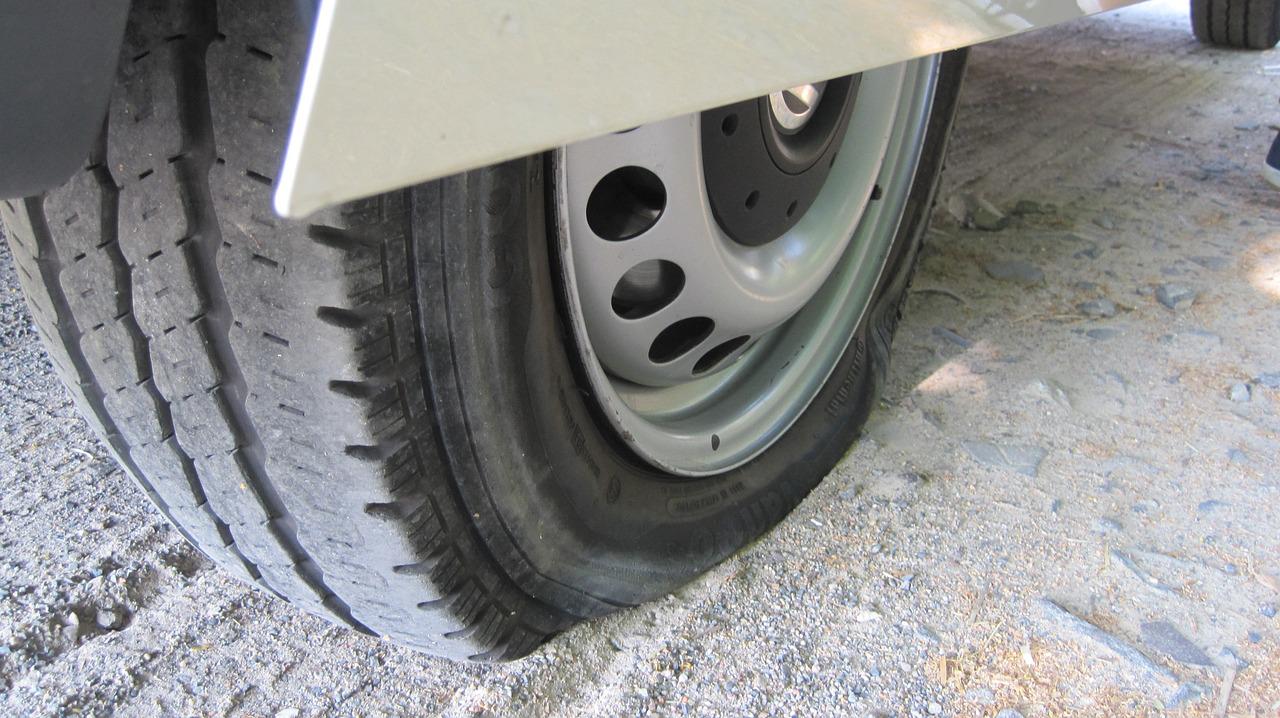 We have just moved our family 1200 miles from St. Paul, Minnesota, to Sugar Land, Texas. The reasoning for the move is perfectly fine. Though it is painful to leave friends of two decades, the opportunity to move from a blue state to a red state is itself a delight; I had long ago given up on the possibility that the people for whom I cast votes had a snowball’s chance in Houston of winning elected office. Also, the real reason for moving—the opportunity to work at a Catholic university that is serious about its mission—makes me happy. No more solicitation of woke “solidarity statements” addressed to me. There are myriad other good things, not least of which is the farewell I have bid to my snow shovels and the spinal torque communicated by them every winter, the pain of which was generally masked for a little while by the fact that my face hurt from the wind chill. Hello, Fahrenheit 68 in January!
Yet… moving is itself a pain to do. Sure, I moved cross country twice when I was in my twenties. But how much stuff did I have then? The first time was moving out to the Bronx when I was 23. I had enough stuff at the time to fill part of a station wagon. The second time was when I moved from the Bronx to St. Paul when I got married at 27. By then I had enough to fill a good bit of a pick-up truck. Not a lot of pain there. Much worse was moving a few blocks in the Bronx—a tale I’ll tell in another essay. But moving in one’s late forties with seven children? Better I had signed up for a swimming-with-millstones class.
Apart from our seven children and the massive number of books and papers two academics can amass, there are two main reasons for the extreme pain of such a move. They are, respectively, my wife and me. Another way to think about them, however, are two habits that we have. The first is perhaps more on the side of my wife. The second is one in which we are not-so-secret sharers.
To follow after my paternal and maternal great-great-great-great-great-great grandfather, allow me to blame the woman God gave me and start with that first.
***
It was twenty-one years ago on August 4 that I pledged my troth in front of God and a heap of witnesses in Our Lady of Perpetual Help Parish in Everett, Washington. As the reception in nearby Snohomish was nearing its end that evening, my mother-in-law hugged me and began to give some advice. One part I’ve never forgotten: “She’s like her father. You’ll have to get rid of things when she’s not looking.”
My wife, you see, is a packrat. No, not the kind who keeps things for the sake of keeping things. I have known such people.
One gentleman to whom I delivered the South Bend Tribune in my Hoosier childhood was such. A good man who volunteered to keep score at the Bremen High School basketball games for over fifty years, he had the eccentric goal of having the largest estate sale in the county after his own death. To that end, every single item he owned he kept. Some of it was in its original packing, some had been used. I saw it because in those days paper carriers collected the subscription money themselves. Older people, seeing an opportunity for company, would often ply the carrier in the house with cookies or a beverage. Mr. Packrat Extraordinaire would invite me back through the leaning towers of newspapers, books, magazines, tools, trinkets, kitchenware, and knickknacks to watch him procure the money or write the check needed to keep amassing the newsprint part of his collection. The library in the film version of Umberto Eco’s The Name of the Rose created a sense of déjà vu when I watched that film in high school. At some point in my childhood I realized that another house around the corner was also his. His lust for posthumous estate-sale glory required more than one house for satiation.
No, my wife, like her father before her, is one of those packrats who actually has a plan to use all that she amasses. The problem with this is that her ideas are quite often fairly reasonable and could work. Most of her plans for things she has accepted from friends, found abandoned in alleys, or purchased at the St. Vincent De Paul store could work. A great many do work. The boards we saved from someone’s alley? They did indeed end up fixing the sides of the decrepit wagon we dragged home from somebody else’s alley.
But a great many of these projects require the kind of bending of the space-time continuum that might be possible only if I were Superman and could circle the earth at a very high speed or if we were denizens of a spaceship traveling slowly through the vast reaches of the galaxy.
Thus, the collection of screws, nails, boards, trinkets, and doodads tended to grow in our house and garage at a rate that made old Mr. Packrat grow envious from beyond the grave.
***
Here, however, I must pause in my Edenic blame game, to note that it is now time to admit that I, too, not only stood by as the Serpent offered my wife the Apples of Potentially Useful Junk. I let her take them. And, well, I gobbled them up myself.
What habit did we share? I always had the vague sensation of what was wrong, but our friend Jill put it into words for us. There are, she said, two kinds of minimalists. The first kind of minimalist is a minimalist with regard to things. The Thing Minimalist does not want much but does want very particular, often expensive or complicated-to-acquire things.
The second kind of minimalist is a minimalist with regard to money. The Money Minimalist prioritizes not spending much money on things and will blanche at individual purchases with high price tags. Because the focus is on the dollar amount spent, however, Money Minimalists will find themselves amassing great heaps of things that were purchased for an incredibly low unit price because the bulk price becomes low enough to respond to Thing Minimalists looking on in horror by saying things such as, “When you divide it up, these were only 83 cents apiece!” Questions about whether one will actually use 150 pencil sharpeners or 10 thousand paper clips generally cause the Money Minimalists to blink and repeat the unit price.
In addition to liking Chinese food, long walks on the beach, and the works of Austen and Aquinas, my wife and I are Money Minimalists. So, even if she had no schemes to build any contraptions requiring years of extended space-time and the assistance of James Doohan’s chief engineer “Scottie” of the starship Enterprise, we would likely have approached our move to the Republic of Texas with a Texas-sized collection of stuff requiring disposal before we could actually get in the vehicles and drive.
Thus, the weeks before our move were a whirligig of trips to donate goods and dump things in the dump, a task made easier by my friend Dan’s multi-day loan of his Toyota Tacoma and my friend Justin’s trailer and Herculean aid. In the end, we simply didn’t have the time to sort everything out. More stuff than perhaps should have ended up in the dump. Even so, as we got ready to leave and were packing our vehicles, I heard a faint muttering in a Scotch brogue, “They cannae hold much more.”
We still had too much stuff. We will have to come back to Minnesota at some point this fall or winter to take what we had to leave in a storage locker on West 7th Street. I’m sure what’s there is all useful. If not, I’m sure it was procured at an incredibly low price.
All the same, as we start a new chapter of life, I have a new goal for us. From now on, we are to switch our minimalism from Money to Things. No more bargains involving slightly less quality but the requirement to count our wares in the thousands. No more acceptance of free things that will make our house less free. Henceforth and forevermore, we are no more in the market for good and plenty. We shall be procurers of the excellent and few.
To be honest, our move was minimally painful. We’re here in one piece and we are not insane—or at least, no more than we started out. If, however, we ever have to move again, I’d like to try a slightly different kind of minimally painful move.
The Imaginative Conservative applies the principle of appreciation to the discussion of culture and politics as we approach dialogue with magnanimity rather than with mere civility. Will you help us remain a refreshing oasis in the increasingly contentious arena of modern discourse? Please consider donating now.
The featured image is courtesy of Pixabay.






Welcome to Texas, and thank you for the thoughtful essay.
“Henceforth and forevermore, we are no more in the market for good and plenty. We shall be procurers of the excellent and few.” I like that.
Welcome to Houston! I hope you find St. Laurence or whichever parish you choose to be a good fit for your family. I struggle with an opposite problem of getting rid of sometimes too many things which frustrates my husband. Helping your family sort through all your things sounds like a lot of fun to me! God bless you in this new chapter of life.
Welcome to Texas! May God bless your family and work at St. Thomas University.