
The positive secular reviews that have come in for my off-Broadway verse drama, “Death Comes for the War Poets,” show the power of art to touch hearts even in enemy territory, in the secular art community of New York City, that most “woke” of communities in that most “woke” of cities. This shows the evangelizing power of beauty in action.
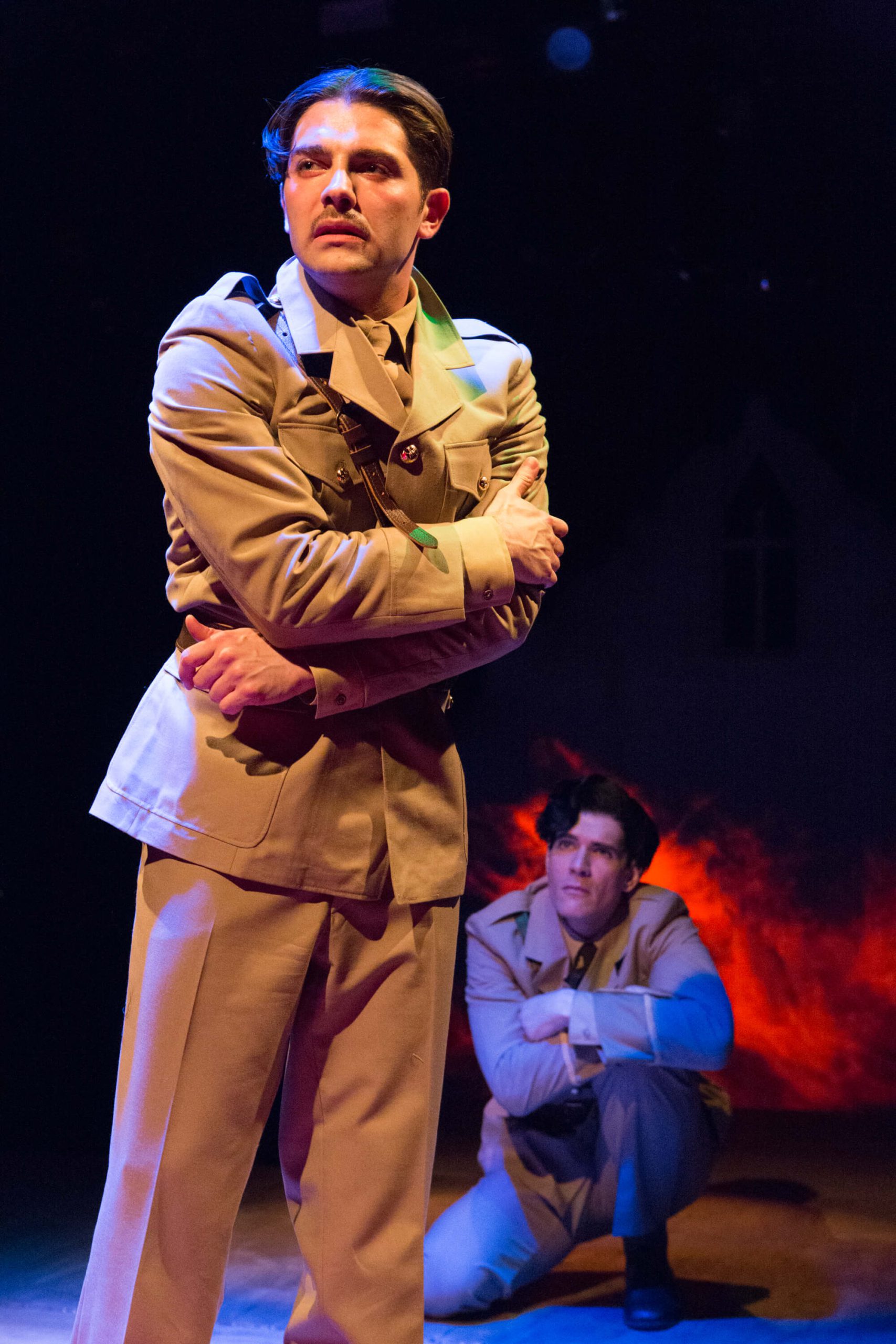 Back in 2017, before the covidious cloud descended like madness, the world might have seemed a saner and simpler place. It wasn’t. It was the same dark and dismal place it is today, a vale of tears and a land of exile, with only the same glimmers of lifegiving grace to lighten the load and enlighten the eye. In that year of 2017, Death Comes for the War Poets, a verse drama that I wrote to commemorate the centenary of World War One, was performed off-Broadway. To be more precise, the play was not simply a commemoration of the centenary of war but was also a celebration of the life, work and conversion to Catholic Christianity of the war poet, Siegfried Sassoon, who had died fifty years earlier, in 1967, and had been received into the Church ten years prior to that, in 1957.
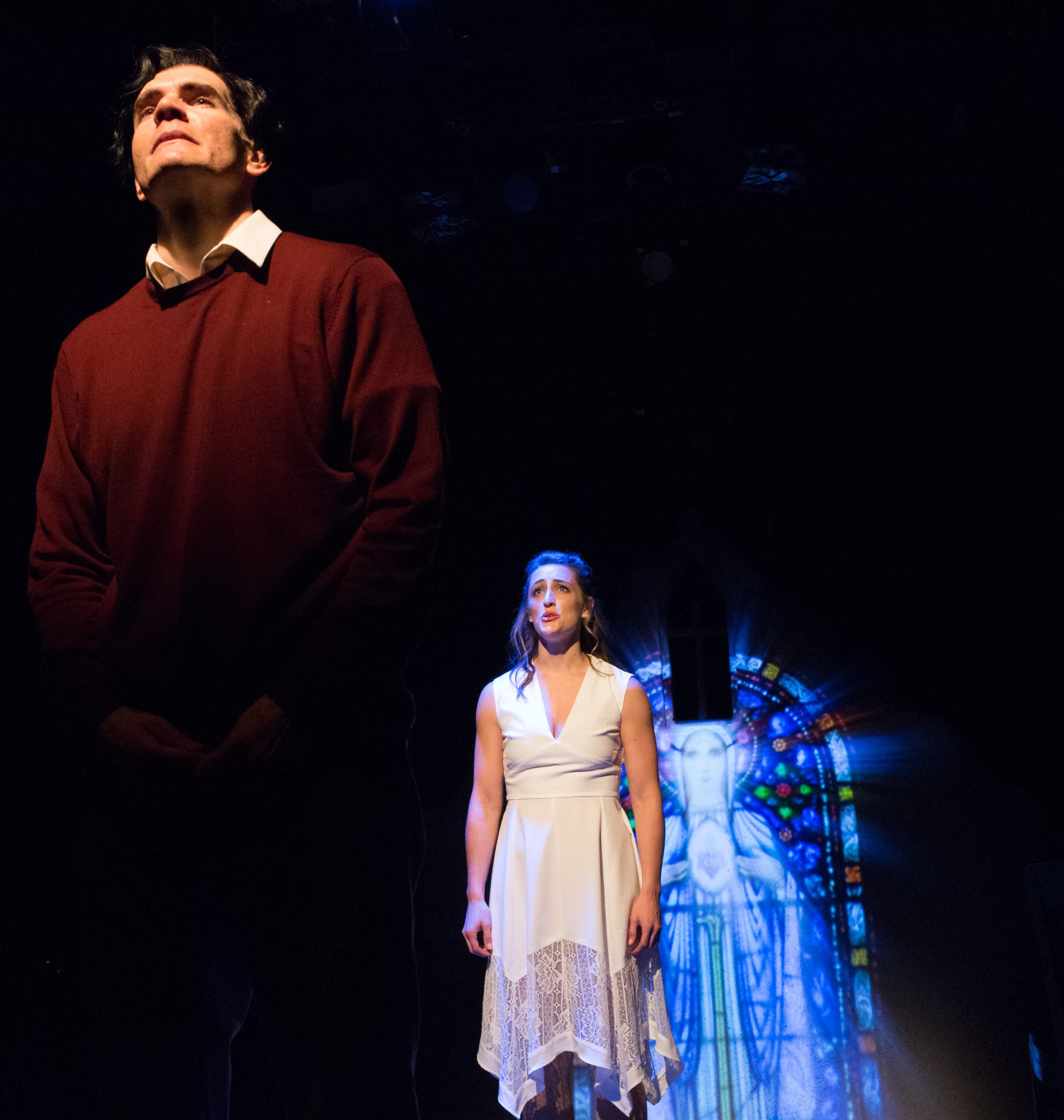
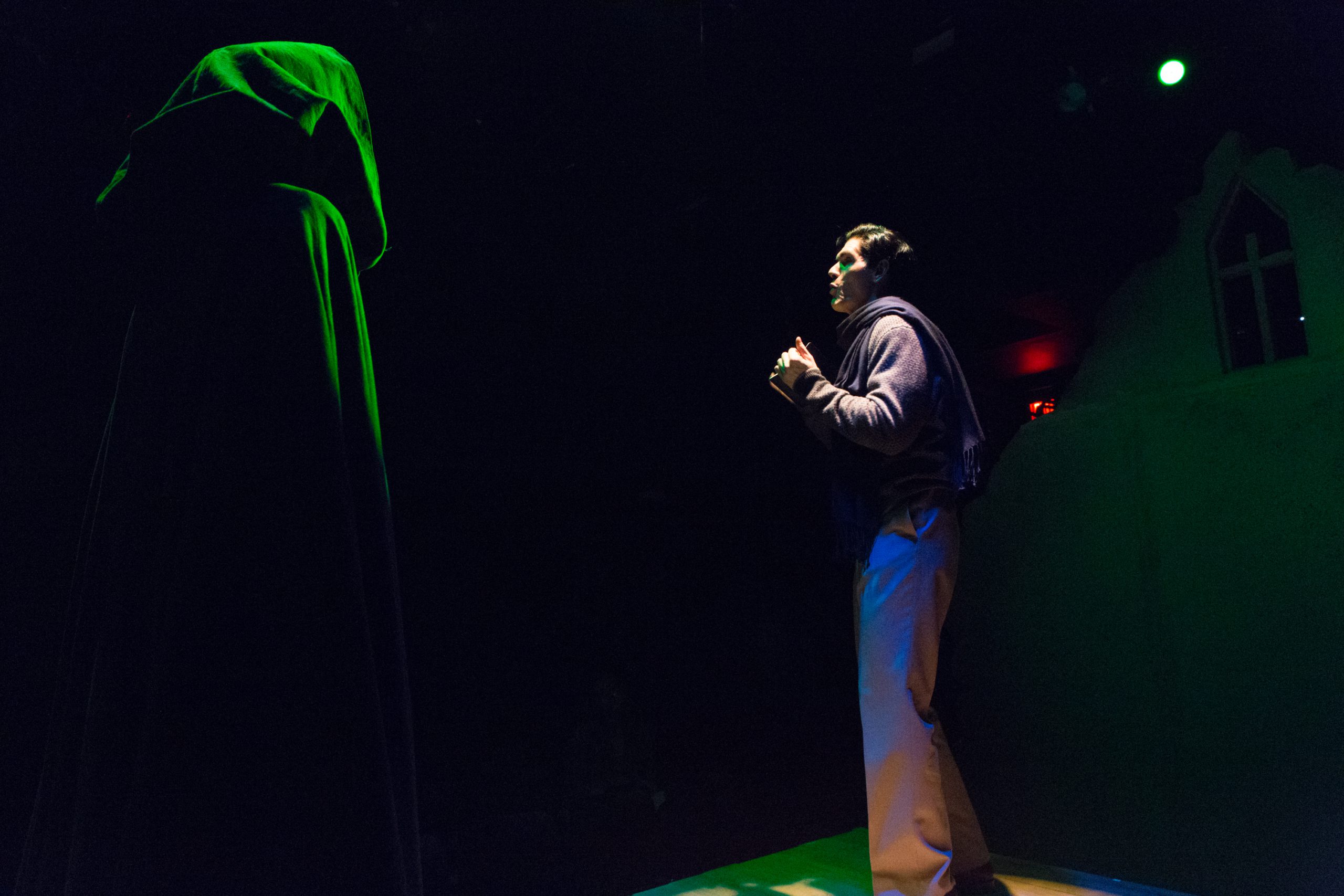
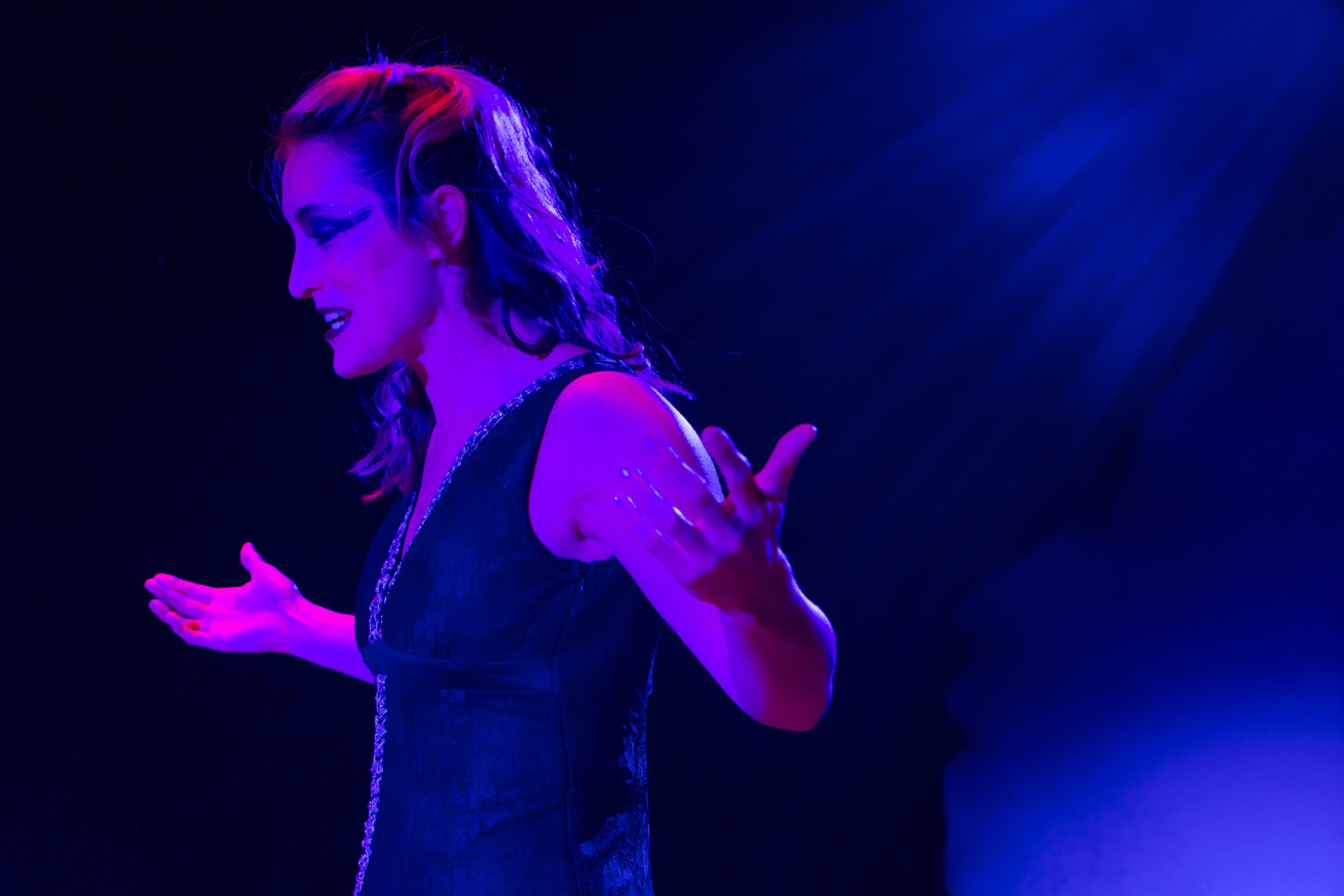 Sassoon is one of only three characters in the play. The others are Wilfred Owen, Sassoon’s friend and fellow poet, and the female figure of Death who, as the title proclaims, will come for both poets before the conclusion of the drama. It is Death herself who provides metaphysical depth to the drama on the stage, as it is death itself which provides metaphysical depth to the drama of the life we are all living. Her presence, both repulsive and yet seductive, serves to make the play a memento mori, reminding each member of the audience of his own mortality. As with Owen and Sassoon on the stage, each of us will meet Death sooner or later. It is sooner for Owen, who is killed in the final days of the war, and later for Sassoon, who lives to a ripe old age and is received into the Church as a septuagenarian. It is, however, the conversion of Death, rather than the conversion of Sassoon, which takes centre stage. In the daze of disbelief and the days of unbelief, she appears to Sassoon and Owen as a sadistic and seductive strumpet, dressed in black, desirous of having these men on her side of the grave so that she can embrace them more intimately, consummating her relationship with them. Following Sassoon’s embrace of faith, Death is transformed into a chaste and virginal saint, almost a Marian figure, or as Sassoon’s own personal guardian angel. Death Comes for the War Poets is, therefore, much more deeply about the conversion of Death than it is about the conversion of Siegfried Sassoon.
 Following its premiere at the Sheen Center, it received good reviews from the Catholic media, which was gratifying, but, and much more surprisingly, it was also well-received by New York’s secular media. Times Square Chronicles described it as “a beautiful demonstration of poetry in motion” and as “a unique telling of two World War I poets and soldiers, Siegfried Sassoon and Wilfred Owen, and their relationship to death.” Specifically, the reviewer did not shy away from the deeper spiritual vision of the play: “As he [Sassoon] finds peace in the shelter of the Catholic Church, we see his relationship with Death change. As Death, Sarah Naughton is mysterious, playful and omniscient. She is seductive in the sense that she knows no man can avoid Death’s kiss, and also forgiving of the fact that most men do not want it. Perhaps the strangest thing that she does is dance, this and her mesmerizing singing voice add a surreal and haunting feel to Death’s presence.” It should be added that Death is not merely haunting but is herself haunted by dead poets, whose words she utters as she speaks to the two living poets whom she prepares to receive into her arms. These ghosts include Thomas Gray, Gerard Manley Hopkins, T. S. Eliot, G. K. Chesterton, Rupert Brooke and Edith Sitwell.
The reviewer in the Times Square Chronicles concluded with a very positive summary of the play’s merit: “As a revelation of such visceral poetry, and as a commemoration of artists and soldiers, Death Comes for the War Poets is a moving theatrical piece of poetry in and of itself.”
Another surprisingly positive review was published by Front Mezz Junkies, an online theatre review:
A play about War, Death, English poets… filled me with a certain type of theatrical dread…. And seeing Death arrive in … traditional garb [and] hovering over Sassoon made my heart sink a wee bit…. I thought to myself that this was going to be one heavy dark piece of theatre. Then, much to my surprise, Death, played with exciting musicality and sprightliness by Sarah Naughton… transformed. Flinging herself quite dramatically into a whole other interpretation of what Death is and means. And it didn’t stop with that one provocative shift…. Writer Pearce and director Peter Dobbins… kept expanding and redefining as we watched Sassoon’s own expansion of mind and spirit. Death became something else before our eyes as Sassoon embraced a new pathway to understanding. Such relief, that this 70 minute play never just sat in its heaviness but danced and sang its way through the poetry of War and Death, never hitting us over the head with a dark melancholy. Ever surprising us with hope, love, and spectacularly beautiful imagery.
Much of this has to do with the fine directorial choices made by Dobbins, and the spirited performances by both Carriere… and Raver…. They brought life and dimension into their character’s tragedy and pain. Their confusion and desire to understand why such a horrific tragedy would or even could come to pass was as engaging and thoughtful as could be, way beyond the imagined concept that I was prepared for going in. Although I am neither a scholar nor a poetry-master, especially in the works of these two great writers, there was beauty in their misery and Sassoon’s final acceptance and embrace of his spirituality. Much of the language and poetry went over my head, as I noticed others laughing and nodding their heads in understanding and appreciation, but the overall themes and imagery of larks singing and guns a blazing were impossible to not take in. This is a piece filled with tremendous heart and earnestness. Not exactly what I had in mind on a lovely summer’s night, but as far as verse drama goes, Death Comes for the War Poets was an uplifting experience as we travel alongside Sassoon’s quest to make sense of his life, and life itself.
 I’ve quoted at length from these secular reviews of my play not to blow my own trumpet (honestly!) but to show the power of art to touch hearts even in enemy territory, in the secular art community of New York City, that most “woke” of communities in that most “woke” of cities. This shows the evangelizing power of beauty in action. It vindicates the faith in the dramatic power of the work of Father Peter John Cameron of the Blackfriars Repertory Theatre, who produced the play, and of Peter Dobbins of the Storm Theatre, who directed it. In addition, and this brings me to the reason for my revisiting Death Comes for the War Poets at this particular time, it expresses may excitement at Manalive Media Group’s plans to bring it to life as a movie filmed in real time on location along the upper reaches of the River Somme in Péronne, France, and streamed to historic theaters, art houses, and colleges and universities across the West, prior to its release in more conventional form. I will say no more on these exciting plans which, needless to say I am supporting wholeheartedly, except to direct those who are interested in learning more to MMG’s webpage on the project and to direct them to Douglas Dye, MMG’s co-founder and chief executive office who can be reached directly at douglas.dye@manalivemediagroup.com. My hope is that we can find the necessary investors to bring this powerful means of evangelization to movie screens. Please consider helping.
The Imaginative Conservative applies the principle of appreciation to the discussion of culture and politics—we approach dialogue with magnanimity rather than with mere civility. Will you help us remain a refreshing oasis in the increasingly contentious arena of modern discourse? Please consider donating now.
Images provided by the author.




Thank you for drawing my attention to this project. I read the reviews of the play. This would be stunning in film–and much needed.
I don’t have the funds or position to help, except for the currency and place of prayer. “May God bless this project and bring it to fruition.”
Dear Joseph—Thank you very much. It has been the honor of a lifetime to get to know you better these past years, and for Team Manalive to develop your dramatic verse tapestry as our inaugural project, a true storytelling innovation. Simply, what we’re doing is captured by the very words of Sassoon, who wrote:
“It must be hoped that some imaginative mind will one day give the world a dramatic masterpiece wherein our present shocks and disasters are set in proportion to human history as a whole, warning a less insane epoch against the errors which debase the kindlier arts of life-development and consign the wisdom of the ages to the refuse dump.” —Siegfried Sassoon, Siegfried’s Journey: 1914-1918 (1946)