
We do not see or know ourselves as idolators, but that is because we do not know ourselves well enough, or see how we honour our wayward needs, pamper our desires, sacrifice important things on the bonfire of our own vanities, or place ourselves unconsciously ahead of God and neighbour.
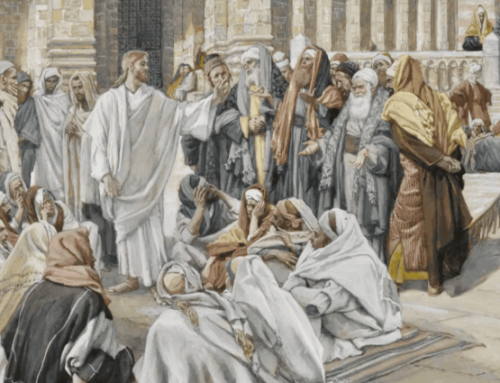
 Mark 12: 28-34 marks a contrast with the gospel of Tuesday. Then, Jesus was approached by some of the more dishonest scribes, looking to ensnare Him in questions. Today, we have one of the honest ones, sincerely wondering and pondering, thinking about God, questioning himself, wanting to discern honestly who Jesus was, and trying to hear God’s call in his daily life. Jesus meets him, responds to his question, and we hear in the scribe’s quiet reaction – well spoken, Master, what you have said is true – a sign that Jesus’ words hit home, went to the man’s heart, and spoke to his concerns not only about the Scriptures but, at least implicitly, about Him.
What did he want to know anyway? In essence, he wanted to know the most important commandment. Why? Because what we put first defines who we are and tells others who we are. This question could hardly have been a point of dispute among the scribes, but it was surely the right question to discern who Jesus was, or rather where He was from. For who but somebody on God’s side would put the love of God above all other things? My kingdom is not of this world. Jesus is not in search of Himself or in search of what He can accumulate for Himself, as we too often are. His heart is turned to the Father, rapt in an inner prayer of contemplation and love, even as He goes about His daily business. And the mood music of this inner attention is captured precisely by those words:
Listen, Israel, the Lord our God is the one Lord, and you must love the Lord your God with all your soul, with all your mind and with all your strength. […] and you must love your neighbour as yourself.
Note here also the first clause that lays emphasis on God’s identity first: the Lord our God is the one Lord. Some might say that this was emphasised because polytheism was the cultural context in which the Ten Commandments were given to Moses after the Jews had been living for so long with their Egyptian polytheist slave owners.
Yet there is something more here. Human nature in its sinfulness is inclined more or less towards dislodging God from His central place in our hearts and to squeezing in something else in His place, often ourselves, sometimes other things insofar as they serve our purposes. We do not see or know ourselves as idolators, but that is because we do not know ourselves well enough, or see how we honour our wayward needs, pamper our desires, sacrifice important things on the bonfire of our own vanities, or place ourselves unconsciously ahead of God and neighbour. Yet our call is not to be perfect in our own eyes, but to give our all to God so He can make us what He intends us to be. The Lord our God is the one Lord and so our lives must in some senses be a hunt for the idols that we consciously or unconsciously try to sneak into their honoured places in our interior castles.
These idols are obvious when they are central to some sin or other: greed or anger, laziness, or hostility. Yet they can lurk or hide away also in hidden corners where the light shines less: our unexamined needs, our wayward tendencies which we turn a blind eye to, those indulgences that provoke just a minor itch without ever really coming to the surface of our minds, but which corrode our efforts all the same.
Since loving God seems such a lovely and pleasant end to which to be called, you would think that we would run towards it without a trace of hesitation. And yet here we are, years after we have known our calling, still lingering in the doldrums of self-obsession instead of charging across the ocean of God’s goodness, sails filled with the winds of His love.
Lord make me know your ways, the ways to your heart, the ways to serve my neighbour, and the ways to break free of the slavery that my own wayward heart still hankers for.
The Lord our God is the one Lord: we must have no strange gods before him, and least of all, ourselves.
****
A recording of this gospel can be accessed here.
__________
Republished from The COLW Pilgrim Blog.
The Imaginative Conservative applies the principle of appreciation to the discussion of culture and politics—we approach dialogue with magnanimity rather than with mere civility. Will you help us remain a refreshing oasis in the increasingly contentious arena of modern discourse? Please consider donating now.
The featured image is an illustration of a line from the story “The Other Gods” by the horror fiction writer H.P. Lovecraft, “And as Atal shut his eyes and stopped his ears and tried to jump downward against the frightful pull from unknown heights, there resounded on Hatheg-Kla that terrible peal of thunder which awaked the good cotters of the plains and the honest burgesses of Hatheg and Nir and Ulthar. This file is in the public domain, courtesy of Wikimedia Commons.




Leave A Comment