
The very essence of our spiritual journey is in endlessly getting up no matter how many times we fall. It is in this, more than anything else, that the real quality of our love is measured.
 It should now be clear that the Primacy of Loving means that love is the prime objective of every moment of every day of our lives, by performing acts of love that gradually lead to a habit of loving, then to an inner disposition of loving that begins to permeate our whole lives. Begin each day therefore with the Morning Offering. Sometimes in a quarter of an hour of personal mental prayer you can make more acts of love, turning away from what your wayward self would prefer to indulge in, turning back to God, than in many weeks when you forget this important spiritual exercise. Practising acts of selflessness in formal prayer enables you to develop the habit of selflessness that not only enables you to love God inside of prayer but everyone else outside of prayer too. Prayer is for a Christian what a gymnasium is for an athlete where the muscles of your heart and not the muscles of your body are exercised, as they practise what is called “weight training” or “pumping iron”. The principle behind it is very simple. By repeatedly raising weights above your head in the gymnasium you are not just developing the muscles in your arms and legs, but virtually every other muscle in your body as well simultaneously, in one simple action. The whole person is not only made stronger and more powerful but is given powers of endurance beyond those who do not use this method. It is the same in the spiritual gymnasium which is prayer. What is prayer but the raising of the heart and mind to God? It is just like weight-training. Whatever form of prayer you are engaged in, whether it is saying your morning prayers, trying to meditate or even contemplating you will always experience distractions, so you will always have to keep raising your heart and mind to God time and time again. As a person is doing this then the muscles of the heart and mind are continually being exercised, gradually transforming the whole spiritual metabolism. Athletes know that this concentrated period of physical exercise will give greater ease and facility to whatever they do in the rest of their day. The same is true for the spiritual athlete. It is not only they, but others too, who will benefit from the love generated in prayer where the muscles of the heart are developed more quickly and more fully than anywhere else.
There is no time like the present. This journey can begin now in the “sacrament of the present moment” where alone time can touch eternity. Never be deceived into believing that our continual failures will disqualify us from this journey. God judges us by how best we try no matt er how many times we fall, for only he knows the power of our personal “demons” and how best we have tried to overcome them. Everyone begins life with a different hand of cards. Everyone begins with different parents or only one or even none. Even the best of parents are themselves psychologically handicapped by what nature and nurture has failed to give them, and what we therefore have failed to receive from them. But remember, God ultimately judges us by how best we have tried despite the odds that seem to have been against us from the beginning. And he judges those who have received so much and yet have given so little too. Only God knows the quality of our endeavour in comparison with what we were given at the beginning of our life, so only he can judge us at the end of it, by how best we have tried. He does not judge us by what the world may think that we have achieved, but what he knows we have achieved. There is an old Spanish proverb that says, “You see what I drink but you do not see my thirst.” God does!
Only Our Lady was conceived without sin, and that means that the rest of us were not. That is why we are continually falling, both inside and outside of prayer, whether we like it or not, and that includes the saints too. The difference between us and the saints is not that they did not sin and we do. They sinned just as we do. What distinguishes the saint from the sinner is the speed with which they get up after having fallen. The saints do not waste precious time pretending they do not sin, or making endless excuses, or blaming others for what they know only too well was their own fault. When passing through Purgatory Dante noticed that now at last people saw the truth, so they did not spend their time blaming others but only themselves, for the sins that separated them from God. The saints saw this even in this life. The moment they fell, they did not waste time blaming others but only themselves and so they sought forgiveness and began again, knowing they had sinned, but trusting in the mercy of God.
St Francis of Assisi said that the very moment a person sins must be the moment when he or she turns back to God, begging his forgiveness, immediately and without delay. He put it this way in his writings,
“A man is faithful and prudent when he is quick to atone for all his offences, interiorly by contrition, exteriorly by confessing them and then by making reparation” (Admonition XXIV).
Herein lies one of the main differences between the saints and sinners like us. Only too often people simply cannot face their guilt so they run away from God and hide, as Adam did in the Garden of Eden. When God called out, “Adam, Adam, where are you?” (Genesis 3:9), God knew exactly where Adam was: it was Adam who did not know where he was. He had lost his way trying to hide his sin and the guilt that shamed him. Sometimes we can spend years on the run because pride will not allow us to admit what we have done. Our inability to eat humble pie means that we can spend half a lifetime suffering from spiritual starvation. What is even worse than the pride that comes before a fall, is the pride that follows the fall, because it stops us from getting up, sometimes permanently.
So the difference between the saints and us is not that they did not fall and we do, but that they learned how to use their inevitable failures to their advantage. Saint Paul was the first to pen what is in fact the great secret of the spiritual life. It is simply this, that God’s power works most perfectly in human weakness, gradually transforming it. That is why no one can progress in the spiritual life without the humility to know their weakness and their need of the only One who can help them.
Whether in or out of prayer, the measure of spiritual advancement can always be determined by the speed with which we turn back to God from the distractions, the temptations, or the sins that try to turn us away from him. However, what all the saints discovered was that this speed can only be maintained with the help and strength from God. That is why, although they may have differed from one another in everything else, they were one in their daily commitment to prayer. They knew without a shadow of a doubt that without it they had no power to do anything of any real value or worth, let alone advance in the spiritual life. That is why each of them in different ways echoed the words of Saint Teresa of Ávila, whom I do not hesitate to quote yet again, when she said, “There is only one way to perfection and that is to pray. If anyone points in another direction they are deceiving you.”
The very essence of our spiritual journey, then, is in endlessly getting up no matter how many times we fall. It is in this, more than anything else, that the real quality of our love is measured.
Even if we do not have a pure and humble heart to begin with, a pure and humble heart will be God’s gift for those who persevere in following their heart’s desire, come what may. The most pernicious stumbling block to our spiritual advancement is the pride that follows our fall, which induces us to pack up and run away from God rather than face the truth of our sinfulness. Yet again then I insist that the difference between the saint and the sinner then is not that they never fail and we do, but the speed with which they seek forgiveness and begin again immediately no matter how many times they fall. This takes great humility and is how true humility is learned.
“When you stop falling then you are in heaven, but when you stop getting up then you are in hell. In the trying is the dying, and in the dying is the rising that draws us up into the mystical body of Christ and into his mystical contemplation of his Father” (Peter Calvay Hermit).
___________
This essay is chapter sixty-seven of The Primacy of Loving and is published here by gracious permission of the author.
The Imaginative Conservative applies the principle of appreciation to the discussion of culture and politics—we approach dialogue with magnanimity rather than with mere civility. Will you help us remain a refreshing oasis in the increasingly contentious arena of modern discourse? Please consider donating now.
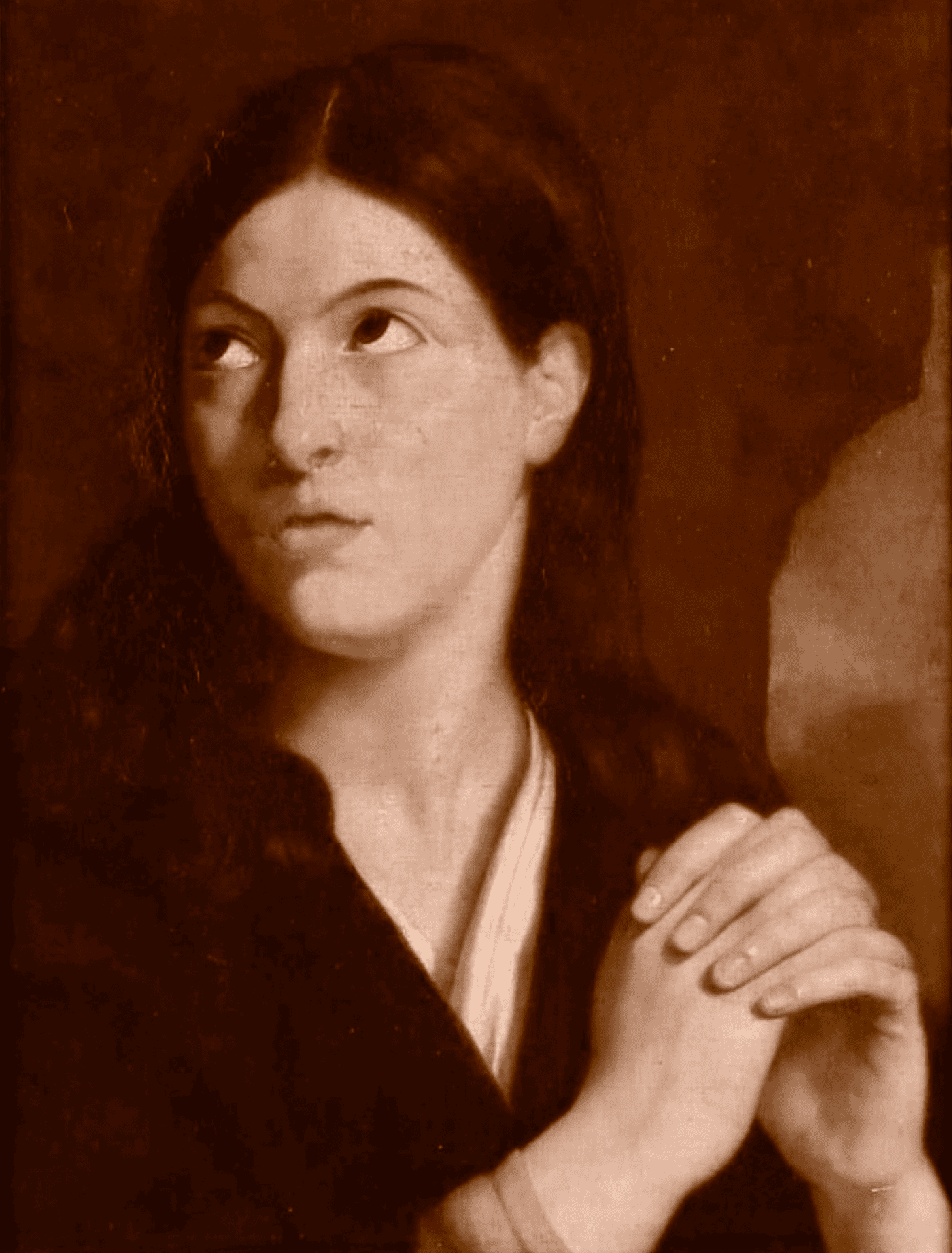
The featured image, uploaded by Kunstworm, is “Portrait of Praying Woman,” by Jan Willem Pieneman (1779–1853). This file is made available under the Creative Commons CC0 1.0 Universal Public Domain Dedication, courtesy of Wikimedia Commons.



Leave A Comment