
In his new book, “The Need to be Whole,” Wendell Berry offers us exactly the honesty, depth, and nuance that the American conversation about race requires, and in so doing has done us all a great service.
The Need to be Whole: Patriotism and the History of Prejudice, by Wendell Berry (528 pages, Shoemaker + Company, 2022)

For many Americans, the national conversation about race that has been taking place in the wake of George Floyd’s death has been long-overdue and necessary. But if it has been necessary, it has also been limited and imperfect, coming at a time when we Americans are ill-suited to conversation in general and especially ill-suited to conversation about difficult issues such as race that run deep and touch a nerve. For decades now our ability to engage in public discourse has been slowly declining, eroded by a number of factors, most of all the changing nature of technology and media. The result has been an increasing tendency to treat our political opponents not as healthy opposition but as enemies. This new mode of public discourse has little time for truth, but lots of energy for conflict. It has little patience with nuance but lots of strength for hate. Its method is to caricature those who think differently and to neatly classify people into right and wrong, virtuous and sinful, saved and unworthy of redemption.
In this climate, a discussion about anything important—let alone something as fraught as race—has become extremely difficult, whether at the kitchen table or on the debate stage. This is tragic, as our form of government depends on earnest conversation among people of good will. It is not an exaggeration to see our polarization as an existential political threat. For those who wish to resist this cultural moment, who wish to re-engage in conversation with friends, neighbors, and strangers for the sake of our communities, it is helpful to find role models and examples. The writer Wendell Berry is one such example.
Mr. Berry has been thinking about race for a long time. He first wrote of the issue more than fifty years ago in his short book The Hidden Wound (1969, with an 1988 afterward). Many books on race from fifty years ago can feel dated, but not Mr. Berry’s. It reads today with a relevance completely undiminished. Yet Mr. Berry had felt for some time the incompleteness of that effort, and in recent years he has taken it upon himself to revisit the topic, to think more deeply and completely than he had thus been able to.
The result, The Need to Be Whole: Patriotism and the History of Prejudice, clocks in at around five hundred pages, making it Mr. Berry’s longest non-fiction work. Although the book suffers from some of Mr. Berry’s characteristic wordiness (he admits to being a slow thinker, and perhaps the style reflects this in its length and somewhat plodding pace), it is an incredible accomplishment, a magnum opus which could be seen as the pinnacle of his long and distinguished career.
But for many, alas, it won’t be seen as the pinnacle but rather the nadir of his work, for his thesis will not be a popular one. As he explains:
“I do not think of the chattel slavery of the antebellum South as a problem that is isolatable or unique…. [The more I have observed], the more I have seen the old-time version of slavery as one of a continuum of violent exploitations, including other forms of slavery, that has been with us since the European discovery of America. It is so far our history’s dominant theme” (42).
Rather than discussing race in isolation, Mr. Berry argues that our history of prejudice needs to be placed in a larger context. Just as a man suffering from heart disease, diabetes, and obesity would do well to see the connection among his ailments, so too, Mr. Berry argues, we would do well to see our sad history of racial prejudice as one expression of the tendency to exploit—to use up and discard—our land, our animals, and our people. In this sense, though slavery was one especially egregious expression of the tendency to exploit, it has not been the only one. And while slavery and legal segregation have thankfully come to an end, other forms of exploitation have not. Indeed, they have become so ingrained in our culture, so normalized, that most of us don’t perceive them at all.
If the South’s embrace of slavery was one form of exploitation, the industrialism of the North was another. Indeed, one result of the Civil War was the expansion of Northern industrialism into the South. Today we accept the ubiquity of the industrial worldview unquestioningly, as if it were inherent in human culture itself. But Mr. Berry knows better.
Mr. Berry has spent his entire public life fighting industrialism, especially in his home state of Kentucky, where coal mining has decimated both the environment and human communities. For Mr. Berry, industrialism is best understood as a deterministic economic system in which the salient values are maximum productivity at minimal cost (13). In practice, this has always meant scorning the psychological value of work (and therefore trying to minimize it) while treating workers as disposable. Even more harmful is the manner in which the industrial ethos demands that only its preferred values of efficiency and profit deserve recognition, while other claims to value—such as the sanctity of life or the health of communities—are dismissed or marginalized. This is what gives the industrial worldview its deterministic character. Whether we like it or not, so its apologists argue, we have no choice but to accept that competition, degradation, and creative destruction are baked into the nature of things. It might be sad that industrialism leads to a degraded environment and the destruction of human communities, but there’s basically nothing we can do about it.
Mr. Berry is unwilling to accept such nihilism. As he has argued at length throughout his career, adopting the industrial mindset has deep and persistent consequences, both personally and communally. Personally we lose the autonomy that comes from providing for ourselves. When most Americans were rural Americans, owned land, and operated at least a subsistence home economy, it was possible to be poor but rare to be destitute. Mr. Berry cites civil rights activist John Lewis, quoting his mother:
“We never saw too much money,” she says, “but we always had what we needed. Meat, vegetables, everything, we raised that for ourselves.”
Such an anecdote might be dismissed as a cliché by some, though like many clichés, perhaps it has become cliché because it is largely true. Soup kitchens during the Great Depression were primarily urban phenomena. In exchange for the humble but secure agrarian lives most Americans had always lived until the 20th century, large numbers (both white and black) began opting for the tempting allure of city life, where they gained freedom from the so-called “drudgery” of the farm but in exchange for a sort of wage slavery, keeping them ultimately at the mercy of an employer and an hourly wage, to be withdrawn at will by the employer, whose goal, frequently, was not the well being of employees but the maximizing of efficiency and profit.
Moreover, the move from being known in the country to relative anonymity in the city led to the destruction of communities (both black and white). As Mr. Berry argues:
How far are we justified in regarding a “job”, even “a good job”, as appropriate compensation for the loss of a homeland, a home community….. How could we ever have been justified in merely forgetting a suddenly obsolete young black man raised on a Louisiana plantation, and leaving him merely free to migrate to some distant large city where he will have a good chance of dying, still young, by violence or a drug?
While urban neighborhoods for a time provided something of community, they too have largely faded away as the true anonymity of suburbia has replaced them. We are left with fractured, fragmented communities which no longer provide the foundation of meaning or the sense of belonging or home that they once did. In their place we now have well-known epidemics of despair, addiction, and poverty. For Mr. Berry, the bonds of community create the foundation on which personal human flourishing can occur, but these bonds have been severed by the uncompromising demands of the industrial worldview.
For many, such an analysis will seem hopelessly naive, nostalgic, and perhaps dangerous. But for Mr. Berry, this analysis is simply the truth as he has experienced it, however out of fashion or inconvenient a truth it might be. He has written passionately of such matters for more than 50 years and the problems have only gotten worse. As he writes in The Need to be Whole:
I feel that I am watching a long-worsening, extremely complicated emergency that is unnoticed by almost everyone. (10)
Mr. Berry has long recognized this crisis and has never given false hope that it is an easy problem to solve. He writes:
“Hope is hard to measure, and I am unsure how much hope is offered by this book. But the first step toward hope is to withhold approval from “solutions” that are hopeless. I can do that.”
But to the extent that hope is possible and any solution viable, Mr. Berry believes it lies in a commitment to know each other. In other words, the solution lies in the attempt to re-establish community, however imperfectly. In the book Mr. Berry relays hearing on the radio a story of yet another black man killed by police, and the author reports that his mind went to the thought,“They don’t know each other.” And he’s right. Community policing (my example, not his) would represent significant progress toward restoring something of what Mr. Berry is talking about. In speaking of his youth, Mr. Berry remarks that despite the shortcomings of his community, “all I am willing to attest without qualification is that we knew one another.” (129) He goes on, “only neighborliness entirely dissolves stereotypes.” (129)
But knowing each other and neighborliness require fighting the facile zeitgeist of oversimplification, which is why Mr. Berry is so damning in his critique of it. We can’t know each other if we don’t see each other, and we can’t see each other if we keep each other at arms’ length in tidy camps of winners and losers, the elect and the damned. Instead, knowing each other involves listening, and listening involves mutual forgiveness. Forgiveness involves letting go of injustice done to us and admitting that we have done injustice to others. Such vulnerability—such honesty—is opposed to almost every current in contemporary culture.
For a time it seemed ever so slightly possible. After the election of Donald Trump, Mr. Berry points out that certain journalists and intellectuals “all of sudden… discovered rural America.” Mr. Berry had hoped that such nascent curiosity would grow to familiarity, and familiarity to conversation, and conversation to understanding. But it was hoping for too much. Mr. Berry points out that the curious visitors didn’t much like what they saw. And taking the words of Paul Krugman as an example, he points out the elites think, in any case, that “the real America in which we live… is mostly metropolitan.” He continues to use Krugman’s own words against him:
“But it’s important to get real. There are powerful forces behind the relative and in some cases absolute decline of rural America—and the truth is that nobody knows how to reverse those forces.”
For a Nobel Prize-winning economist to claim such ignorance is breathtaking. One could start by recognizing the decline of rural America as a serious problem, worthy not of passing interest in a column but of sustained national attention, which has yet to be done. Mr. Berry has been offering solutions for decades, and ways to reverse those forces of decline certainly have been suggested, but such suggestions have fallen on deaf ears. Instead of a serious and sustained inquiry, Mr. Krugman suggests nothing can be done and more or less washes his hands of the problem. Thus, Mr. Berry and his rural neighbors are let down again.
A true attempt at getting to know someone begins with humility that there’s someone and something to learn about. Sometimes the things that need to be learned are painful, as many can attest who have sensitively listened to those who have spoken powerful stories in recent years about both racial prejudice and sexual harassment and assault. But Mr. Berry knows that relationships are a two-way street and require honesty, and to him the conversation about race has for too long been oversimplified and thus falsified. Without denying for a moment the painful truths about our history of slavery and continuing struggles with race prejudice, and without wishing at all to romanticize or falsify the past or present, Mr. Berry holds the conviction that our history of race does not consist of good guys and bad guys, saints and sinners. He knows there is no man so fallen as to be beyond redemption just as he knows there’s no woman so saintly as to be free of sin. This old humility—grounded in all the great religious faiths—has been replaced in our post-religious culture with a new sort of religion, that of the saved (those who think “correctly” about a whole host of hot button issues) and the damned (those who hold contrarian views). This new religion has no such humility and has begun to run amok. Mr. Berry, who’s always been drawn to but struggled with organized religion, is in favor of the old humility.
And so as a Kentuckian, the author feels a need to speak for Kentucky (and to some extent the South more generally), despite the evils of slavery and segregation, because it is not those awful institutions that tell the whole story of the South and her people. Mr. Berry gives many examples of setting the record straight. He includes the fact that as a border state (sympathetic to the South but prevented from seceding through military occupation and martial law), Kentuckians were allowed to keep their slaves despite the Emancipation Proclamation (which only applied to Confederate states). He points out that a great number fought for the South not for slavery but simply because their home had been invaded. He laments the erasing of history through the removal of Confederate monuments, even when the people they honored (such as P.G.T. Beauregard) fought for civil rights for freed slaves in the South. He wonders how a conquered people could reasonably be expected to welcome their former slaves as equals when they themselves had just been crushed by an invasion and decade-long military occupation. He laments the naiveté of expecting political equality when the entire South had been so utterly destroyed and a large percentage of the population, both black and white, were utterly impoverished. The list goes on and on.
But Mr. Berry gives the most energy and attention to Robert E. Lee. He explains why:
His significance for my purpose in this book is that he embodied and suffered, as did no other prominent person of his time, the division between nation and country, nationalism and patriotism, that some of us in rural America are feeling at present.
Although Lee owned slaves, he knew slavery was a great evil. Lee opposed secession. As one of the leading generals in the United States he was offered command of all Union forces, which he felt forced to decline. As he explained, “I cannot raise my hand against my birthplace, my home, my children.” To many of us, this might seem like a rationalization, though perhaps this is only because, unlike Mr. Berry, we’ve lost our attachment to place and home. If we are homeless individuals seeking autonomy and self-actualization, Lee was homebound, committed to his people and place, even when he thought they were making a terrible mistake.
Mr. Berry is especially interested in the way Lee demonstrates what the author distinguishes as patriotism as separate from nationalism. To Mr. Berry, patriotism is a love of hearth and home. It is defensive, personal, and particular. By contrast, nationalism is a love of country generally or abstractly conceived. It is theoretical and expansionist. The war Ukraine is currently fighting is patriotic as Mr. Berry understands it. The war Russia has instigated, on the other hand, is nationalistic.
But to Mr. Berry the war Lincoln instigated was also nationalistic. Although there would have been no war without the distrust and animosity bred by slavery, slavery did not instigate the war insofar as Lincoln made crystal clear that he would in fact preserve slavery in the South in order to save the Union. Lincoln instigated the war to preserve the Union—that is, to ensure the nationalistic goal of expansion and power. Lee, by contrast, was fighting a patriotic war, one to defend hearth and home. The tragic irony of this is not lost on Mr. Berry:
“It is an incongruity hard to bear that the South’s patriotic defense of its land and people, unique as it was in the history of white Americas, had to be also a war in opposition to the freeing and the freedom of four million black people.” (204)
But living with such incongruity is what mature adults do, however much we seem to have lost that ability as a culture. Wendell Berry challenges us to live with complexity, however uncomfortable it might be.
***
 The period after the war was not a happy one. Federal troops occupied the South for a decade, and though they temporarily ensured some level of fair treatment of the freed slaves, they did so with the point of a bayonet. The North always cared more about the Union than the slaves, and so eventually the occupation ended and the slaves were left to fend for themselves, facing Southern hatred and Northern indifference. Insofar as the South was impoverished and humiliated, Mr. Berry asserts, it strains the limits of credulity to think they could extend a hand to the former slaves under such conditions. Instead, the defeat of the South led to a racial animosity at least as bad and almost certainly far worse than that which existed during slavery. As a result, Mr. Berry asks, what was the net good of the war? This is an uncomfortable question to ask, but an essential one. In celebrating the freedom of the slaves we celebrate an unequivocal good. But we never ask at what cost. Mr. Berry makes us confront the cost: a decimated economy, over a million Americans (black and white) dead or wounded, an impoverished Southern population (both black and white), and the seed of further racial animosity that would last another hundred years. Defenders of war and exploitation rarely ask us to consider the net good of their actions, preferring instead to highlight only the benefits and never the cost. Mr. Berry knows better, that a real accounting must be done with all our actions. While he knows that alternative history is rife with difficulty and is loath to speculate, he also knows that the alternative is to accept that the past and present couldn’t have been different than they are, which is a lie. And so Mr. Berry has to wonder whether slavery could have ended and race relations improved in a less destructive manner had war been avoided, as had been the case in England and Russia. After all, most Southerners didn’t own slaves (less than 25% is a generally accepted estimate), and most who did owned fewer than five. The large plantation was the rare exception (the one-percenters of the time). Many, like Lee, considered slavery a moral and political evil and would have welcomed a plan for gradual emancipation. Is it inconceivable that an independent and prosperous South could muster the moral and economic resources for emancipation? Had Lee followed Davis as president of the Confederate States of America, could space for emancipation have emerged? We can never know, but we certainly can, and should, wonder.
For those who would dismiss Mr. Berry’s historical analysis, it’s impossible to dismiss his moving first-hand experience of the small Kentucky town of his youth. Born in 1934, Wendell Berry is just barely of an age to remember his town when it was populated by a significant black population. As he relates, “I don’t remember not knowing black people just as I don’t remember not knowing white people” (101). Because of school segregation (which he greatly laments, as it prohibited black and white children from easily becoming friends), Mr. Berry knew mostly the black adults who were employed by his family, as both domestic help and farmhands. The latter worked together on equal terms with the family and with the white workers, and Mr. Berry had a chance to observe, learn from, and befriend several of them. The influence of two in particular—Nick Watkins and Aunt Georgie Ashby—he wrote about at length in The Hidden Wound. The importance of Mr. Berry’s recounting of these relationships is not to suggest that all was perfect with race relations in Port Royal in the 1940s. He’s not blind or naive enough to not understand that the relationships couldn’t be ones of true equality in such a time and place. But he’s also not blind to what was good about that time and place, and he argues there was much good from which we can learn.
To begin, blacks and whites worked side by side (at least on farms) in a relationship of mutual understanding and respect. Those Mr. Berry befriended—who would take him hunting, give him a ride on a horse cart, teach him a small skill, or regale him with wild tales—were people whom he looked up to, admired, and loved. As a boy, he couldn’t understand why Nick Watkins couldn’t accept his invitation to his birthday party (he later left the party to visit Nick out back). Mr. Berry’s anecdotes are only individual stories from one life, but they are richly suggestive of the fact that in his childhood home, blacks and whites “knew each other.” The relationship was not one of equality, much to be lamented, but it was a relationship, which is more than many can say today, when the races are more segregated in a practical sense than during the days of legal segregation. While Mr. Berry is told in contemporary books that white people have “always been taught to fear black people”, he must protest because he was never taught to fear or hate black people but to show them respect and be considerate of their feelings. The true racism of his youth was directed not toward his black neighbors but to the Japanese during WWII, who were portrayed not as people but caricatures, wholly other, as if they belonged to a “different species.” The difference, he implies, is that of first-hand experience. It’s hard to hold a stereotype of a person when you know him first-hand.
He does not deny that some of his community considered blacks inferior. Many casually used the language of prejudice (though a good many also scrupulously avoided such language). Certainly those black Americans whose stories he relates might have very different recollections of those years. But Mr. Berry sees that in the town of his youth there was potential for continued progress because despite the prejudice there was familiarity and proximity and mutual need. Blacks and whites “knew each other,” which could be the catch-phrase of the book. And this knowing could have been the basis for further healing the wounds of the past. Instead, by the time time Mr. Berry was 20, many of his black neighbors had moved away, and the economy was changing in any case such that mutual farm help was no longer as necessary. Most moved North in the Great Migration, seeking relief from the racism of the South and the “drudgery” of farm work. But one has to wonder what was lost in addition to what was gained in such a move. After all, the racism of the North was not much better (if more subtle) than the racism of the South. And Mr. Berry stresses that the substitution of an hourly-wage factory job in the city for a rural, homestead economy is one of the most destructive substitutions any people can make. He cites his fellow Kentuckian, the black writer bell hooks:
“My maternal grandparents were radically opposed to any notion of the social and racial uplift that meant black folks would lead us away from respect for the land, that would lead us to imitate the social mores of more affluent whites.”
For Mr. Berry and hooks (and John Lewis’s mother cited earlier), the land is the key. That many in the past (especially in the South) knew this makes such a past worthy of study and contemplation, notwithstanding the serious shortcomings of such times. Too often today our approach to the difficult past is self-righteousness (If I were Thomas Jefferson I wouldn’t have owned slaves). But this places our own self-satisfaction above the truth, and it obscures all there is to learn from the complexity of our history.
Mr. Berry writes of the tragedy “that our history is so discordant, so mixed and tangled.” (207) More than anything, drawing our attention to this sad fact is at the heart of The Need to be Whole. Because history is so tangled, because life is so tangled, we need to resist the easy road of oversimplification and demonization. We need to know each other and we need to love each other. For Mr. Berry, if we care about slavery and its legacy, the last thing we should do is turn our sad history into a morality play with winners and losers, sinner and saints. Such might make us feel self-righteous and free of the guilt of our collective past, but it’s not helpful or productive. If we want to help and love black people we must love and help people, period. Otherwise the “side of love begins to hate the side of hate” (37) and then love becomes its opposite. Mr. Berry tells the remarkable story of civil rights activist Will Campbell who came to realize that perhaps in addition to suffering African Americans, he needed to reach out to the Klan as well, whose hearts, perhaps, were suffering even more. He offered them not “correction and and retribution but kindness…. He was an embarrassment and troublemaker, no doubt an actual follower of Jesus.” In our own time, we have the witness of Daryl Davis, who has taken time and trouble to do the same, even more remarkable because Davis is black.
Mr. Berry knows his book will cause trouble for him. He admits many friends tried to talk him out of publishing thoughts so out of line with the times. But, as he points out, his friends are really asking him not “for [his] most careful thoughts…. They are asking [him] to lay aside [his] old effort to tell the truth… in order to take up another art, which is that of public relations.” (214). Mr. Berry explains frankly, “I am not going to do that.” When one takes such a bold public stand, it’s helpful to have defenders. And so it’s greatly encouraging that bell hooks has also found much in Mr. Berry to elevate and praise. Her 2009 book belonging includes a reflection on The Hidden Wound and an interview with Mr. Berry. As she explains,
“Berry endeavors to show that dominator culture and the racial apartheid it upheld could not prevent intimacy from emerging between black and white folk. And he emphasizes that such intimacy also humanizes, even though it forms itself within a dehumanizing social framework.” (177)
She goes on to point out that the solidarity Wendell Berry showed as a boy in leaving his own birthday party to visit with Nick Watkins at the back door shows a “solidarity which is racism’s undoing” (179). In today’s hyper-sensitive, over-simplifying, and demonizing culture, the example offered by Mr. Berry and hooks is a balm to the soul. As Mr. Berry recounts when interviewed by hooks, “I think guilt and anger [are] the wrong motives for a conversation about race” (188). Amen. Such courageous and true words are just what we need in our current moment. In The Need to be Whole, Mr. Berry offers us exactly the honesty, depth, and nuance that the American conversation about race requires, and in so doing has done us all a great service.
The Imaginative Conservative applies the principle of appreciation to the discussion of culture and politics—we approach dialogue with magnanimity rather than with mere civility. Will you help us remain a refreshing oasis in the increasingly contentious arena of modern discourse? Please consider donating now.
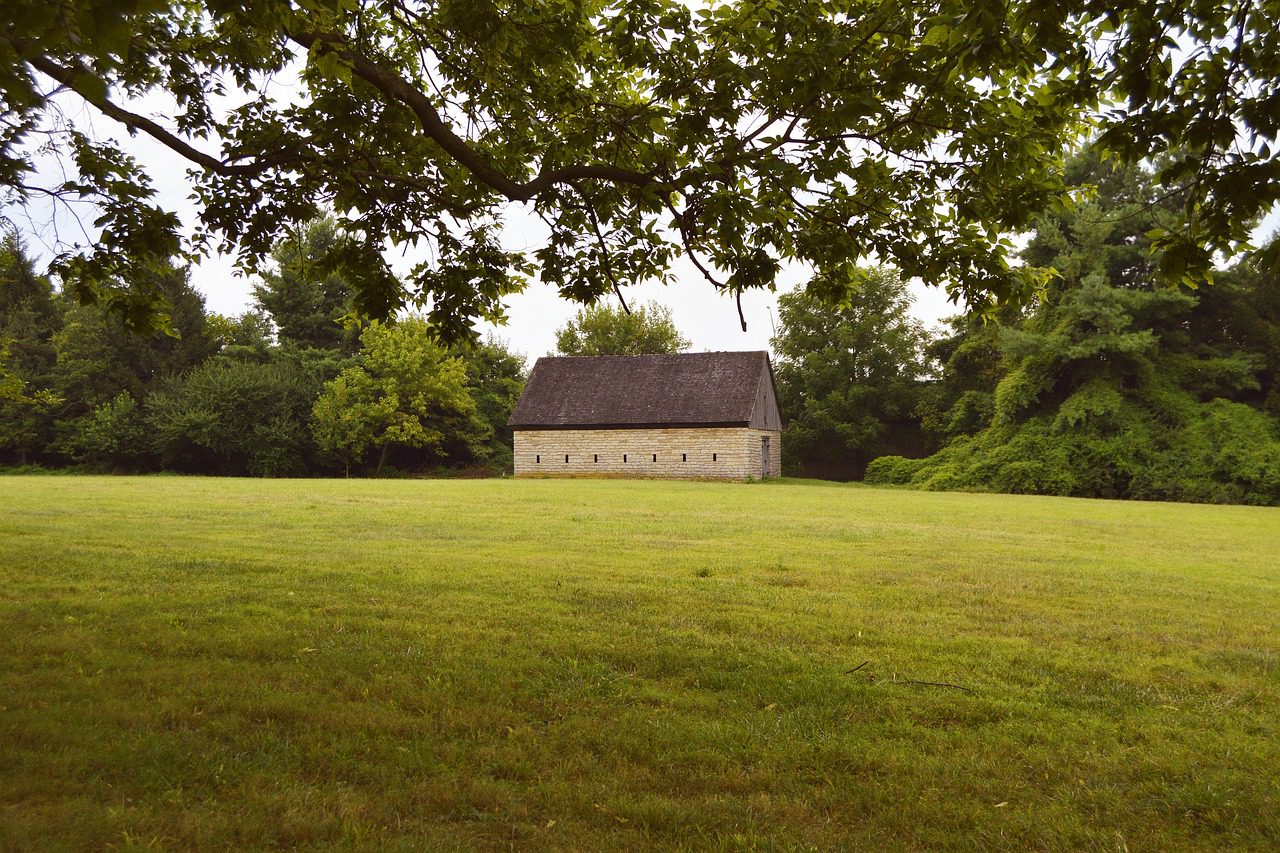
The featured image is courtesy of Pixabay.




Thanks for this review, Justin. I’ve been reading a few others over at FPR. And started the book earlier in the week when it arrived. Your review, and Berry’s works, tend to highlight the rather important, but forgotten, notion that one can learn great lessons from our elders, if we bother to listen.
And I appreciate his willingness to think slow (as well as your willingness to engage with his work).
Cheers,
Brian
When we realize three things, we can focus upon what is truly important:
1) The focus is driven by a political class who gain power by dividing us, and race baiters who seek to profit from it.
2) Slavery and caste systems were not, and are not, unique to our history or our society. If fact, our Christian ethic allowed us, as a country to advance in respect for the individual far more and before most.
3) Our country was the only state that resorted to civil war that ended in the eradication of institutional separation of castes of people, if we appreciate that insurrections have a different foundation and motivation than what happened in the United States.