
This year, may we replenish the cistern that nurtures the principles of the Declaration: the vessel that is our recommitment to the Christian faith, the sharing of the Gospel, and the denunciation of the enemies of Truth… the vessel, that makes the United States the last, best hope for mankind.
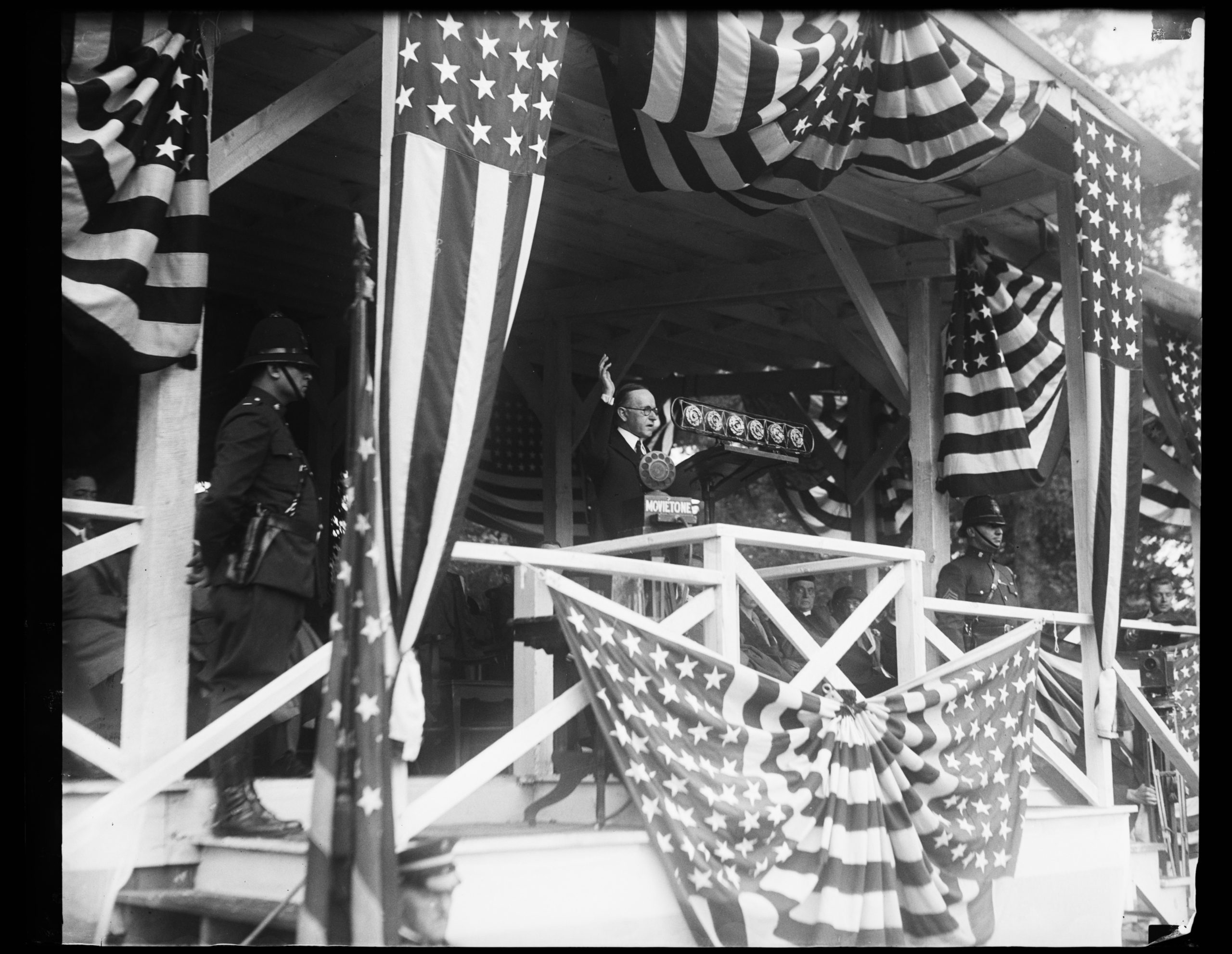 On July 5, 1926, Calvin Coolidge gave his Address at the Celebration of the 150th Anniversary of the Declaration of Independence in Philadelphia. As we celebrate the 250th anniversary of this great document in the coming months, I hope Coolidge’s words are renewed in the hearts of the people. In his speech, the president reaffirmed America’s founding principles and paid homage to the religious spirit of the common people that influenced them. Church attendance may have been low at the time of the signing of the Declaration—even lower than today—yet the American people of 1776 were a Christian people. And the Almighty Father, certainly, loved America. In 1926, Coolidge emphasizes that the religious spirit of the people is the “spring that watered” the founding principles. Without their source, these principles will wither and die. If the people forsake the Scriptures, their connection to the Declaration will be broken, and that which nurtures it will be dead. The president warns of a “pagan materialism,” an era of science, progress, and material prosperity that will occur if the religious habits of the people fall by the wayside, or worse still, if the children of the next generation are not raised in the faith. Coolidge declares rightly that the “things of the spirit come first,” that the future of the country lies in the Christian faith.
The ideas set forth on July 4, 1776, Coolidges, avers were generated from a zealous Christian people. The people proved, without a doubt, that mankind was free and capable of self-government, and a historic Christian revival fueled their convictions. As if proclaimed from Heaven, the United States was the great end to which mankind had come. “About the Declaration there is a finality that is exceedingly restful,” Coolidge said.
If all men are created equal, that is final. If they are endowed with their inalienable rights, that is final. If governments derive their just powers from the consent of the governed, that is final. No advance, no progress can be made beyond these propositions. If anyone wishes to deny their truth or their soundness, the only direction in which he can proceed historically is not forward, but backward toward the time when there was no equality, no rights of the individual, no rule of the people.
Surely, God made man to live freely and endowed him with rights kept safe from absolute despotism. The Declaration declared this, and it cannot be changed. And Coolidge realized that if the American experiment failed, the government that followed would be one that history had seen before, and the people would suffer for it. Either the United States endures, or history rolls backwards. As Hamilton said in Federalist No. 1, the United States embodies the chance to decide if societies can establish good government by reflection and choice, or whether we are forever destined to depend for our political constitutions on accident and force.
Coolidge recognizes that the Declaration was not the first time in history a people asserted their independence and desire to choose their own rulers. But the difference, Coolidge avers, is that the Declaration lays bare the principle of equality. Never had this principle been included in an official political statement of any country. For the first time in history, men were deemed equal from birth. Gone were the royal families of old and the aristocracies of the ancient world, and in the new world man unclasped the shackles of ignorance and took control of his life with reason and faith.
The equality of man was transcendent and immune from the threats of the mortal world. Coolidge states, “It is but natural that the first paragraph of the Declaration of Independence should open with a reference to Nature’s God.” The presence of God in the Declaration is not a coincidence. It is very much intentional. The people of 1776 had to accept the principle of equality to be both Christians and Americans. Just as there is neither Jew nor Gentile, neither slave nor free, male nor female, they were all one in Christ Jesus and one people of the United States. The Gospel was embedded deeply in the hearts of the people, and the men of the Continental Congress reflected the people’s ardent, fervent spirit in the founding documents. As the history of the nation has unfolded, the Declaration and its Source within have become the standard to which this great country has held.
Coolidge perhaps predicts the oncoming crisis of modernity in seeking to remind the Americans of 1926 about the Americans of the founding era. He proclaims,
They [equality, liberty, popular sovereignty, the rights of man] have their source and their roots in the religious convictions…. We hold that the duly authorized expression of the will of the people has a divine sanction….The real heart of the American Government depends upon the heart of the people.
And so it is that the heart of the people guides the fate of the country. The religious spirit of the American people of 1776 remains essential to the life of the Republic lo these 250 years. This is the year of the Semiquincentennial of the United States. I will digress for a moment and say that while Jefferson set the precedent of allowing “all men to be free to profess, and by argument to maintain, their opinions in matters of religion,” we Americans of 2026 avow that the United States was, is, and continues to be shaped by Christianity. We seek to identify, proclaim, and preserve Truth for generations to come.
Truth will not prevail if left to herself. It prevailed 250 years ago because of the courage in the hearts of the people. Coolidge gave all honor, praise, and respect to the presence of the Divine. This year, may we replenish the cistern that nurtures the principles of the Declaration: the vessel that is our recommitment to the Christian faith, the sharing of the Gospel, and the denunciation of the enemies of Truth…. the vessel that makes the United States the last, best hope for mankind.
___________
The Imaginative Conservative applies the principle of appreciation to the discussion of culture and politics—we approach dialogue with magnanimity rather than with mere civility. Will you help us remain a refreshing oasis in the increasingly contentious arena of modern discourse? Please consider donating now.
The featured image is “President Coolidge at podium” (1928) [detail], and is in the public domain, courtesy of Wikimedia Commons.





Leave A Comment