
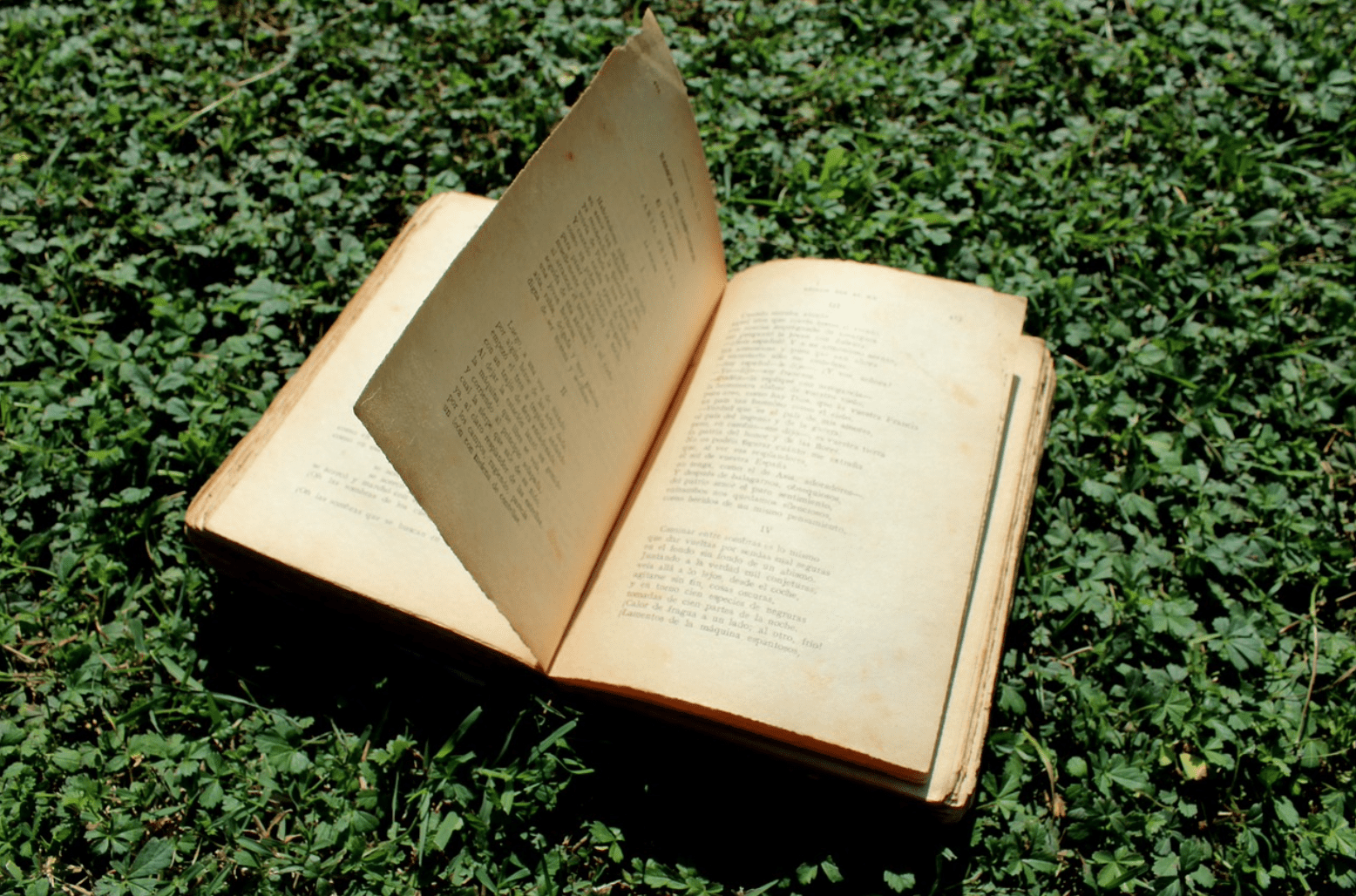
Poetry is the still, small voice of calm in a world gone mad with distraction. It finds us space to breathe. It allows us time to think. It takes us out of time and space into the realm of metaphysics. It takes us from the transient things to the permanent things, from the things of time to the things of eternity.
Anna Szyda interviews Joseph Pearce
 1. In your writing, you have dealt with such literary giants as Oscar Wilde, Aleksandr Solzhenitsyn and J.R.R. Tolkien, to name but a few. Am I right in my perception that what primarily interests you in a writer is his / her religious background?
I am interested primarily in the triune splendour of the good, true and beautiful. These transcendentals are triune, which is to say that they are unified and inseparable; they are the manifestation of the one Triune God.
God is Love, Logos and Poet. He is the Good, the True and the Beautiful. This was glimpsed by Plato and Aristotle and revealed by Jesus Christ in his revelation of Himself as the way, the truth and the life. The way of goodness is caritas; the truth is Reason, the Logos, the ratio of reality, the Truth Himself; and the life is the beauty inherent in poesis, which animates and unites the beholder of beauty and the beauty of the thing beheld. I am interested in the writers you mention in the light of these transcendentals.
Aleksandr Solzhenitsyn was a pilgrim. He took the path from hatred to love and from the atheist lie to the Christian truth. He manifested this love and told this truth through the creation of beautiful works of literature. He agreed with Dostoyevsky’s maxim that beauty can save the world. Beauty exorcizes hatred, lies and ugliness. It shows that hatred can be healed with love, made manifest in merciful forgiveness; it shows that falsehood can be exposed with the light of truth; it shows that even ugliness can be transfigured if it is baptized in the blood that poured forth from Christ on the Cross.
Solzhenitsyn saw that suffering itself could be beautiful if it brings the one who suffers to goodness and truth. He was grateful for his arrest and imprisonment because it saved him from living the Marxist lie. He was grateful for his suffering because it brought him to his knees. It brought him to the foot of the cross. He shows this with great beauty in works such as One Day in the Life of Ivan Denisovich, Cancer Ward and In the First Circle.
Tolkien wrote in a different genre but he reflects the same truths as those to be found in Solzhenitsyn’s works. He shows the power of the darkness of sin but he also shows us the even greater power of redemptive suffering. He shows us, with the light of love and in the hopeful words of Samwise Gamgee, that “above all shadows rides the sun”.
As for Oscar Wilde, he had a lifelong love affair with the goodness, truth and beauty of the Catholic Church but he was an unfaithful lover. He flirted with wickedness, lies and ugliness before being brought to his knees in self-inflicted suffering. It is then that he thanked God for breaking his heart of stone because “how else but through a broken heart may Lord Christ enter in”.
2. In your book, Literary Converts, you set out to examine the extent to which an author’s faith shapes his writing. I was wondering if you could expand on that.
As a convert myself, I have always been fascinated by other converts. This fascination is due, in part, by a realization that no two paths are the same. It might be true, figuratively, that all paths lead to Rome, or at least all true paths, but there are many different paths leading to this same destination. There are, in fact, as many different paths as there are different people. And yet each pilgrim, on his individual path, is helped by his fellow pilgrims. Mixing metaphors, it is true that no man is an island. We need each other. There is no love of God in the absence of the love of neighbour. I was aware, for instance, of the influence of Chesterton, Belloc, C. S. Lewis, Solzhenitsyn, Newman, Aquinas and others on my own path to Rome. I would never have reached the Eternal City if my path had not been lit by the goodness, truth and beauty of these fellow pilgrims. It was this realization of the indebtedness of every convert to other pilgrims which animated and motivated my writing of Literary Converts. I wanted to penetrate to the depths of the Catholic Literary Revival in the twentieth century in a quest to understand this network of minds which were energizing each other. I also wanted to see how these minds were being energized by grace, as well as by each other. I wanted to see, in the words of the book’s subtitle, the “spiritual inspiration in an age of unbelief”.
3. You are also known as a distinguished poet. How do you envisage the role of the coming generations of poets?
Poetry is the still, small voice of calm in a world gone mad with distraction. It finds us space to breathe. It allows us time to think. It takes us out of time and space into the realm of metaphysics. It takes us from the transient things to the permanent things, from the things of time to the things of eternity. It takes us to goodness, truth and beauty. Poetry takes us from the five physical senses to the five metaphysical senses: humility, gratitude, wonder, contemplation and dilation.
The true poet begins on his knees in humility, asking for the assistance of his Muse, the gift of inspiration. Such humility is inseparable from the sense of gratitude for existence which opens the eyes in wonder. It is only with eyes wide open in wonder that we are moved to the contemplation necessary for the dilation of the mind and soul into the fullness of the splendour of truth. This is true of all poesis, all artistic creativity and the active engagement with it, not merely to the writing and reading of poetry in the strict sense of the word.
Tolkien wrote that nature is a study for eternity for those so gifted. Poets are those so gifted. They dance to the music of the spheres. Those who refuse to dance are dead. They have no music in their hearts and therefore no life in their souls. They are the walking dead. Shakespeare says it better than I:
The man that hath no music in himself,
Nor is not moved with concord of sweet sounds,
Is fit for treasons, stratagems, and spoils;
The motions of his spirit are dull as night,
And his affections dark as Erebus.
Let no such man be trusted. Mark the music.
4. What are you working on at the moment?
I have recently finished a history of Christendom in which I devote a separate chapter for each of the twenty centuries since the time of Christ. It was inspired by the words of Pope Benedict XVI that “the only really effective apologia for Christianity comes down to two arguments, namely the saints the Church has produced and the art which has grown in her womb”. This, he added, was the “witness … borne to the Lord by the splendor of holiness and art”. My book looks at the time-woven tapestry of the good and the beautiful of which Pope Benedict speaks, as well as the evil woven throughout history by those in every generation who choose pride over humility and who owe their allegiance to the City of Man, not to the City of God.
As for works in progress, I’m finishing up a series of brief reflections on fifty great works of literature, which I hope to publish as a book, and another series of brief spiritual reflections for men on great literature. In the spring, an anthology of children’s poetry, which I’ve selected, entitled Poems Every Child Should Know, will be published. It will be a companion volume to the earlier anthology, Poems Every Catholic Should Know.
In addition to these multifarious book projects, I write regular essays for several journals and am teaching online and travelling widely on the lecture circuit. I continue to edit the St. Austin Review, a Catholic cultural journal which I’ve edited since it was launched in 2001. And last but not least, I record three podcasts every week for the Inner Sanctum of my personal website, jpearce.co. I’m keeping busy!
This interview was first published, along with translations of three of Joseph Pearce’s poems, in the Christmas issue of the Gazeta Obywatelska magazine in Poland. This is the interview’s first publication in English.
The Imaginative Conservative applies the principle of appreciation to the discussion of culture and politics—we approach dialogue with magnanimity rather than with mere civility. Will you help us remain a refreshing oasis in the increasingly contentious arena of modern discourse? Please consider donating now.
The featured image is courtesy of Pixabay.





I count it good fortune to know Professor Pearce personally. From our first interaction at the CS Lewis Foundation Symposium in 2011 to the annual Chesterton Conferences, he is and remains a figure of goodwill, true Christian cheer, and profound intellectual depths. Cheers, Joseph!
I appreciate reading Joseph’s thoughts. He certainly has a poetic turn of phrase even in his prose, and will now explore some of his poetry