
 Something is stirring underground. Something exciting. Something new. Something invigorating. Refreshing. Needed. The something to which I refer is a new Catholic cultural revival, which is being made manifest in the visual arts, music and most especially in literature.
Last week, in the first of these “notes from underground”, I focused on murder mysteries being written by contemporary Catholic authors. This week, switching genres, I’d like to direct the spotlight onto contemporary Catholic novelists who are writing what might be called contemporary realism.
Defining our terms, contemporary realist fiction is set in the present day or the very recent past, the past of living memory, and refrains from the depiction of anything fantastic, magical, miraculous or overtly supernatural. It is, however, realistic, not materialistic. It is animated by the philosophical realism of Christian philosophy, not the philosophical materialism of the atheist or relativist. It is set in a cosmos in which reality is not only physical but metaphysical; a reality in which goodness, truth and beauty are not merely human constructs but are transcendentally real. Such realism is the realism of Plato and Aristotle, and of the medieval scholastics; it is a realism that understands that reality is both natural and supernatural. Yet this fictional realism eschews the physical manifestation of the supernatural, preferring instead to have it subsumed within the narrative as a perceived but invisible presence.
A perfect example of classic contemporary realist fiction is Brideshead Revisited by Evelyn Waugh. In his preface to the novel, Waugh describes its theme as “the operation of divine grace on a group of diverse but closely connected characters”. This grace is present in the lives of Waugh’s characters in a way that he believed was also present in the lives of his readers. It reflects the invisible and providential presence of God. Its presence presents possibilities for the growth in virtue through the presence of potentially redemptive suffering, prompting spiritual conversion. Its absence, through the sinner’s rejection of it, results in self-inflicted misery for the sinner and the affliction of misery upon others.
Having cited Brideshead Revisited, a classic of the genre, let’s now look at some contemporary realist fiction being written today.
 Glenn Arbery’s brace of novels, Bearings and Distances and Boundaries of Eden, are so unflinchingly grim that one finds oneself grimacing on every page. They are not for the faint of heart, or the squeamish, or those with puritanical sensibilities. They plunge beneath the surface of contemporary culture, probing behind the grotesque mask of modernity’s seductive smile of hedonistic self-satisfaction, exposing the death culture’s grinning skull, the sneer of cynicism which lies behind its lies. Arberry’s characters in Bearings and Distances are so obsessed with sex that they let their lust lead them by the nose until everything they touch stinks with its ugly consequences.
 Fiorella de Maria is probably best-known for her murder mystery novels but she has also written one excellent work of contemporary realism and has co-written another. We’ll Never Tell Them is set in the twenty-first century with regular flashbacks to an earlier time, a century earlier, in stories told by an elderly dying man to the young woman who is nursing him. From the lips of the dying man, the young lady receives the kiss of life in the learning of priceless lessons about why life is worth living and why people are worth loving. The other novel, co-written with K. V. Turley, takes the reader to Hollywood where a struggling woman journalist, grieving the loss of her husband, is sucked into the dark and diabolical world of the aging actor, Bela Lugosi, best-known, or rather only known, for his portrayal of Dracula. Lugosi is so obsessed with the character he played that he is almost possessed by him or by it. As the young woman interviews him, Lugosi seems to get inside her head, even as Lugosi’s own vampiric alter ego has gotten inside his head. Is he possessing her psychologically, even as he is himself psychologically possessed? Is he seeking to suck her into the abyss in which he finds himself? If so, how can she escape? How does she escape? Does she escape? These are for the reader to discover, not for the reviewer to reveal.
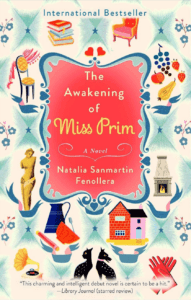 A novel of another ilk, albeit still fictional realism, is The Awakening of Miss Prim by Natalia Sanmartin Fenollera. A surprising international bestseller, the eponymous protagonist stumbles into a small village, the inhabitants of which challenge her urban and modern presumptions and prejudices. As Miss Prim gets to know people who have chosen a better life, indeed the good life, away from the city’s madding crowd and its fatuous fads and fashions, she is awakened into a world of wonder in which even the mundane becomes mysterious.
Such is the stir beneath the surface that we have not even scratched the surface. There are so many other good works of grassroots realism, that this listing of them will need to be continued. More soon but, in the meantime, why not play your part in the grassroots revival by purchasing some of these books? Better still, purchase them directly from the publisher, not from a globalist monster. In doing so, you will be supporting these writers and their publishers and will also be contributing to the renewal and revitalization of culture from the grassroots up.
The Imaginative Conservative applies the principle of appreciation to the discussion of culture and politics—we approach dialogue with magnanimity rather than with mere civility. Will you help us remain a refreshing oasis in the increasingly contentious arena of modern discourse? Please consider donating now.







Thank you for this series of posts and thank you in particular for introducing me to Father Gilbert!