
Just as any great ball players should study the form and technique of past athletes, so every Christian, and especially every minister commissioned to preach the Word, should study the Fathers of the Church. We can spend time in their company through their writings.
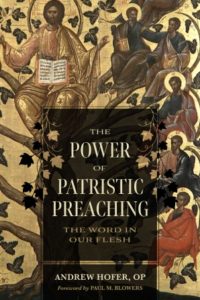
The Power of Patristic Preaching: The Word in Our Flesh, by Andrew Hofer, O.P. (The Catholic University of America Press, 2023)
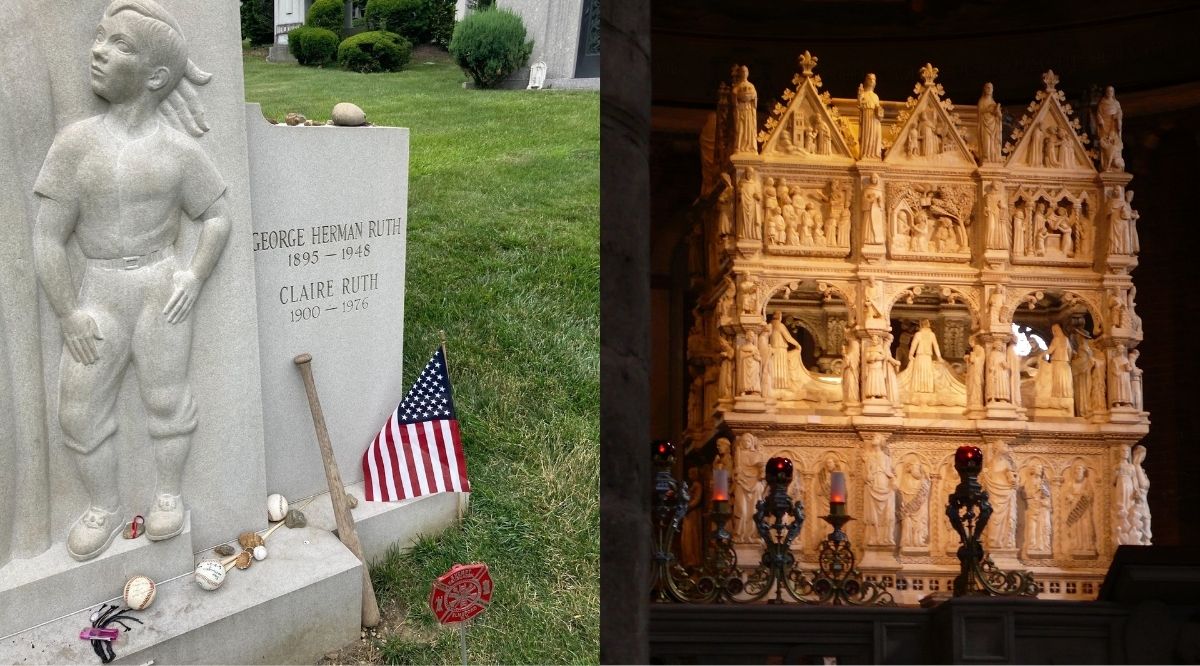
 Every sport has its heroes. These heroes sometimes become legends: celebrities who continue to impress and inspire future athletes for decades. If you visit Babe Ruth’s tomb in Hawthorne, NY, you can see something of the long-term impact of this baseball legend. The Bambino died over seventy-five years ago, but fans of the man and this contemplative, American sport still leave baseballs and bats at his grave as a tribute to this MVP.
Preaching is not a sport. But, like sports, preaching has its heroes: those who proclaimed the Gospel of Jesus Christ with unique power and efficacy. Many of these heroes are also saints. Some of these saints are preaching legends, in the sense that they are perennially relevant and inspiring. This category (“legendary preaching saints”) includes, in a privileged and foundational way, the Church Fathers, whose homilies, sermons, and guidance continue to sustain the Church in her evangelical mission.
Just as any great ball players should study the form and technique of past athletes, so every Christian, and especially every minister commissioned to preach the Word, should study the Fathers of the Church. We can spend time in their company through their writings.
Father Andrew Hofer’s The Power of Patristic Preaching drafts an all-star lineup of seven preachers from the first six centuries of Christianity. The book, which identifies in each author’s preaching a particular moral emphasis, is also totally Christocentric. This is the significance of the subtitle: The Word became flesh, and by his grace he manifests his Incarnation through the earthly lives and words of his saints, whom he fills with divine life.
The unifying themes of the book—incarnation, deification, and proclamation—also united these seven very different authors from East and West, whether they wrote in prose or poetry, Latin, Greek, or Syriac. For thinkers as diverse as Gregory the Great and Ephrem, Augustine and John Chrysostom, one faith united them in the Incarnate Word, who became the Son of Man so that we might become sons of God. This faith they preached by their lives and by their words.
 One of the great benefits of this study is that it offers readers a robust exposure to many of the highlights of these authors’ preaching. Given the length of the book, it can only be an introduction to patristic preaching, but it is one at the same time accessible and thorough. The reader should leave with a sense of awe at these authors’ comfort and familiarity with Sacred Scripture, their devotion to revealed truth, and their zeal for the conversion of souls—including for the further conversion of their own souls. In a series of unexpected but fascinating parallels, Fr. Hofer introduces each patristic author by quoting a contemporary Christian preacher. The implicit comparisons with well-known Catholic, Orthodox, and Protestant preachers bring to light the primary insight of each Father.
Although scholars and theologians will benefit from the extensive footnotes, index, and bibliography, this book is “primarily for hearers and preachers of the Word, all those committed to evangelization and building up the Church” (38). It has a particular relevance for those preparing for ordained ministry. I have found it immediately formative for my own preaching this summer as a transitional deacon, and it would make a great gift for any priest or seminarian.
With that said, it would be wrong to narrow the intended audience. This book is an excellent resource for any informed Christian, including informed non-Catholics. This is because the truths that the saints preach about holiness, faith, love, and almsgiving are for all. For whenever they preach about these things, they preach the grace of Jesus Christ.
We have much to gain from the powerful preaching of these holy heroes.
✠
Republished with gracious permission from Dominicana (August 2024).
The Imaginative Conservative applies the principle of appreciation to the discussion of culture and politics—we approach dialogue with magnanimity rather than with mere civility. Will you help us remain a refreshing oasis in the increasingly contentious arena of modern discourse? Please consider donating now.
Photo (Grave of Babe Ruth) by Linus Martz, O.P.
Photo (Tomb of St. Augustine) by Welleschik (CC BY-SA 3.0)






Leave A Comment