The Old Republic and President Obama’s America

By |2014-01-14T20:16:27-06:00February 21st, 2013|Categories: American Republic, Barack Obama, Pat Buchanan, Political Economy|

“Second Term Begins With a Sweeping Agenda for Equality,” ran the eight-column banner in which The Washington Post captured the essence of President Obama’s second inaugural. There he declared: “What binds this nation together … what makes us–what makes us American–is our allegiance to an idea, articulated in a declaration made more than two centuries [...]

Clockwork Blues: Hubris, Humility & The Minimum Wage

By |2013-12-19T10:26:27-06:00February 18th, 2013|Categories: Barack Obama, Keynesian, Political Economy, Politics|Tags: |

President Obama buttered up the American taxeaters with his syrupy State of the Union address on Fat Tuesday night by tabling a massive stack of new spending proposals that are selling like hotcakes with folks who will never have to pick up the tab. If enacted, these proposals will pancake employers, batter investors, and will [...]

Withering Competition

By |2014-01-09T09:42:24-06:00February 15th, 2013|Categories: Books, Education, Free Markets, Political Economy|Tags: |

According to the Washington Post, Washington DC’s public school district is planning to close 15 under-enrolled traditional schools: “If we don’t become very serious about marketing and competing with charter schools," [DC Councilman David] Catania said, “traditional public schools, as we know them, will become a thing of the past.” Charter schools have grown quickly [...]

Small is Beautiful and Faithful: The Vision of E. F. Schumacher

By |2019-10-03T14:39:59-05:00February 12th, 2013|Categories: Books, Catholicism, Economics, Environmentalism, Featured, Joseph Pearce|

A little over a century ago, on August 16, 1911, the great visionary economist E. F. Schumacher was born in the German city of Bonn. An icon of the early Green movement, few people seem to know that Schumacher’s vision was inspired by the great papal encyclicals of Leo XIII and Pius XI or that [...]

President Obama’s Economic Growth Is Unworthy of U.S. Tradition: What’s the Matter?

By |2013-12-19T10:25:44-06:00February 11th, 2013|Categories: Barack Obama, Brian Domitrovic, Economics|

Last November, the political science models that predict presidential-election winners broke. As has long been taught, no incumbent ever wins re-election after presiding over weak recovery from a steep recession and 1.5% yearly economic growth—namely President Obama’s record over his first term in office. So political scientists have to tend to their models. In the [...]

Moral Visions of the Free Market

By |2019-07-23T10:43:34-05:00February 8th, 2013|Categories: Books, Christianity, Communio, David L. Schindler, Economics, Featured, Political Economy|Tags: , , |

Wealth, Poverty & Human Destiny
 edited by Doug Bandow and David Schindler For religious believers, the complicated issue of reconciling the free market with traditional morality is one of increasing importance as the ideology of capitalism gains unprecedented public support and globalization becomes unavoidable. The prospect of material triumph appears omnipresent, and the justifications for [...]

Faith and Marriage Under Attack

By |2017-06-05T12:35:06-05:00February 7th, 2013|Categories: Books, Christianity, Communio, Culture, David L. Schindler, Economics, Featured, Marriage, Political Economy, Stratford Caldecott|

On both sides of the Atlantic, we are witnessing a concerted attack on Christianity and on the institution that the Church deems the fundamental cell of society, namely the family founded on the marriage of a man and a woman. In the US, Archbishop Chaput and other bishops have reacted strongly to the “contraception mandate”–the plans of the [...]

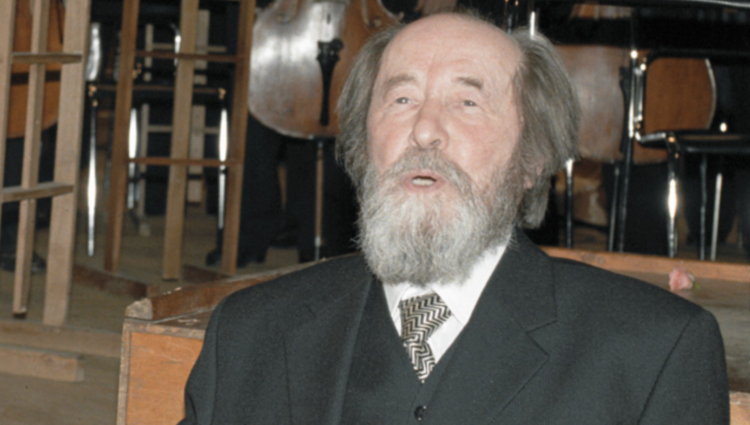
Solzhenitsyn’s Prophetic Voice: Critic of Communism

By |2022-08-03T09:34:18-05:00February 4th, 2013|Categories: Aleksandr Solzhenitsyn, Books, Capitalism, Communism, Joseph Pearce|Tags: |

Solzhenitsyn knew that the materialism that shaped the culture of both capitalist and communist societies was ultimately inhuman because of its denial of spiritual values and because it led to serious environmental degradation. Interview of Joseph Pearce by Annamarie Adkins After the fall of the Berlin Wall, some people predicted that global affairs had reached [...]

Income Tax & Fed Created In 1913, Phil Mickelson Shrugs In 2013?

By |2014-01-13T14:47:35-06:00February 1st, 2013|Categories: Brian Domitrovic, Economics, Political Economy|

Phil Michelson Don’t quite recall what happened in 1913? The Philadelphia Athletics’ World Series win that year didn’t make its mark? How about this, as I wrote in my book Econoclasts: For all one hears about, say, 1914, 1929, 1945, 1968, 1989, and 2001, 1913 may well be the most important year in [...]

God Bless This Stress

By |2014-03-28T15:47:07-05:00January 30th, 2013|Categories: American Founding, Books, Constitution, Federalism, Free Markets|Tags: |

The human body needs some stressors, and everything organic and complex communicates with the environment via stressors.—Nassim Nicholas Taleb Nassim Nicholas Taleb, the author of The Black Swan: The Impact of the Highly Improbable, is back with a new book: Antifragile: Things that Gain from Disorder. He recently sat down with Reason’s Nick Gillespie for an interview. Taleb makes [...]

President Obama: The Worst Keynesian Ever

By |2013-12-19T10:58:55-06:00January 18th, 2013|Categories: Barack Obama, Brian Domitrovic, Economics, Keynesian, Political Economy|

The president is bent on raising taxes big time. The rationale? The deficit is getting out of control. Indeed it is. Since January 2009, when President Obama took office, the United States has run cumulative budget deficits of $5 trillion. Before that time, debt held by the public was $6.3 trillion. Now it’s $11.4 trillion, an [...]

Local Politics: Small May Not Be Beautiful, But It’s What We’ve Got

By |2016-08-22T10:30:58-05:00January 3rd, 2013|Categories: Books, Bruce Frohnen, Christianity, Community, Culture, Economics, Modernity, Political Economy|Tags: |

What matters at this stage is the construction of local forms of community within which civility and the intellectual and moral life can be sustained through the new dark ages which are already upon us.—Alasdair MacIntyre in After Virtue MacIntyre’s brilliant critique of modernity and its many failings was published almost thirty years ago. Its many [...]

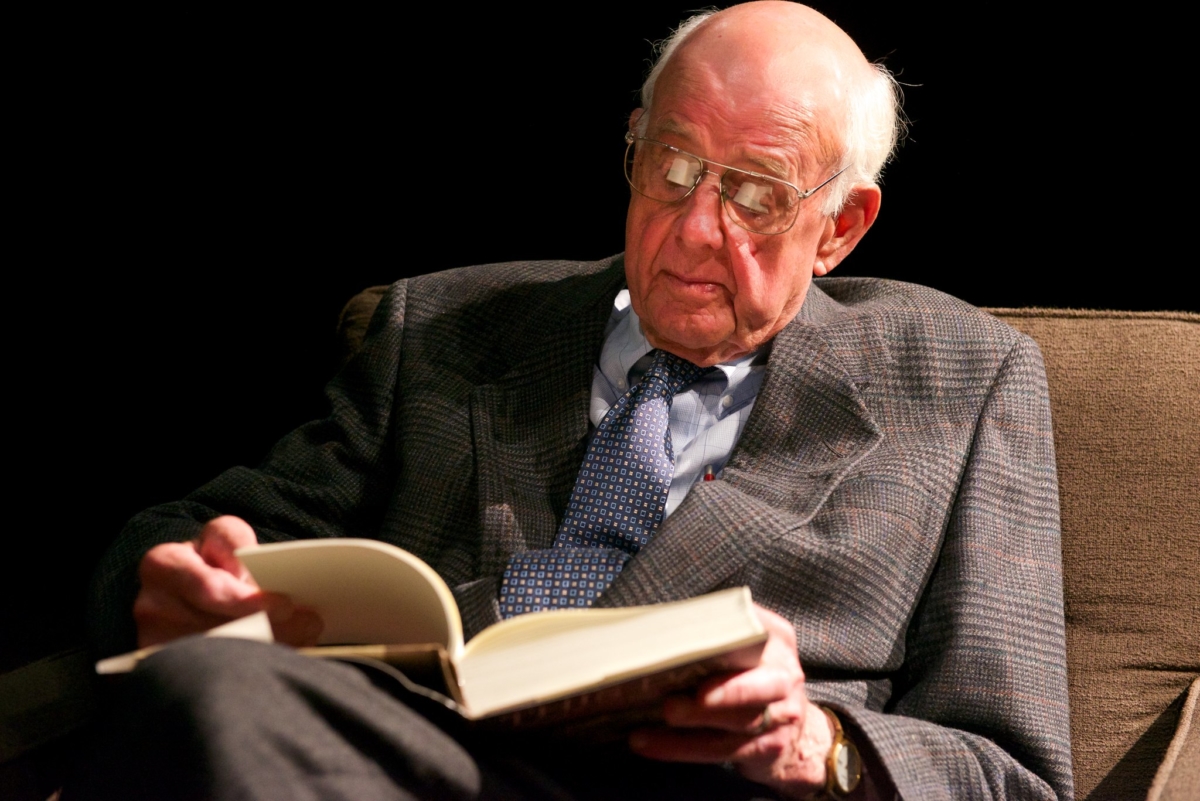
Economy of the Tao: Wendell Berry & Economic Health

By |2019-07-23T13:05:48-05:00December 30th, 2012|Categories: Agrarianism, Economics, Featured, Political Economy, Ralph Ancil, Wendell Berry, Wilhelm Roepke|

Berry’s economic program, what he calls the “little economy,” is a smaller wheel in the larger motion of the “Great Economy.” To understand the former, it is vital to grasp the latter. In the following, then, Berry’s vision of the broader drama of human action is set forth, followed by a presentation of his narrower [...]

Go to Top