
Pope Francis’ new restrictions on the celebration of the “Old Mass” are made in the name of the “concord and unity” of the Church. But the pope’s move is much more likely to steel the resolve of those who make the argument that the Roman Rite should return to its earlier form.
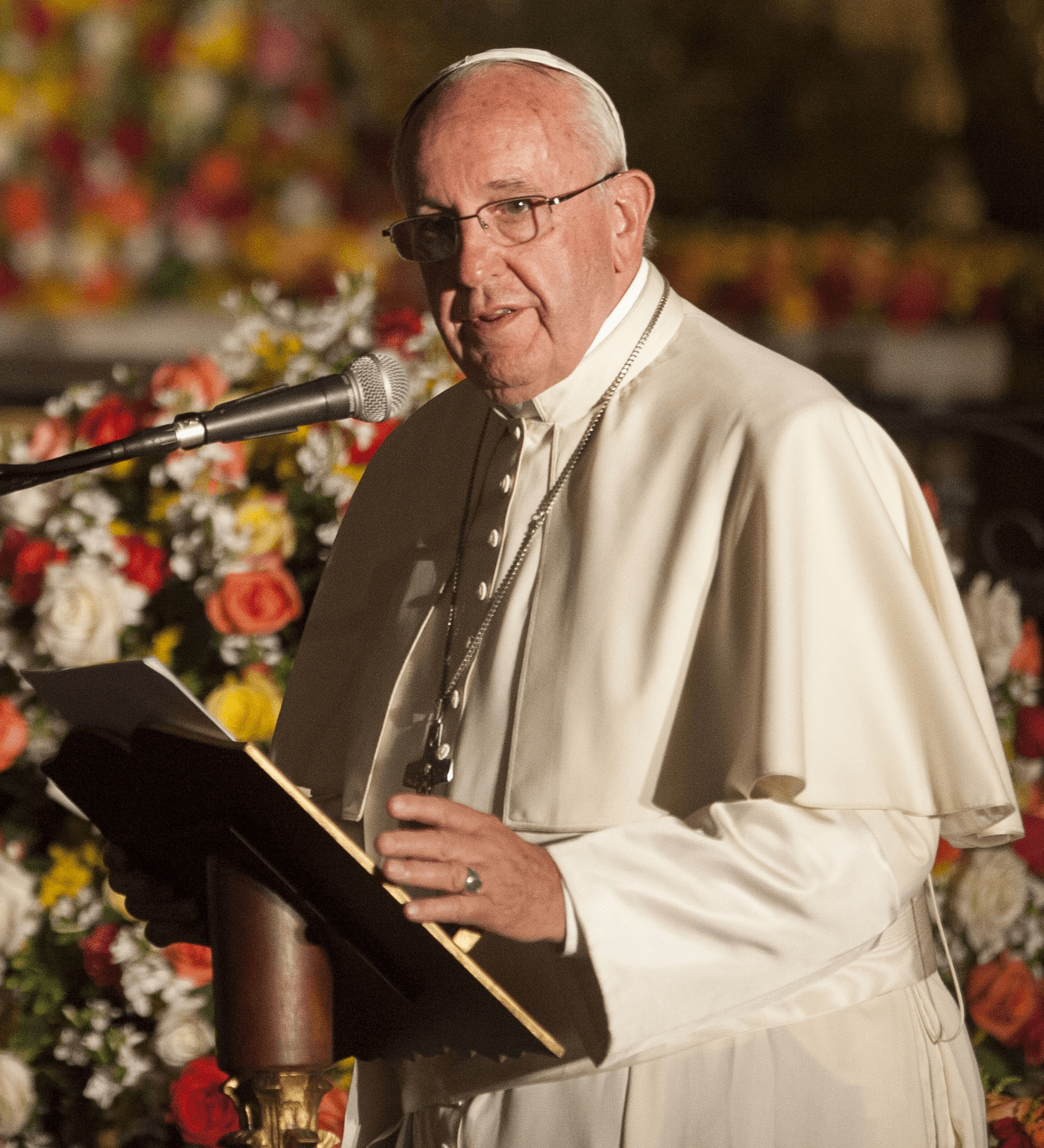 Pope Francis’s Traditionis Custodes landed with a thud this past week.[i] The legal document motu proprio (“on his own initiative”) effectively reversed Summorum Pontificum, Pope Benedict XVI’s 2007 legal document that made it clear that the older form of the Roman liturgy, what many people call the Traditional Latin Mass, was never abrogated and that priests had the legal right to celebrate this form of the liturgy. Pope Francis ruled that priests may not say this form of the liturgy without the permission of their bishops, that these liturgies may not happen in parish churches, that any priest celebrating this liturgy must profess the validity of the Second Vatican Council (1962-65) and acknowledge the legitimacy of the newer form of the Roman Liturgy (known colloquially as the Novus Ordo, or new order), and that any priest ordained from henceforth must have his application to his bishop approved by Rome in order to say it.
These new restrictions are made, Francis writes, in the name of the “concord and unity” of the Church since, according to a letter to bishops accompanying the legal document, Pope Benedict’s own decision to allow a freer use of the traditional rite was abused: “The words and attitudes of many is the close connection between the choice of celebrations according to the liturgical books prior to Vatican Council II and the rejection of the Church and her institutions in the name of what is called the ‘true Church.’”[ii] In other words, many people who celebrate the older rite reject the Novus Ordo and possibly Vatican II; thus it must be reined in.
Now there are a great number of problems with the thinking behind this. Several years ago Fr. Donald Kloster teamed up with some statisticians to look at how those who regularly go to Traditional Latin Mass compare with statistics on American Catholics derived from various surveys taken by CARA (a Georgetown institute dedicated to studying Catholic life), Pew Research, and others who are surveying American Catholics in general, who are most likely to attend the Novus Ordo. What they showed was that Traditional Latin Mass Catholics were much more likely to adhere to Catholic teaching on abortion, same-sex marriage, and contraception by wide margins. They also have on average about 1.5 times the number of children as do Novus Ordo attendees, have a weekly Mass attendance rate over 90% (as opposed to 25% of NO), and give five times as much to Church or charity.[iii] If the association between liturgies and rejections of Catholic teaching is enough justification for a papal crack down on the Traditional Latin Mass, then those who favor that Mass have a far better case for the abolition of the Novus Ordo. Even ignoring Francis’s one-sided application of a principle, this document will affect only those Catholics who are attending the traditional rites in churches that are in full communion with the Church where priests have followed all the legal prescriptions. Those in schismatic churches or in the legally problematic (but not schismatic) Society of St. Pius X are not affected at all.
In other words, Pope Francis seems intent on punishing those most faithful to Catholic teaching and most desirous of being in the good graces of the bishops and the bishop of Rome by making it more difficult for them to celebrate in the rite that they believe best represents and most allows them participation in the fullness of Catholic teaching. In the name of unity, he is willing to marginalize this group of Catholics while large sectors of the Roman Catholic Church, particularly many German clerics and even bishops, continue to publicly cast doubt on Church teaching and indicate their willingness to disobey the pope on matters such as blessing same-sex unions.
There are deeper problems with the coherence of his reasoning. Pope Francis’s assertion in his document that the liturgical forms of the Novus Ordo “are the unique expression of the lex orandi [law of prayer] of the Roman Rite” seems a bit strained. The Anglican Use liturgy, approved by Pope Benedict for those who came into the Catholic Church from Anglicanism, also differs from the Novus Ordo and yet is considered (as its name indicates) a “use” of the Roman Rite, thus presuming that it participates in the same lex orandi. But the pope is given to hyperbole here, it seems, because he associates the revised rites with the will of the Holy Spirit and wants to end celebration of the older rites.
Quoting the Vatican II document on the liturgy, Sacrosanctum Concilium, he implies that attendees of the Traditional Latin Mass are necessarily “strangers and silent spectators in the mystery of faith” whereas those who attend the Novus Ordo can have “a full understanding of the rites and prayers, would participate in the sacred action consciously, piously, and actively.” He quotes Pope Paul VI, the pope under whose watch the Roman Rite was revised in 1969, who “declared that the revision of the Roman Missal, carried out in the light of ancient liturgical sources, had the goal of permitting the Church to raise up, in the variety of languages, ‘a single and identical prayer,’ that expressed her unity.” Despite these stark weaknesses of the older rite, which can apparently only a) produce passivity and a sense of exile from the liturgy and b) result in a disunified bunch of private prayers (the reasoning is not stated, but it seems to be the old canard that all worshipers at the older rite simply pray their rosaries or other devotions and do not actually pray along with the priest), Francis is still willing to provide for those who prefer the older rite. Though he assures us that these people “need to return in due time to the Roman Rite promulgated by Saints Paul VI and John Paul II.”
Let me say with confidence that this universal return will not happen. And that is because Pope Francis’s assertions are very problematic, starting with the idea that only the reformed rites are or can be associated with active, conscious participation. Those who have attended both the Traditional Mass and the Novus Ordo know that a simplified rite in vernacular languages, even with a great many verbal responses and physical actions, does not in any way guarantee “active, conscious participation” in liturgy. I primarily assist (a much better term for a conscious, active participation than “attend”) at the Novus Ordo but have done so many times at the Traditional Latin Mass and several Eastern Liturgies. In all liturgical celebrations I am perfectly capable of and have been guilty of indulging in anxious worry about other matters, preoccupation with work, daydreams, and anything else rather than active, conscious participation in the prayer of Christ the high priest. If anything, a simplified rite in my own language provides an environment more conducive to being a stranger to the Lord since I can zone out and pop back in more easily. I’m guessing that many people like the older rites such as the Traditional Latin Mass or the Liturgy of St. John Chrysostom (used by many Eastern Catholics and Eastern Orthodox), whether in an ancient language or in English, because one must pay more attention in order to follow along with the services. The paradox of modern liturgical reform is that liturgical rites made less complicated render active, conscious participation more difficult.
The same problem attends to his argument that returning to the liturgical books of the Novus Ordo, revised under the authority of the canonized popes Paul VI and John Paul II, will show the “singular” and “identical” nature of the Roman liturgical tradition. First of all, the insistence on the use of vernacular languages betrays this notion right off the bat. One can attend the Traditional Latin Mass anywhere and follow along in one’s missal (or Mass book), whatever language is being spoken. Will one understand the sermon, which is given in the vernacular? No, but the rest of the Mass can be followed when one is in Tokyo just as easily as when one is in Peoria—or vice versa. It is much more difficult to follow a Mass in a language one does not know than it is to follow the Latin. And given the nature of the Novus Ordo Mass, in which there are at least four canons (or Eucharistic prayers) that are in regular use, it is ever so much harder to figure out what is going on when traveling.
In fact, the question of Eucharistic prayers is only the beginning of it, for there are countless legitimate options for priests celebrating the newer rite. Even putting aside the question of illicit liturgical practices, the “single and identical” nature of the Roman Rite is largely a fiction. Throw in all the liturgical illegalities (most of which are banal and many of which are heterodox) that are practiced and Francis’s argument is pretty self-defeating. Though he makes a stab at balance in the letter to the bishops with some stock phrases about stopping such liturgical freewheeling, he is only writing legislation against one form of liturgy. And the liturgy he is legislating against is the one likely to give a vivid sense that there is one “single and identical” liturgy for those who attend it in different parishes around the diocese, country, or world.
Many Vatican observers do not think Pope Francis is all that interested in liturgy, or that if he is, it is only in relation to ecclesio-political issues. I cannot say in what his interest lies. But the document issued under his guidance bears the arguments of an older and slightly out-of-touch generation of clerics and scholars who have never accepted that their “reforms” were not really popular with the vast Catholic body. Or, if “popular,” they were popular in the way that a substitute teacher who lets you use your notes for the test is popular. They make things easy, but ease does not breed love. As the statistics cited above show, they certainly have not increased faith among modern people. If anything, those who have experienced conversion in which Catholic liturgy is a part of the process have most often experienced it under the Traditional Latin Mass or one of the Eastern liturgies.
Those who love the Latin Mass say that this power the older liturgy has is not merely because it is foreign or makes one work a bit harder at prayer; they make the further claim that the “reforms” of the modern liturgy were not just ineffective at some level, but that they marred the Roman Rite. While some traditionalists will claim that the Novus Ordo is an invalid liturgy (i.e., it is not a real Mass; no transformation of the elements of bread and wine into the Lord’s body and blood, soul and divinity occurs), most claim that it though it is valid it is an objectively inferior rite, one that cut out important parts of the Roman Rite as it developed from the age of Gregory the Great until 1962 and added elements that are theologically weaker and not as coherent. As Cardinal Ratzinger observed, the new liturgical books “occasionally show far too many signs of being drawn up by academics and reinforce the notion that a liturgical book can be ‘made’ like any other book.”[iv]
There is not really a good case that the Novus Ordo is per se invalid, but even to make claims about its weakness or inferiority is supposedly beyond the pale for many of these clerics and scholars. Never mind that even non-traditionalist scholars such as Lauren Pristas have shown how the theological edges have been sawed off some of the prayers that were “reformed” in the newer rite. How could the Holy Spirit allow a bad or lesser liturgy to be foisted on them? Lost on them is the irony that they think the same thing of the earlier rites. Why would those earlier rites have needed “reform” if they had not somehow lost their true or better form? What would be the point of all the changes if the changes were not for the better?
Defenders of modern liturgy often appeal to the authority of Vatican II’s documents. To reject the reforms of the Mass, they say, is to reject a Church Council. This seems to be the implication of Pope Francis’s accompanying letter. Yet the Novus Ordo liturgy was not created by the Second Vatican Council but by a committee under Pope Paul VI. One does not even need to criticize Vatican II to criticize the liturgy; one just needs to criticize the popes in charge for approving it. Some object that this criticism is heterodox, but papal infallibility only applies to doctrinal definitions authoritatively made in the name of the Church. There is no teaching that popes will always make wise decisions with regard to the life of the Church. Any cursory skimming of the Catholic Church’s history will make that clear.
Even if one criticizes the Vatican II documents on the liturgy that inspired the supposed reforms, it is not clear how, from a Catholic perspective, this is a problem either. Ecumenical Councils (and the Catholic Church considers Vatican II such) are also only infallible when they authoritatively teach doctrines. Setting out goals for future liturgy or even making disciplinary decisions do not count as defining doctrine. As noted, one of those goals—full, conscious, and active participation in liturgy–is accepted by all Catholics. One might think both that the Traditional Latin Mass both allows and encourages it and that the Novus Ordo does not do as well at this goal and be orthodox. Catholic history is full of failed reform councils. As Pope Benedict once noted, it is an open question as to whether Vatican II will be considered a failed council as the Fifth Lateran Council was. He said this despite having been a participant at and a proponent of most of the decisions of Vatican II.
What Traditionis Custodes boils down to practically is a decision to marginalize one group of Catholics, tempting many of them to leave the unity in whose name the decision was made. But it is also a decision to attempt to foreclose on the question of whether the Catholic reforms of the late-twentieth and early-twenty-first centuries were actually successful. Pope Benedict’s decision to free the older rite and his terminology of the Novus Ordo as the Ordinary Form of the Roman Rite and the Traditional Latin Mass the Extraordinary Form was designed, he said, for a mutual enrichment of the two rites. Perhaps, he thought, there could be a development where the two rites met somewhere in the middle someday.
That mutual enrichment business might have been a pipe dream. Perhaps like the immortals in the Highlander films, “there can be only one” Roman Rite. But Francis’s decision to forego that co-existence and attempt to legally squash the Traditional Latin Mass seems like the move of a man, afraid that he cannot win by persuading others, who flees to legal authority to stop the voices of the competitors. It may also reflect the fact that where the enrichment happened, it was not so mutual. Many, especially younger priests and laypeople, are more likely to seek out Novus Ordo liturgies that look more like the Traditional Latin Mass. And when they did, even simply by following the letter of the Novus Ordo law, they were treated with suspicion anyway. “Nobody can turn a blind eye,” wrote Cardinal Gerhard Mueller in an essay on the document, “to the fact that even those priests and laypeople who celebrate Mass according to the order of the Missal of St. Paul VI are now being widely decried as traditionalist.”[v]
It is quite possible that the next pope will reverse Francis’s decision. In the meantime, however, Francis’s ham-handed move is much more likely to steel the resolve of those who make the argument that the Roman Rite should return to its earlier form. The pope whose motto is that the Church should “make a mess” has betrayed the weakness of his arguments by resorting to a bullying use of the law in order to shut down an argument that is messy for those attached to the 1960s and unwilling to admit they have made mistakes. The Holy Spirit is certainly progressive. But sometimes true progress involves, as Chesterton noted, admitting you’ve gone down a wrong road and retracing your steps. At the very least, it involves taking seriously the evidence that you might have done so. This would be a good step for a pope who has spoken at length about the need for humility even in leaders of the Church.
The Imaginative Conservative applies the principle of appreciation to the discussion of culture and politics—we approach dialogue with magnanimity rather than with mere civility. Will you help us remain a refreshing oasis in the increasingly contentious arena of modern discourse? Please consider donating now.
[i] Pope Francis, Traditionis Custodes, July 16, 2021.
[ii] Pope Francis, Letter of the Holy Father to the bishops of the whole world, accompanying Traditionis Custodes, July 16, 2021.
[iii] Brian Williams, “National Survey Results: What We Learned About Latin Mass Attendees,” Liturgy Guy, February 24, 2019.
[iv] Joseph Ratzinger, The Feast of Faith (San Francisco: Ignatius, 1981), 85.
[v] Gerhard Cardinal Mueller, “Cardinal Mueller on the New TLM Restrictions,” The Catholic Thing, July 19, 2021. (Translated from German by Robert Royal and Msg. Hans Feichtinger)
The featured image, uploaded by La Cancillería de Ecuador, is licensed under the Creative Commons Attribution-Share Alike 2.0 Generic license, courtesy of Wikimedia Commons.



Pope Francis has some other understanding of the word “unity”. A Catholic from Nairobi, one from Prague, one from Stockholm, can go to a Mass in Pierre, SD (in a parish where it’s still allowed) and know exactly what’s going on.
During WW2, an Italian priest read a book by C, S.Lewis, in translation. He wanted to write to Lewis, but neither man knew the other’s language. Then the priest realized that Lewis was a language scholar, and wrote to him in Latin. Lewis wrote back – in Latin. Their correspondence went on for years. There’s a book with parts of the correspondence: “Latin Letters of C. S. Lewis”. Unfortunately, Lewis’ concern for the privacy of his correspondents led him to destroy all the priests’ letters. Only Lewis’ are printed.
The priest he corresponded with, Fr, Giovanni Calabria, was canonized as St. John Calabria in 1999.
I am not in favor of having two different forms of Mass (Novus Ordo and Tridentine). As far as I am concerned it creates two different classes of Catholics and epitomizes the social and cultural fragmentation that is all around us. It should be one or the other, not both. The best way in my opinion would be to celebrate the Novus Ordo in a more traditional way, as is already done in many parishes. Mr. Deavel alludes to this when he speaks of “Novus Ordo liturgies that look more like the Traditional Latin Mass.”
The Latin rite has always been characterized as a family of rites with a diversity of expressions. Examples of this in the past are the Dominican rite and the Gallican rite. In more recent years, there has been the Anglican use, which I would probably be attending now if they had one in my area. Curiously, Pope Francis’ new document ignores this completely and makes no mention of the Anglican use .
I’ll never forget, as a child, listening to the traditional Latin mass, and thinking how awesome and beautiful it was and that as I was sitting here in my little local church, millions across the world were doing the same in the same traditional language.
“I’ll never forget, as a child, listening to the traditional Latin mass”
You were fortunate indeed, if you were able to “listen” to it.
I was 24 years old in 1969, when the Novus Ordo was introduced, so I well remember the Tridentine mass and the manner in which it was, for the most part, celebrated.
I recall attending Low Mass in Notre-Dame-de-Paris – the choir, from the chancel arch to the high altar is 36 m and the transept adds a further 14 m, so someone in the front pew was 50 m (162 feet) from the priest, under a vault 33 m high. The nave is 60 m long, so someone at the back was about 100 m from him – about the length of a football field. There was no sound system.
That is, perhaps, an extreme case, but even in the typical parish church, the distance from altar to front pew was often a good 20m (65 feet).
A Low Mass was completely inaudible and the Sanctus bell served a very practical purpose. When the priest turned to us, we knew, of course, that he was saying “Dominus vobiscum,” but, had he said « Salut les copains » only the server would have been any the wiser.
Wonderful article. Thank you.
Just before the moto propio came out, I had just finished reading Brian Moore’s novel, Catholics: A Novel, which conceptualizes a future Catholic church that is stripped of traditional Catholicism. It’s a dystopia. It’s a terribly written novel, if you ask me, and I’m not recommending it, but Pope Francis is building that very dystopia piece by piece.
Pope Francis is doing what Pope Francis does. Another Pope will come along and give us another opinion.
I am only proficient in English and know very little Latin. I like both forms but am more comfortable with my own language.
I do hope that the Church scholars will be kept abreast of all the Ancient Languages in order to keep our ever changing vocabulary abreast of the original thought patterns of our Spiritual Literature.
Other than that I follow the Creed.
Pope Francis’ case would be stronger if the reformed liturgy was actually conducted along the lines intended by the Council. “Sacrosanctum Concilium” states that Latin and Gregorian chant were to be given pride of place in the reformed liturgy and that the priest may turn around and face the people and not that he must. Instead, chant was replaced by mediocre songs and hymns that can scarcely inspire people to sing. It is seldom mentioned that one of the purposes of “Summorum Pontificum” was to promote “reform of the reform” of the liturgy along the lines actually intended by the Council. If you are going to reform something, you have to start with what you are reforming. I would feel better about the restrictions if the Novus Ordo mass were done in a more traditional way as mentioned above. However, I see few signs of this happening, at least in my diocese. Pope Francis’ new document certainly does not encourage this.
I don’t know how widespread it is, but I can tell you that traditional and dignified celebrations of the Novus Ordo Mass are being done. At my parish we celebrate the Novus Ordo with a certain amount of Latin – the Mass Ordinary is usually sung or chanted in Latin – and we always sing traditional music, whether chant or polyphony or the older hymns. We can certainly reinstate many of the traditional features in the context of the Novus Ordo – turn the priest back around facing East, encourage reception of Communion on the tongue, etc., etc. After all, the only essential feature of the Novus Ordo in my understanding is the dialog form. Kitsch and banality were never mandated.
The 1962 mass is a wonderful treasure. It created a spiritual renaissance for me personally. Whether new or ancient rite, one thing is for certain: the priest should NOT face the people but the Altar ‘ad orientem’ at the high altar AND the communion railing MUST be restored. Shame on the pope for judging a loyal people who both accept the Council and who love the Mass.
“By their fruits we shall know them”.
It is always the same that those who beat their chests about how they attend the Tridentine Mass, are also the same people who throw rocks at the Pope and any other Catholic they seem fit. Instead of shouting and bringing attention to themselves in rationalizing how important the Tridentine Mass is to them (which I used to attend in Jacksonville, FL for years), their actions, behaviors and holy lives would be the only witness the world would need to see to possibly inquire. Yet, predictably, they cast aspersions on this pope, or that pope, typical of Americans who believe they always know better. St Pope John Paul II would have never applauded these folks, nor would have Benedict XVI, St Pope Paul VI, St Pope John XXIII, and certainly Holy Mother Mary.
To [Jesus], my dear Dioscorus, I wish you to submit with complete devotion, and to construct no other way for yourself of grasping and holding the truth than the way constructed by Him who, as God, saw how faltering were our steps. This way is first humility, second humility, third humility, and however often you should ask me I would say the same, not because there are not other precepts to be explained, but, if humility does not precede and accompany and follow every good work we do, and if it is not set before us to look upon, and beside us to lean upon, and behind us to fence us in, pride will wrest from our hand any good deed we do while we are in the very act of taking pleasure in it.
– Saint Augustine