
The English have shown themselves to be as “revolting” as the French or the Russians but for a much nobler cause. Let’s raise a glass of the best beer to those revolting Englishmen of the sixteenth century, who rose and died for the Faith of their fathers.
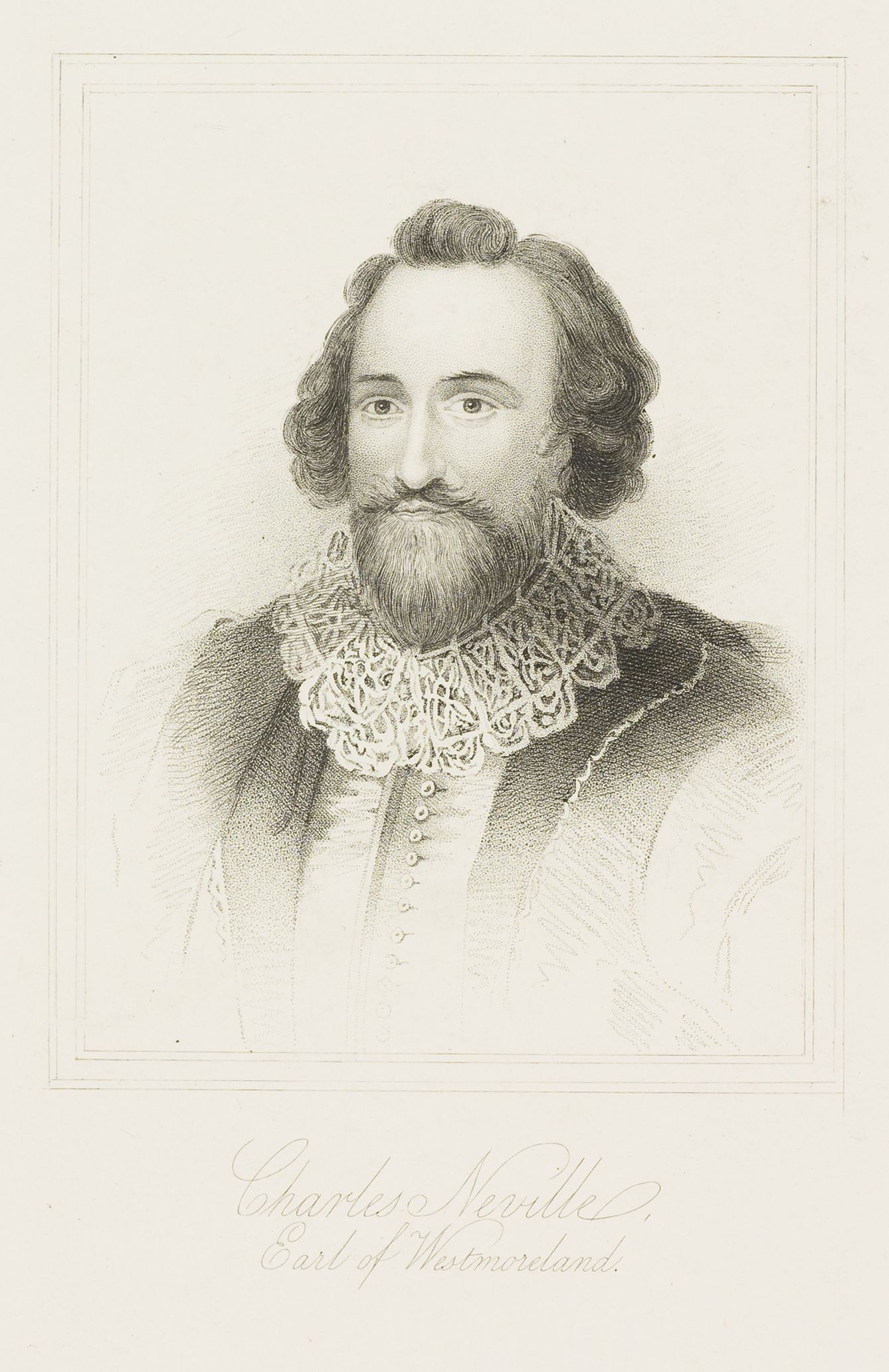
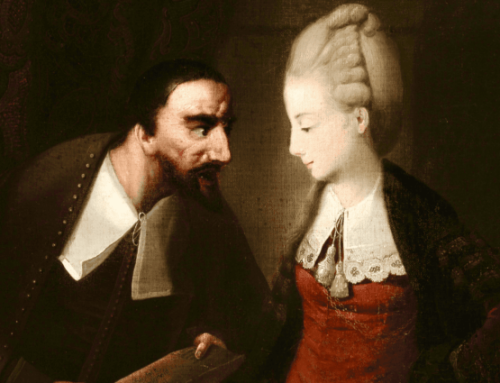
Charles Neville, Earl of Westmoreland, who led the Northern Rebellion of 1569
In last week’s essay, I discussed the alleged sloth of the English people as described by J.R.R. Tolkien, who called it “the major English vice”. I suggested that Tolkien might have been influenced in this judgment of his own nation and people by a well-known poem by G.K. Chesterton, which Tolkien probably knew well. The poem in question is “The Secret People” in which Chesterton compares the overt violence of other nations, especially in terms of their national revolutions, with the people of England “that never have spoken yet”.
“The Secret People” sketches English history from the time of the Norman Conquest to the present day. Its narrative voice is that of the English people themselves, the “we” and the “us”, who reiterate the refrain that “we have not spoken yet”.
Daring to disagree with Tolkien and Chesterton, it is simply not true that the English have not spoken up against their unjust rulers, nor is it true that they have not risen in rebellion and revolution against them. On the contrary, a careful revisiting of English history will illustrate that the English people can be quite as “revolting” as those other countries, such as the French and the Russians, who can boast of their own nations’ revolutions. To put it plainly, Chesterton was a little hasty in suggesting that the English were lazy or lethargic in response to tyranny.
Let’s return to the section of Chesterton’s poem which deals with the so-called English “Reformation” and the destruction of the monasteries:
They burnt the homes of the shaven men, that had been quaint and kind,
Till there was no bed in a monk’s house, nor food that man could find.
The inns of God where no man paid, that were the wall of the weak.
The King’s Servants ate them all. And still we did not speak.
Chesterton’s description of the pillaging and plundering of the monasteries and its destructive consequences is well said but it was not the case that the people of England “did not speak”. They rose in anger in a rebellion that became known as the Pilgrimage of Grace and there’s no doubt that King Henry VIII’s attack on the Church was the spark that lit the fuse of open revolt. The monasteries were at the very core of the social fabric and social welfare of local communities and the people rightly perceived the destruction of the monasteries as an attack upon their own way of life. There were also rumours that the king’s “reformation” would lead to the closure of parish churches, and the stripping of their wealth, which had been supplied by the generosity of local guilds and by the financial sacrifice of local people.
At the beginning of October 1536, a sermon in the parish church of Louth in Lincolnshire sparked the uprising. Within a week, a people’s army had occupied Lincoln. The rising spread to the north, the whole of Yorkshire rising in protest. According to the historian, Gerard Culkin, the rising of the north of England in protest at the king’s “reformation” was “the most serious threat to his throne… in all the long years of his reign”. Thousands of men from all parts of Yorkshire and beyond descended on York to join the people’s army which had assembled there under the leadership of Robert Aske, a London attorney. Under his guidance the revolt became a pilgrimage for the restoration of religion and religious liberty. The pilgrims wore a badge depicting the Five Wounds of Christ and swore an oath to exalt and defend the Church. Aske composed a proclamation, itemizing the purpose and demands of the Pilgrimage, which was presented to the king.
Henry was alarmed by the uprising and had every reason for being so. The Duke of Norfolk, whom Henry had appointed to deal with the uprising, warned him that the royal forces, numbering only 8,000 men, were no match for the 40,000 rebels who now included in their ranks “all the flower of the North”. Furthermore, and of even greater concern, the Duke reported that the king’s own troops “think their quarrel to be good and godly”. Faced with such unwelcome news, the king had little option but to negotiate. On December 5, the Duke of Norfolk, as the king’s representative, met the leaders of the Pilgrimage at Doncaster and received the list of their demands. The first demand was for the suppression of heresy, the second was for the restoration of the Pope’s authority in spiritual matters, and the third was for the restoration of the suppressed abbeys.
Powerless to put down the Pilgrimage of Grace by military means, Henry employed the machiavellian power of the lie. Promising concessions and a general pardon for all who had taken part in the Pilgrimage, Henry persuaded the good-natured but gullible Aske to order the rebels to disperse and disarm. As soon as the tens of thousands of “pilgrims” had returned home, Henry moved his troops into the north of the country. He was now in a position to force his own will on the people. Robert Aske was executed in York on July 12, 1537 and a further two hundred or so would suffer a similar fate. The king then stepped up his war on the remaining abbeys, accusing the abbots and monks of complicity in the Pilgrimage and executing them as traitors.
The English people, mindful of the ruthless and deadly punishment that awaited any outward sign of dissent, tolerated the tyranny in sullen silence for the next twelve years. It was the government-mandated introduction of the new Protestant service at Whitsuntide in 1549 and the consequent definitive banning of the Mass which caused the people of England to rise in anger again. The banishment of the Mass, the sacrificial heart of Christian worship, was met with active opposition across the country. In London, Bishop Bonner protested and was deposed and imprisoned. Dissent and resistance were rife in the universities, at Oxford and Cambridge, but it was in the west of the country that the most spirited resistance arose. The people of Devon and Cornwall likened the new state-imposed Protestant service to a “Christmas game”, a mere mummery, and rose in violent rebellion. Demanding the withdrawal of the new service and the restoration of the Mass, the Catholic insurgents succeeded in having the Mass restored in the west of the country. Similar popular risings happened in other parts of England. The populace rose in Sussex , Somerset, Leicestershire, Worcestershire, Rutlandshire, Warwickshire, Suffolk, Surrey, Hampshire, Berkshire, Hertfordshire, Essex, Buckinghamshire, Norfolk and Oxfordshire. Almost the whole of England rose to demand the return of the holy sacrifice of the Mass.
Hilaire Belloc attributed the failure of the holy revolution to “the presence on English soil of well-trained foreign mercenaries, Italian and German, taking government pay and willing to obey any orders for the cutting down of English men and women, to whose lives they were naturally indifferent. It was with the aid of these,” Belloc continued, “and of its artillery, that the government at last obtained the victory.”
Once again, the English had risen against the imposition of the state religion and in defence of the faith of their fathers and once again the government had seen itself on the brink of collapse. It saved itself, once again, through the merciless suppression of all dissent. In Oxfordshire, dozens of priests were hanged from the steeples of their own churches for their complicity in the rising of the people in defence of the Mass. It is estimated that almost half of those who rose against the government in Devon and Cornwall were killed – almost 4,000 people, both armed and unarmed, put to the sword by the foreign mercenaries. These merciless mercenaries also slaughtered 3,000 of those who had risen in rebellion in Norfolk, with a further 300 subsequently being hanged.
In 1569, during the reign of Elizabeth I, the people of the north of England rose again in what became known as the Northern Rebellion. Rallying under the banner of the Five Wounds, under which their fathers had fought for religious liberty during the Pilgrimage of Grace, thirty-three years earlier, they called for the restoration of the Catholic Faith to the people of England. Taking the northern city of Durham, the rebels restored the Mass, and then continued the march southward, restoring the Mass as they went. It was an impressive demonstration of the strength of Catholic allegiance in the north of the country but militarily it was a disaster. Retreating before the advance of the royal army, the rebellion ended in disarray. As with Henry VIII’s response to the Pilgrimage of Grace, Elizabeth showed no mercy. More than eight hundred people were hanged, including the priest who had said the first Mass in Durham. “Three hundred were put to death in Durham alone,” wrote Hilaire Belloc, “every village which had sent even one man to the rising was visited with executions.”
In the light or shadow of these three glorious uprisings of the people of England to defend the Faith, let’s return to Chesterton’s poem:
It may be we shall rise the last as Frenchmen rose the first,
Our wrath come after Russia’s wrath and our wrath be the worst.
It may be we are meant to mark with our riot and our rest
God’s scorn for all men governing. It may be beer is best.
But we are the people of England; and we have not spoken yet.
Smile at us, pay us, pass us. But do not quite forget.
Pace Chesterton, the English will not “rise the last as Frenchmen rose the first” because the English had risen in revolution 250 years before the French and almost 400 years before the Russians. The difference is that the English rose in defence of Christendom whereas the French and Russians rose against it. The people of England have spoken. They have shown themselves to be as “revolting” as the French or the Russians but for a much nobler cause. Let’s raise a glass of the best beer to those revolting Englishmen of the sixteenth century who rose and died for the Faith of their fathers. Let’s raise a glass in their honour and let us never quite forget.
__________
The Imaginative Conservative applies the principle of appreciation to the discussion of culture and politics—we approach dialogue with magnanimity rather than with mere civility. Will you help us remain a refreshing oasis in the increasingly contentious arena of modern discourse? Please consider donating now.
The featured image is a portrait of Charles Neville, Earl of Westmoreland, and is in the public domain, courtesy of Wikimedia Commons.



Thank you for this article. I was raised Protestant (now am Eastern Orthodox). They never taught us any of this in Sunday School. It was all about Martin Luther standing up to that mean old Pope, and there was this John Calvin guy but don’t pay too much attention to what he wrote because we don’t really believe it any more, and by the way, Henry VIII wanted a divorce and so that was that. Everything else was glossed over or not mentioned at all.
Thank you for this interesting and informative article.
I am skeptical of any counter reformation work that leans so heavily on Belloc.
Thank you as always, Mr. Pearce.
If you’ve not read it, I highly recommend the volume ‘Monstrous Society’ by David Collings. The overall thesis is right along these same lines, namely, that the English population struggled for centuries to regain the Commons closed off by the nascent British oligarchs following Henry’s era. He argues that these ‘revolts’ were largely unsuccessful and that the population ultimately accepted ‘representation’ (however dubious) in lieu of this lost order. He reads this history in parallel with the Gothic thematics in English literature that were so popular, including a very intriguing discussion of the relationship between the ethics implicit in Bentham’s Utilitarianism and his so-called ‘auto-icon.’
For my own part, life makes more and more sense as ‘modernity’ comes more into focus, and ‘modernity’ comes more into focus the more I understand it specifically in terms of the Henrician and post-Henrician English dynamics.