
 The inspiration for the writing of essays can come from the most surprising and unusual of places. Recently, I received an email from a woman whose homeschooled daughter had asked her whether Hamlet and Ophelia had slept together. This prompted her to ask me for my thoughts on the matter.
My initial thought was that my thoughts don’t matter; or at least, they only matter insofar as they can be shown to conform with the known facts. My thoughts must be subject to objective criteria, specifically the evidence that Shakespeare presents to us in the text of the play. None of us have any right to thoughts that contradict the facts as presented to us, or at least we should not expect our thoughts to be taken seriously should they contradict these facts.
What then are the facts?
Here’s the textual evidence:
Ophelia insists that Hamlet has always behaved honourably towards her. “My lord,” she tells her father, “he hath importun’d me with love in honourable fashion…. And hath given countenance to his speech, my lord, with almost all the holy vows of heaven.”
Polonius, Ophelia’s father, is a spymaster and therefore a liar and cynic by profession. As such, we might expect him to suspect the worst of motives on the part of Hamlet. Yet he doesn’t suggest that Ophelia has slept with Hamlet. On the contrary, he warns her that Hamlet’s courtship of her should not be regarded as honourable but as having the ulterior motive of seduction. He orders Ophelia to cease seeing Hamlet. Ever self-serving, Polonius does not have his own daughter’s well-being in mind as he forbids her relationship with Hamlet, merely to protect his own reputation. “Tender yourself more dearly,” he says, “or you’ll tender me a fool.”
It says much for Ophelia’s character that she does not rebel against her father’s will but is obedient to it: “I shall obey, my lord.”
Earlier, Laertes, Ophelia’s brother, warns her of the dangers of succumbing to Hamlet’s charms. “Be wary, then,” he tells her; “best safety lies in fear: Youth to itself rebels, though none else near.”
“I shall the effect of this good lesson keep as watchman to my heart,” she replies, adding that Laertes should make sure that he also practices the chastity that he urges and not be shown to be a hypocrite:
But, good my brother,
Do not, as some ungracious pastors do,
Show me the steep and thorny way to heaven,
Whiles, like a puff’d and reckless libertine,
Himself the primrose path of dalliance treads
And recks not his own rede.
The next time we see Ophelia, she is frightened and distraught; she has just seen Hamlet in great distress and behaving very strangely. Polonius believes, wrongly, that Hamlet has been driven mad by his love for Ophelia whereas, in reality, he is in a state of great confusion having just seen the Ghost of his own father.
Later, contrary to her conscience, Ophelia complies with her father’s plans to use her as “bait” enabling Polonius and Claudius to spy on Hamlet. It seems that Hamlet becomes aware of this during the encounter with Ophelia; hence his “madness” towards her. Their estrangement was inevitable from this moment but what are we to make of Hamlet’s relationship with her prior to this definitive break? Had he loved her in honourable fashion as Ophelia had claimed? He gives us his own answer at Ophelia’s grave: “I loved Ophelia; forty thousand brothers could not, with all their quantity of love, make up my sum.” It is true that he uses the past tense “loved” but it’s probably safe to assume that this is because Ophelia is dead, not because he no longer loves her.
It might be argued that their love, however true and honourable, does not preclude the possibility of sexual relations between them, but the textual evidence offers no reason to believe that Ophelia is lying when she says that Hamlet had treated her honourably. More to the point, even Ophelia’s cynical father does not believe that Ophelia has slept with Hamlet, merely that she might be in danger of doing so.
Needless to say, the absence of all textual evidence does not prevent the abuse of Shakespeare’s text and the consequent abuse of his characters. Modern productions of Shakespeare inevitably turn all the female characters into wantons and strumpets. Even the “heavenly” Portia is treated this way when modern producers of The Merchant of Venice have her cheating in the test of the caskets. If Portia and Bassanio can be shown to cheat with each other in this crucial test of virtue on which the whole moral of the play hinges, we can be sure that they will have little difficulty cheating on each other following their marriage.
It is in this light or shadow that we should view Kenneth Branagh’s film adaptation of Hamlet in which Hamlet and Ophelia are depicted as sleeping with each other. Such abuse of Shakespeare and his characters should be seen as the work of virtue vampires, who suck the goodness from the characters, and as the work of veritas vampires, who suck the moral truth from the plot. Such dealers in death can be left to their own devilish devices. As for the rest of us, we should be content with seeing what Shakespeare seeks to show us.
As for Ophelia, she should be seen as being innocent until proven guilty. In the absence of any evidence to the contrary, it is scurrilous and scandalous to suggest that she is anything other than what she says she is. Was she a virgin? Only a cad and a scoundrel would suggest otherwise.
The Imaginative Conservative applies the principle of appreciation to the discussion of culture and politics—we approach dialogue with magnanimity rather than with mere civility. Will you help us remain a refreshing oasis in the increasingly contentious arena of modern discourse? Please consider donating now.
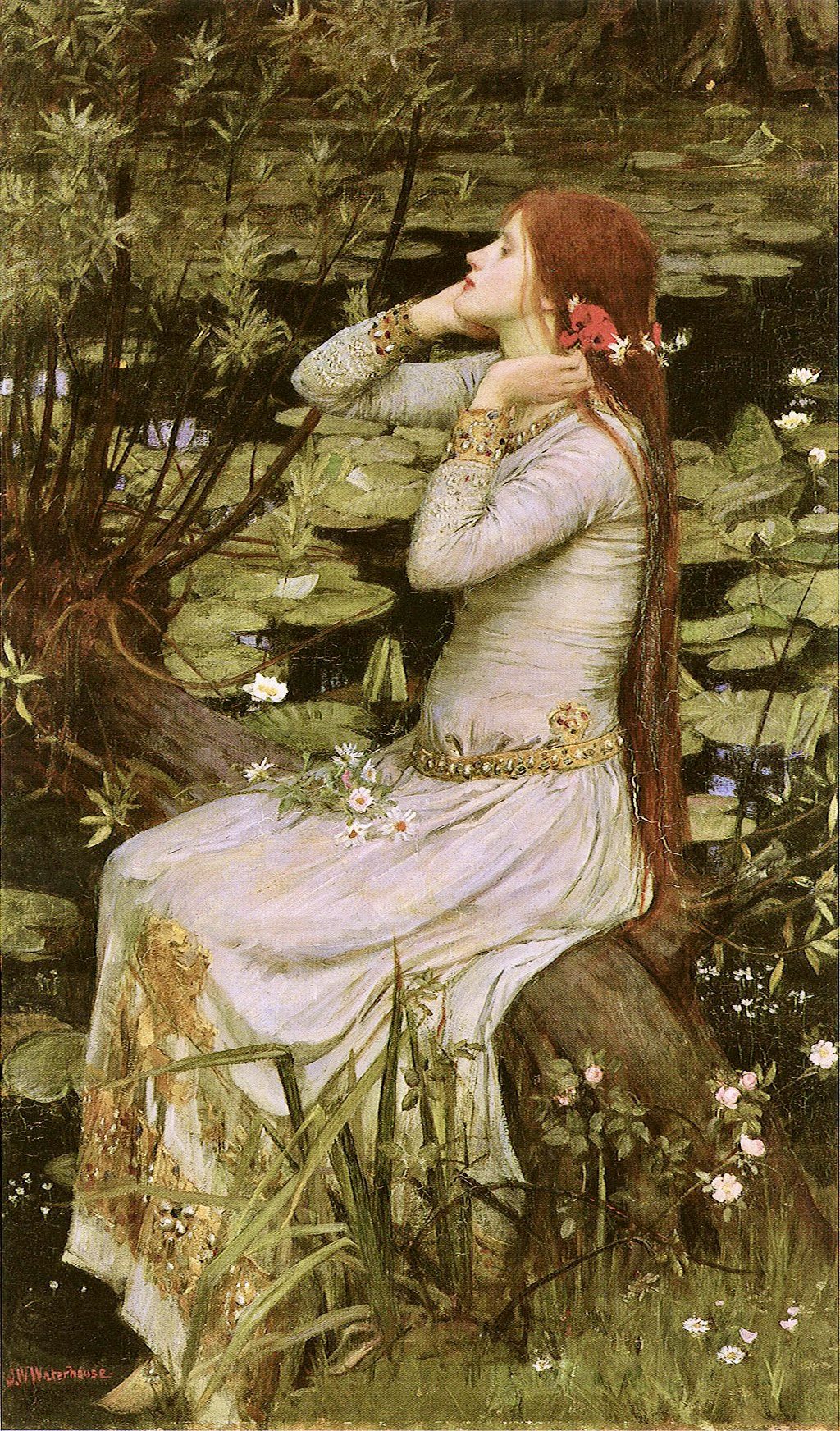
The featured image is “Ophelia” (1894) by John William Waterhouse, and is in the public domain, courtesy of Wikimedia Commons.



It wasn’t until I saw the Branaugh film that it ever occurred to me that Ophelia and Hamlet might have been involved sexually— or, for that matter, that Fortinbras’ arrival at Elsinore was the culmination of a planned attack. As much as I appreciate the film for including the complete text, I take issue with both the above-mentioned liberties.
Well answered. I’m sad Kenneth Branaugh did that. Such a huge talent. It’s interesting that in Henry V the portrayal of Kate, the French princess, is so lovely and innocent. Thanks for this insightful analysis: Moral Vampires is a very appropriate title.
Not to defend Branaugh, in fact to the contrary, but It is a fair bet that what he was doing was toadying to his producer(s) and at the same time catering to an audience that thinks it must be at least a bit sexually titillated, even if not given full-blown pornography.
If Ophelia’s speech isn’t “textual evidence” that she and Hamlet slept together, I don’t know what is. Act IV, Scene V, Lines 50-65:
Tomorrow is Saint Valentine’s day,
All in the morning betime,
And I a maid at your window,
To be your Valentine.
Then up he rose, and donned his clothes,
And dupped the chamber door,
Let in the maid that out a maid
Never departed more.
By Gis and by Saint Charity,
Alack and fie for shame!
Young men will do’t if they come to’t—
By Cock, they are to blame,
Quoth she, ‘Before you tumbled me,
You promised me to wed.’
He answers,
‘So I would I’a done, by yonder sun,
And thou hadst not come to my bed.’
I understand fully your argument, but two things: One, we don’t know how many different ways Shakespeare’s company performed Hamlet – this version is from the memory of actors six years later; and two, there are inconsistencies and errors in Shakespeare – thus my conclusion that given who the Hamlet who came back from Wittenberg would be, in my understanding, he would not violate her chastity, risking the consequences for this maiden he loved. It just doesn’t quite make sense.
I disagree with your characterization of those who interpret Ophelia in a more widespread way, but I do agree with your position that she was a virgin. Hamlet was a noble idealist before the corruption at Elsinore and his mother’s overhasty marriage to his uncle destroyed his idealism. That Hamlet would never have compromised Ophelia’s reputation or her maiden’s very real, very idealistic self-concept. I especially appreciate your thorough analysis of the script in support of your position. I agree with another critic who holds that she is a virgin, and that all the unseemly passages represent her own mental destruction because of what she is subjected to, and that it is really analogous to Hamlet’s striking out at women so jadedly as she strikes out at the men for whom women are objects, property, creatures only worth exploiting. That is the Ophelia who, like Hamlet, has had the realities of Elsinore destroy them. I offer one moral I think the play at least implies: Do not do the things which destroy humans, those creatures capable, as in the instance of someone like Jimmy Carter, of being the quintessence of dust.
Any response to my thoughts will be greatly appreciated, but do not add me to any mailing lists. I am already overrun. Thanks, and again thank you for writing this very insightful article regarding who Ophelia really is.