
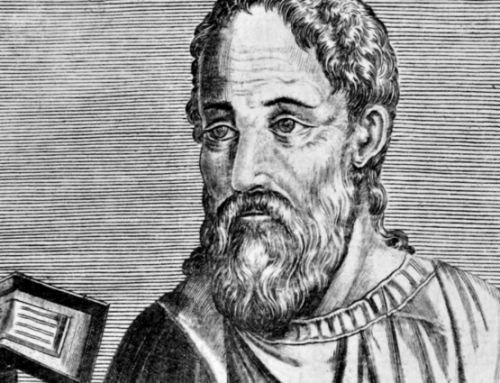
 In the First Letter to Timothy (1 Tim. 1:9-10), Saint Paul informs us (RSV CE 2nd ed.) “The law is not laid down for the righteous but for… immoral persons, sodomites, kidnappers, liars, perjurers, and whatever else is contrary to sound doctrine”. Stern words indeed. In the Vulgate, what the RSV renders “kidnappers” is plagis, sharing a root with plagiarist. In the classical world, plagiarius meant a kidnapper, which finally ended up being the common phrase we use today when someone kidnaps the words of another. Right now, a plague of plagiarism is sweeping though the university system. No less an authority than the Harvard Crimson, reports that 47% of the undergraduates at that storied Ivy League school report having committed plagiarism. It’s plagiarism when students reduce, reuse, or recycle the wordings of the others. It’s “borrowing freely”, or “leaning on heavily” when scholars do it. At its very marrow, though, it’s theft. The theft of intellectual property, maybe, but theft nonetheless.
Not to be bested by two millennia of dubious citation practices, AI enters the scene. It’s a bright new technology with so much promise, even more funding, and its ability to plagiarize is unparalleled. Amidst the hoopla and headlines of AI saving lives, or threatening jobs, it’s easy to miss the lawsuits. Anthropic’s recent settlement for using the copyrighted material of American publishers without permission ran into the billions. I’m looking forward to cashing their check.
Problems never reside in a new technology, it’s how humans use it that makes the difference. Saint Thomas More wisely counseled — in A Man for All Seasons — “I should only ever tell the King what he ought to do, not what he could do.” Artificial intelligence, as with everything else, is subject to the ethics, morals, whims, and fantasies of the humans involved. Who will tell AI companies what they ought to do? Who, for lovers of Westerns, is the man in the white hat?
Last week saw the publication of Pope Leo XIV’s first encyclical, Magnifica Humanitas, in which the pontiff discusses AI and humanity. There was a launch party afterwards, with several Cardinals responding to the work. Intriguingly, one of the cofounders of Anthropic was there, providing comments. I admit to being somewhat conflicted. We publish Pope Leo XIV’s one and only book thus far, and are about to publish an edition of Magnfica Humanitas itself, so I was keen to hear what our author had to say on the matter. But it rankled that the Papal limelight is shared with those who have taken the intellectual property of hundreds of our less-famous authors without permission, and without scholarly credit. The work of our authors—their knowledge, their skill that took years of training to hone, their phrasing—ends up being scraped by an LLM and served up in online searches. Our authors remain anonymous.
There is a story, though, found only in Luke’s Gospel. Jesus invites the tax collector Zaccheus down from a tree and they eat dinner together. At the time, folks like me complained at the favoritism shown to a sinner. But in response, Zaccheus promised to give half his possessions to the poor and pay back, fourfold, anyone he had defrauded.
I’m not expecting a fourfold increase in the legal settlement. But perhaps, just perhaps, AI is about to enter a far more ethical future, guided by those who know what they ought to do, not what they can do.
__________
The Imaginative Conservative applies the principle of appreciation to the discussion of culture and politics—we approach dialogue with magnanimity rather than with mere civility. Will you help us remain a refreshing oasis in the increasingly contentious arena of modern discourse? Please consider donating now.
The featured image is courtesy of Pixabay.


Leave A Comment