
 The very excess of our present paganism may warrant some hope that it will not long endure; for usually excess generates its opposite. One of the most regular sequences in history is that a period of pagan license is followed by an age of puritan restraint and moral discipline. So the moral decay of ancient Rome under Nero and Commodus and later emperors was followed by the rise of Christianity, and its official adoption and protection by the emperor Constantine, as a saving source and buttress of order and decency. The condottiere violence and sexual license of the Italian Renaissance under the Borgias led to the cleansing of the Church and the restoration of morality. The reckless ecstasy of Elizabethan England gave way to the Puritan domination under Cromwell, which led, by reaction, to the paganism of England under Charles II. The breakdown of government, marriage, and the family during the ten years of the French Revolution was ended by the restoration of law, discipline, and parental authority under Napoleon I; the romantic paganism of Byron and Shelley, and the dissolute conduct of the prince of Wales who became George IV, were followed by the public propriety of Victorian England. If these precedents may guide us, we may expect our children’s grandchildren to be Puritans.
But there are more pleasant prospects in history than this oscillation between excess and its opposite. I will not subscribe to the depressing conclusion of Voltaire and Gibbon that history is “the record of the crimes and follies of mankind.” Of course it is partly that, and contains a hundred million tragedies—but it is also the saving sanity of the average family, the labor and love of men and women bearing the stream of life over a thousand obstacles. It is the wisdom and courage of statesmen like Winston Churchill and Franklin Roosevelt, the latter dying exhausted but fulfilled; it is the undiscourageable effort of scientists and philosophers to understand the universe that envelops them; it is the patience and skill of artists and poets giving lasting form to transient beauty, or an illuminating clarity to subtle significance; it is the vision of prophets and saints challenging us to nobility.
On this turbulent and sullied river, hidden amid absurdity and suffering, there is a veritable City of God, in which the creative spirits of the past, by the miracles of memory and tradition, still live and work, carve and build and sing. Plato is there, playing philosophy with Socrates; Shakespeare is there, bringing new treasures every day; Keats is still listening to his nightingale, and Shelley is borne on the west wind; Nietzsche is there, raving and revealing; Christ is there, calling to us to come and share his bread. These and a thousand more, and the gifts they gave, are the Incredible Legacy of the race, the golden strain in the web of history. We need not close our eyes to the evils that challenge us—we should work undiscourageably to lessen them—but we may take strength from the achievements of the past; the splendor of our inheritance. Let us, varying Shakespeare’s unhappy king, sit down and tell brave stories of noble women and great men.
__________
This is an excerpt from Heroes of History: A Brief History of Civilization from Ancient Times to the Dawn of the Modern Age. This essay first appeared here in September 2013.
The Imaginative Conservative applies the principle of appreciation to the discussion of culture and politics as we approach dialogue with magnanimity rather than with mere civility. Will you help us remain a refreshing oasis in the increasingly contentious arena of modern discourse? Please consider donating now.
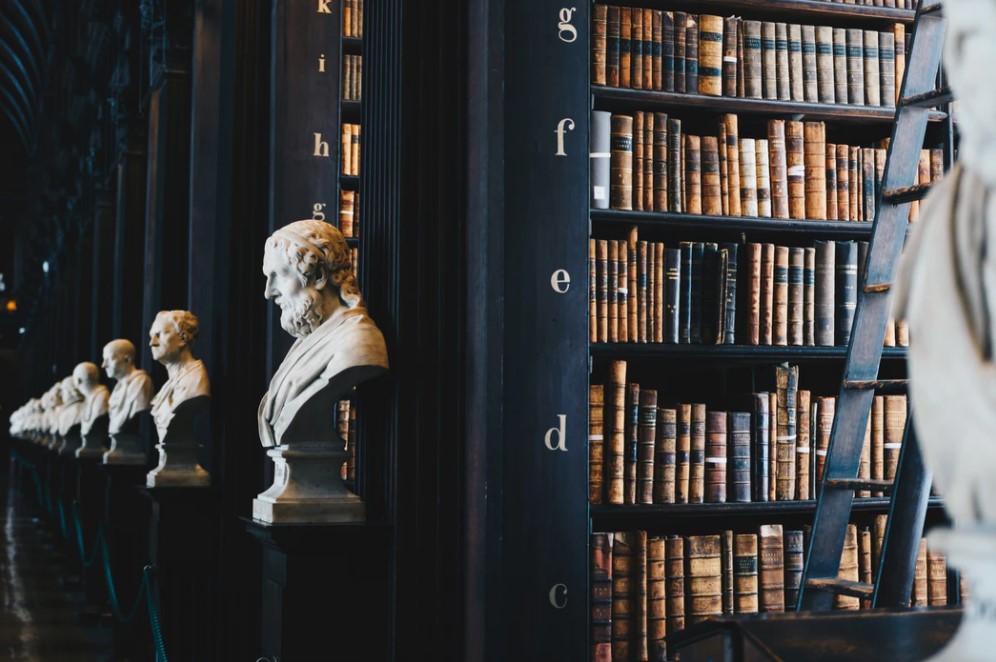
The featured image is courtesy of Unsplash.




And this is somewhat I have feared, a rebirth of morality, but a morality not based on Truth. Hard and harsh demands such as the Pharisees made, without God.
Thank you!
A real classic – thanks!