Is There Still a New England?

By |2026-06-16T11:28:16-05:00June 16th, 2026|Categories: Conservatism, History, Michael J. Connolly, New England, Senior Contributors|

Humans thrive upon historical continuity and knowing their communities are built with deep roots. But histories based on theories of power dynamics destroy an unseen social glue, leaving behind those who understood their place through a shared history. For those disinclined toward interstate highways, the best way to enter New England is eastward out of [...]

American History on the Banks of the Potomac

By |2026-06-14T18:44:24-05:00June 14th, 2026|Categories: American Founding, American Republic, Bradley J. Birzer, History, Timeless Essays|

What do the women and men who occupy the innumerable office buildings on either of the Potomac think about those gun-toting revolutionary gentlemen of the eighteenth century? As I type this, I’m sitting in a restaurant near Gates 10/11 in one of the terminals (not sure which one) of Reagan/Washington airport. The place is packed, [...]

History on Proper Principles: The Legacy of Forrest McDonald

By |2026-06-12T14:33:11-05:00June 12th, 2026|Categories: Alexander Hamilton, American Founding, American Republic, Featured, Federalist Papers, Forrest McDonald, History, Literature, Stephen M. Klugewicz, Timeless Essays|

Forrest McDonald demonstrated that the historian above all must be a pragmatist who looks at the reality of the past as it was, who gets his hands dirty by putting in long hours of research, who makes sense of vast quantities of data, and who then communicates what he has found in an understandable and [...]

The Best and Worst of Centuries

By |2026-06-06T16:14:16-05:00June 6th, 2026|Categories: Christendom, History, Joseph Pearce, Senior Contributors, Timeless Essays|

Is there a century in human history which can claim to be better than all the others? Many, especially Catholics, might argue that the thirteenth century deserves such an accolade. According to Church historian, Alan Schreck, this was “the greatest century of spiritual, cultural, and intellectual advancement in the history of Western civilization”. It was [...]

State Sovereignty & the Politics of the 1780s

By |2026-06-03T14:28:03-05:00June 3rd, 2026|Categories: American Founding, American Republic, Books, Featured, Founding Document, History, Timeless Essays|

State Sovereigntists made their biggest stand over the Treaty of Peace. Their resistance to the Treaty played a critical role in shaping how Americans understood the role state sovereignty played in both the constitutional system and politics. The American Revolution, State Sovereignty, and the American Constitutional Settlement, 1765-1800 by N. Coleman (294 pages, Lexington Books, 2016) [...]

Eusebius, Early Christianity’s Historian

By |2026-05-31T18:55:02-05:00May 31st, 2026|Categories: Ancient World, Catholicism, Christianity, History, Michael De Sapio, Senior Contributors|

The Church owes a profound debt to Eusebius of Caesarea, for without him much of early Christian history and lore would have passed into oblivion, and we would be ignorant of a good deal of our early past. Most believers are probably unaware that the question of Jesus Christ’s divinity was once put up for [...]

Willa Cather’s “The Professor’s House”: A Redemptive, Modern Novel

By |2026-05-30T10:42:16-05:00May 29th, 2026|Categories: History, Literature, World War I|

In Willa Cather’s "The Professor’s House," there’s the new, modern, luxury home built by his wife with prize money Professor St. Peter was awarded following the publication of his eight-volume history on the Spanish explorers in America. The Professor has spent years on the history. But the luxury of the new home represents materialism and [...]

A Realist Outline of History

By |2026-05-15T19:42:02-05:00May 15th, 2026|Categories: American Republic, Catholicism, Christendom, Christianity, Civil Society, History, Progressivism, Western Civilization|

The last three centuries have proven that imposing an ideological vision upon any civilization is cataclysmic. So we must conclude—annoyingly—that no formula can resurrect a Christian culture, but only a Christian response to the concrete needs of real people. Part One: The Rule of Necessity and the Rule of Love Most diagnoses of our current [...]

World War II: Our American “Aeneid”

By |2026-05-07T18:30:21-05:00May 7th, 2026|Categories: History, Military, Timeless Essays, War, World War II|

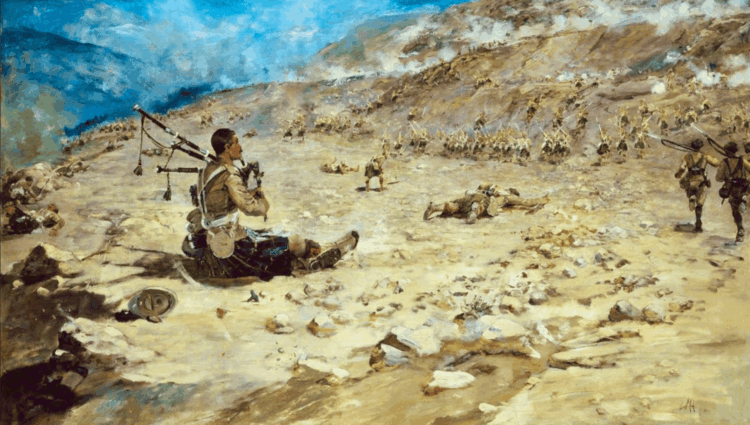
Today, the degree of popular ignorance of World War II is astounding. Military buffs apart, younger Americans know nothing about the Battle of the Bulge, which claimed nineteen thousand American lives. World War II was our “Aeneid,” an epic struggle against authentic evil, which at once created the nation and framed its destiny. The World [...]

Tools: Work Done Right

By |2026-04-30T14:15:16-05:00April 30th, 2026|Categories: Books, History, John Willson, Labor/Work, Timeless Essays|

Tools are a significant part of the permanent things, but they are also relative to time, place, and function. That is, we are tool-using animals. Or to put it another way, we are an ingenious species, capable of creating hammers of nuanced proportions, and using them to build dwelling places and to kill other members [...]

George Washington & the Patience of Power

By |2026-04-29T19:21:42-05:00April 29th, 2026|Categories: American Founding, Christianity, George Washington, History, Timeless Essays, Virtue, War|

In his courage and perseverance throughout the Revolution, George Washington revealed his reliance on patience—and feelingly used the word when referring to his men at Valley Forge. In contemporary American society, the relationship between patience and power is often wary and distant: If people have power, then they won’t have to wait. Recently, however, these two [...]

President James Monroe and Republican Virtue

By |2026-04-27T15:05:29-05:00April 27th, 2026|Categories: American Founding, American Republic, Bradley J. Birzer, Character, Government, History, Senior Contributors, Timeless Essays|

Whatever his failings as an imaginative thinker, President James Monroe’s own convictions were rooted deeply in the spirit and the letter of the U.S. Constitution. As he entered the White House in March 1817, he had little (well, less) use for James Madison’s newfound love of nationalism. While he entered the presidency too late to [...]

Defining Progressivism

By |2026-04-22T11:41:20-05:00April 22nd, 2026|Categories: American Republic, Bradley J. Birzer, Christianity, History, Progressivism, Senior Contributors|

As a theory of history, progressivism always believes in conflict and violence and antagonism. Progressivism, then, not surprisingly, is wrapped up in bigotry, racism, and violence. “Progress! Did you ever reflect that that word is almost a new one?” asked an enraptured Woodrow Wilson in 1913. “No words come more often or more naturally to [...]

Go to Top