
Since we are not greater than our Master, the recourse He invokes is our recourse also: we can, like Him, call upon the name of the Lord, of the Father, and thus we will in the end be delivered from our enemies because we know the Father.
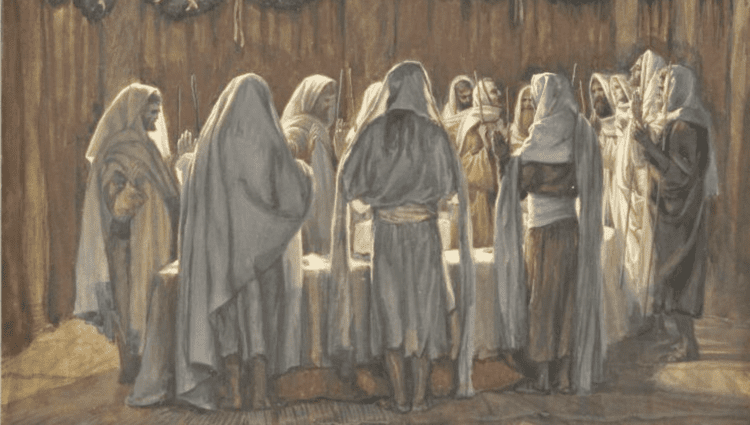 John 15: 18-21 comes from the discourse of Jesus during the Last Supper. In it we hear Jesus again drawing out the paradox that no matter how we love the world and those around us – just as God so loved the world – we cannot expect that the world will reciprocate our affection. Indeed, it may be that we become objects of hate and abuse, victims of the persecutory spirit that has blown through the hearts and minds of men ever since Cain raised his hand in anger against his brother Abel. Yet, in all this, the disciple can take heart, for to suffer persecution in the name of Jesus is to become like Him, a persecuted emissary of the Father, an ambassador of the vineyard owner whose tenants have turned on their landlord. It is an old story and should not surprise us, although in our sweet naivety, we don’t see it coming. The servant is not greater than the Master, nor indeed will the tenants have the last say.
The very last line of this extract is in some ways its most striking: all these things they will do to you on account of my name because they do not know him who sent me. This is not merely true of our persecutors, however; it is true of us too. All our bad behaviour comes from this root: that we do not know the Father. We see this attested even within the Church, for we are all a mixture of good and bad, and as the Dominican Fr Clerissac says, to suffer for the Church, it may be necessary to suffer at the hands of the Church. Ignorance of the Father is a necessary condition that explains the waywardness of the persecutors, but it is not yet a sufficient explanation. For that, we must consider the other source of all our troubles: that we humans do not know ourselves; that the light of self-knowledge we grasped yesterday has dimmed and faded; that the posturing figments of our inner rich man block out the reality of our real poverty; that the uprightness we sensed in our last action seems missing from our next action. Like an old-fashioned analogue radio signal, our fidelity comes and goes, and we fail to appreciate the immense blessing of being called to stand as shorn and shivering lambs in the violent blasts of the world’s intemperate hostility.
In those moments, we need light from without and from within, and here Jesus offers us both. It is natural for us to wish to be in harmony with our neighbours or our fellow countrymen. We are social animals, even we hyper-individualists of the twenty-first century. Yet Jesus warns us clearly to prepare ourselves to be deprived of the consolations of that harmony and the warmth of fellow feeling: they will hate us, if we are true. At best, they will not understand us and grumble at our strangeness. Having entered into the service of God, we must prepare ourselves to do without.
But is this to our loss? We need to understand it is but a temporary situation. Our fellowship is now first with God, the source and foundation of our being and our calling, who calls us precisely into a unity distinct from the human herd, first with Himself, then with the other members of His mystical body, and only then with our fellow humans. God does not destroy human unity but reinvents it, re-creates it, in Himself.
When we die, says Thomas More to his friend the Duke of Norfolk, and you go to heaven for doing your conscience and I go to hell for not doing mine, will you come with me…for fellowship? In that scene in a Man for All Seasons, we hear crystallised the dilemmas of this passage from the gospel. The faithful disciple knows, tastes, bears the consequences of his or her choices, of the preferential option for God, of the burden that is Jesus’ cross, before knowing the surge of universe-defying energy and the life-restoring excesses of the Resurrection.
To restate St Athanasius’s words, therefore, all of us are called to become God, i.e. to become one with Him through a union of love; otherwise, we are condemned to choose a path of hate on which we fake our divine election like the devil, collapse inwards on our suppurating wound of self-centeredness, and turn thereby against the very neighbour we are meant to share an eternal destiny with beside the Lord.
Yet since we are not greater than our Master, the recourse He invokes is our recourse also: we can, like Him, call upon the name of the Lord, of the Father, and thus we will in the end be delivered from our enemies because we know the Father.
And having gone out to in sorrow, we will bring the harvest home with joy.
*****
A recording of this gospel (for the Solemnity of St George) and a reflection can be accessed here.
__________
Republished from The COLW Pilgrim Blog.
The Imaginative Conservative applies the principle of appreciation to the discussion of culture and politics—we approach dialogue with magnanimity rather than with mere civility. Will you help us remain a refreshing oasis in the increasingly contentious arena of modern discourse? Please consider donating now.
The featured image is “The Last Supper” (between 1886 and 1894), by James Tissot, and is in the public domain, courtesy of Wikimedia Commons.



Leave A Comment