
Portia’s famous speech in “The Merchant of Venice” is the best, and best-known, evocation of the quality of mercy in the entire canon of literature, and is also the perfect curtain-raiser to the whole topic.
The quality of mercy is not strained;
It droppeth as the gentle rain from heaven
Upon the place beneath. It is twice blest;
It blesseth him that gives and him that takes:
‘T is mightiest in the mightiest; it becomes
The throned monarch better than his crown:
His sceptre shows the force of temporal power,
The attribute to awe and majesty,
Wherein doth sit the dread and fear of kings;
But mercy is above this sceptred sway;
It is enthronèd in the hearts of kings,
It is an attribute to God himself;
And earthly power doth then show likest God’s
When mercy seasons justice.
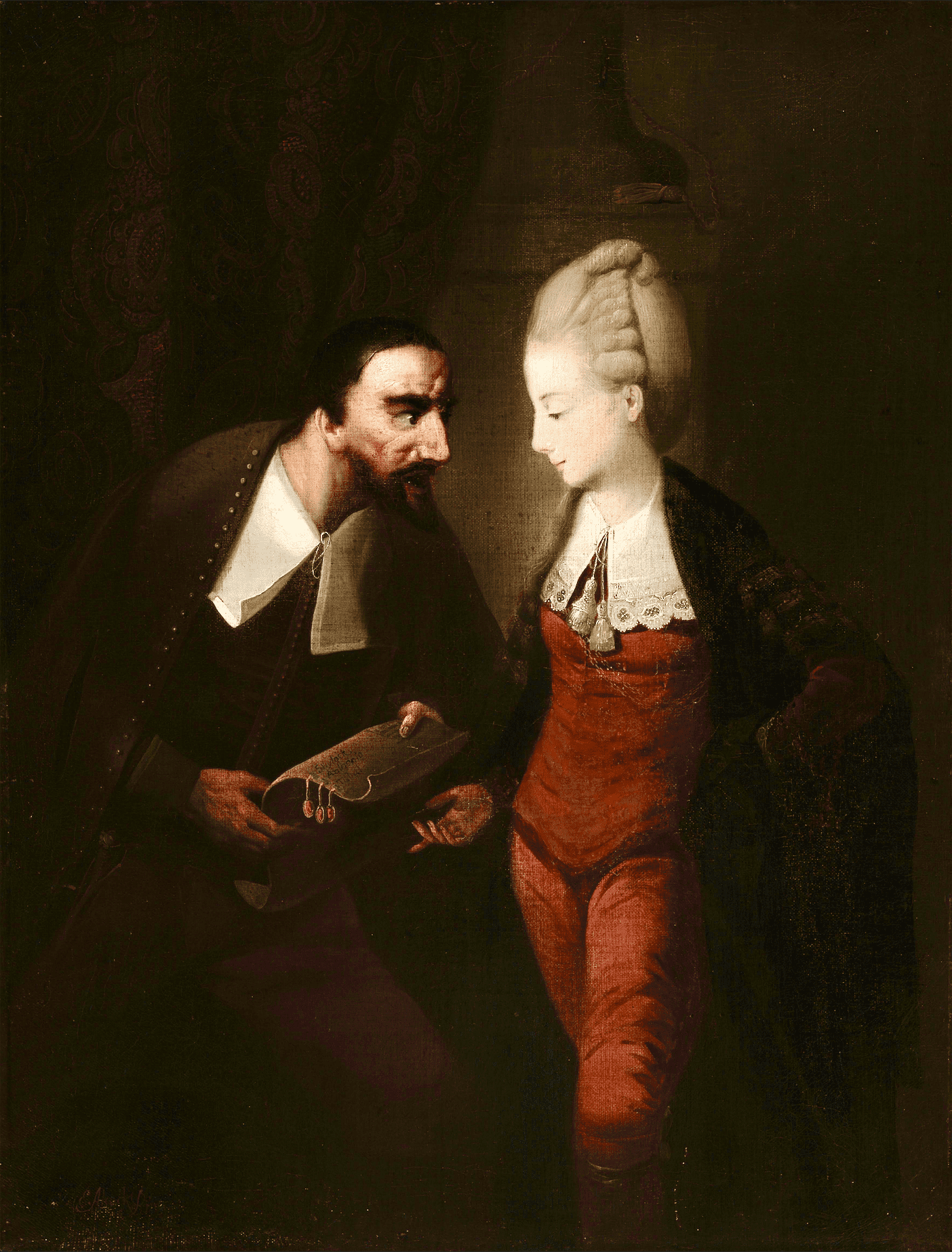 These wonderful words, written by Shakespeare and spoken by Portia in The Merchant of Venice, sprung to mind, perhaps inevitably, during a recent discussion on the representation of mercy and forgiveness in modern literature. The discussion was with a Portuguese priest who was thinking of writing his doctoral dissertation on this very topic. He had contacted me to seek my advice.
As I pondered which works I would include were I writing such a dissertation, it seemed obvious that Portia’s speech should serve as the epigraphic springboard into the discussion. It was not only the best, and best-known, evocation of the quality of mercy in the entire canon of literature, it was also the perfect curtain-raiser to the whole topic. Shakespeare comes at the very beginning of what scholars have labelled the “modern” period and his works foreshadow and frame the great literature of the following centuries.
Having settled on Shakespeare as the starting point, my thoughts turned to the other works that might form the focus of a serious study of mercy and forgiveness in modern literature. My mind leapt to the novels of the nineteenth century in which the quality of mercy was present in its paradoxical absence.
The trail of destruction left by Frankenstein’s Monster is the direct consequence of the absence of mercy or forgiveness in the hearts and the actions of both Victor Frankenstein and the unfortunate creature to which he had given life. The Monster seeks a companion to love, which Frankenstein denies, thereby setting in motion a series of murders as the Monster proves to be as merciless as his master. Neither seeks forgiveness, nor does either offer forgiveness to the other. On the contrary, each feeds off the other’s hatred.
A similar approach animates Wuthering Heights in which the obsessive and possessive passion of Heathcliff and Catherine Earnshaw proves to be mutually destructive. As each refuses to forgive the wrongs of the other, their absence of mercy leads to misery. Rather than willing the good of the other, which is the hallmark of authentic love, their unforgiving and merciless hearts, demented and demonic, seek the other’s harm. The two “lovers” are shown to be possessed by their possessiveness of each other, illustrating that such “love” is synonymous with hatred.
Moving across the Atlantic, we find “the scarlet letter” pinned to the chest of the adulteress, Hester Prynne, signifying the absence of mercy and forgiveness on the part of her Puritan neighbours. The novel explores other themes but they are always seen against the backdrop of an unforgiving culture.
Having taken the via negativa, in which themes of mercy and forgiveness are explored through their absence, we can see in Les Misérables the pivotal presence and life-changing power of Bishop Myriel’s act of mercy and forgiveness on the life of the novel’s protagonist, Jean Valjean.
Moving into the twentieth century, we find the theme of mercy and forgiveness threading its way through The Lord of the Rings. When Frodo laments to Gandalf that it was a pity that Bilbo had not killed Gollum, the wise and wizened wizard states, on the contrary, that it had been pity itself which had stayed Bilbo’s hand. Frodo recalls Gandalf’s words much later in the story when he has the opportunity to have Gollum killed. He also pities the miserable creature, showing him mercy and sparing his life. Later still, Samwise Gamgee pities Gollum and shows him mercy. After Gollum’s death, Frodo counsels Sam that they should find it in their hearts to forgive him for his trespasses in the knowledge that he had become utterly addicted to the evil power of the Ring and therefore almost powerless to resist it.
Many other examples of mercy and forgiveness in Tolkien’s work could be given, including the deathbed confessions of Boromir in The Lord of the Rings and Thorin Oakenshield in The Hobbit, both of which are accompanied by words of absolution and forgiveness.
Themes of mercy and forgiveness are also woven into The Chronicles of Narnia, as seen in Aslan’s forgiveness of Edmund in The Lion, The Witch and the Wardrobe and Reepicheep’s forgiveness of Eustace in The Voyage of the Dawn Treader.
I’ll conclude with a return to the dark side and a return to the via negativa. As with Frankenstein, Wuthering Heights and The Scarlet Letter, the stories of Flannery O’Connor are awash with hints of grace in the disgracefulness of sin. In “A Good Man is Hard to Find” the psychopathic Misfit’s motive for murder is a failure to forgive those, including God, whom he thinks are responsible for his own suffering. His lack of forgiveness leads to his lack of mercy for others.
Although I’ve only scratched the surface, I’m happy that this selection of ten works of modern literature, ranging chronologically from Shakespeare to Flannery O’Connor, offer profound insights into the quality of mercy and the necessity of forgiveness.
__________
The Imaginative Conservative applies the principle of appreciation to the discussion of culture and politics—we approach dialogue with magnanimity rather than with mere civility. Will you help us remain a refreshing oasis in the increasingly contentious arena of modern discourse? Please consider donating now.
The featured image is “Portia and Shylock, from Shakespeare’s ‘The Merchant of Venice,’ IV, i” (circa 1778), by Edward Alcock, and is in the public domain, courtesy of Wikimedia Commons.




Leave A Comment