

About Bruce Frohnen

Bruce P. Frohnen is Professor of Law at Ohio Northern University College of Law and the author of Virtue and the Promise of Conservatism: The Legacy of Burke and Tocqueville, The New Communitarians and The Crisis of Modern Liberalism and editor (with George Carey) of Community and Tradition: Conservative Perspectives on the American Experience. His latest book is Constitutional Morality and the Rise of Quasi-Law (written with the late George Carey).

The Jamestown Project: The Start of Something Big

By |2020-05-13T12:25:13-05:00October 1st, 2012|Categories: American Republic, Books, Bruce Frohnen, Jamestown|Tags: |

Over the course of the seventeenth and eighteenth centuries, Virginia would become something other than what most Americans tend to think of in relation to localist democracy. But Jamestown, after much painful experimentation, had established the kinds of local institutions, beliefs, and practices that colonizers recognized as the prerequisites to successful settlement and that we [...]
Lawless America: What Happened to the Rule of Law

By |2014-12-30T18:07:26-06:00September 25th, 2012|Categories: Bruce Frohnen, Culture, Rule of Law|Tags: |

Though it has been obvious to discerning observers for a con­siderable period that the United States is moving at an acceler­ating pace from constitutionalism toward arbitrary power, the vast majority of Americans have been slow to recognize that a crisis of governance exists. Much of the reason, I think, is that entire structures of understanding [...]

British Culture: The Olympic Bomb

By |2014-12-30T18:08:33-06:00July 28th, 2012|Categories: Bruce Frohnen, Culture, Olympics|

Anyone harboring concerns over the state of British culture should have had their fears laid to rest by the London Olympics’ opening ceremonies. British culture is well and truly dead. From the “signing” choir that could hardly sing, to the parade of “notable” left-wing figures carrying the flag around the stadium, the mish-mash of bad [...]

On Statesmanship: The Case of John Adams

By |2022-07-13T18:37:31-05:00July 20th, 2012|Categories: American Founding, American Republic, Bruce Frohnen, John Adams, Statesman|Tags: |

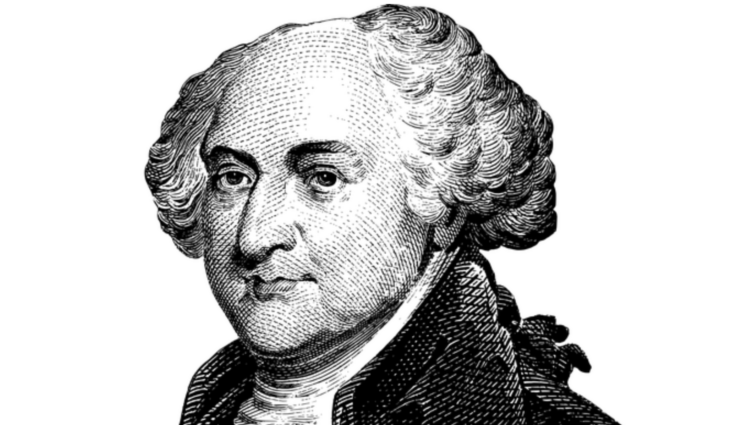
John Adams was a true statesman, committed to republican principles, conducting himself in a virtuous manner that served the public good. Without him, it is entirely possible that there would be no United States of America. What kind of person is worthy of being called a “statesman”? What type of character, what accomplishments, what life [...]

What’s in a name, or “The Individual Mandate is a Unicorn”

By |2014-12-30T18:13:32-06:00July 10th, 2012|Categories: Bruce Frohnen, Constitution, Politics, Supreme Court|

It is official. Obamacare is Constitutional. And we all know why: because Chief Justice Roberts says the individual mandate is not actually a mandate, it is a tax. The critical passage from the opinion nicely sums up Roberts’ decree: “The individual mandate cannot be upheld as an exercise of Congress’s power under the Commerce Clause. That Clause [...]

A Few Unwelcome Words about Mrs. Klein

By |2014-12-30T18:16:10-06:00June 27th, 2012|Categories: Bruce Frohnen, Culture, Film|

Karen Klein, the grandmother/bus monitor whose bullying by a group of middle school students was captured on video and posted online, has become a bit of a celebrity over the summer of 2012. I have nothing but respect for this eminently decent woman. But the story of her ordeal has followed an all-too-common trajectory in [...]

T.S Eliot’s Christianity and Culture: the Problem of Establishment

By |2016-08-03T10:37:29-05:00June 11th, 2012|Categories: Books, Bruce Frohnen, Christendom, Political Science Reviewer, T.S. Eliot|

T.S. Eliot T. S. Eliot indisputably was, and remains, in the first rank of poets of any era and any culture.[1] Eliot is almost as well known among literate persons as a critic and literary theorist. His journal, The Criterion, despite its short lifespan, remains the standard of high modernism. Continuing interest in [...]

The Agnostic Age: Law, Religion, and the Constitution

By |2014-03-19T16:16:08-05:00April 4th, 2012|Categories: Books, Bruce Frohnen, Constitution, Religion|Tags: |

The Agnostic Age: Law, Religion, and the Constitution, by Paul Horwitz Any attempt at fairness in evaluating The Agnostic Age: Law, Religion, and the Constitution must start by recognizing the light touch and good will Paul Horwitz brings to a topic fraught with ponderous and cryptic argumentation, punctuated by outright acrimony. If the book fails [...]

Redeeming America’s Political Culture: The Kirkean Tradition and Traditional Conservatives

By |2017-12-09T14:06:20-06:00February 15th, 2012|Categories: American Republic, Bruce Frohnen, Politics, Russell Kirk, The Conservative Mind|Tags: |

By and large, the American Revolution was not an innovating upheaval, but a conservative restoration of colonial prerogatives. Accustomed from their beginnings to self-government, the colonials felt that by inheritance they possessed the rights of Englishmen and by prescription certain rights peculiar to themselves. When a designing king and a distant parliament presumed to extend [...]

Redeeming America’s Political Culture: The Kirkean Tradition in the Study of American Public Life

By |2019-04-24T10:00:36-05:00October 27th, 2011|Categories: American Founding, American Republic, Books, Bruce Frohnen, Conservatism, Political Science Reviewer, Russell Kirk, The Conservative Mind|

By and large, the American Revolution was not an innovating upheaval, but a conservative restoration of colonial prerogatives. Accustomed from their beginnings to self-government, the colonials felt that by inheritance they possessed the rights of Englishmen and by prescription certain rights peculiar to themselves. When a designing king and a distant parliament presumed to extend [...]

Conservatism Isn’t Liberal

By |2017-06-19T14:03:08-05:00October 7th, 2010|Categories: Bruce Frohnen, Conservatism, Jean-Jacques Rousseau|

Patrick Deneen, over at Front Porch Republic, has posted reflections on what he deems the lack of a conservative tradition in America (find it here). My first instinct, on being shown the piece by Winston Elliott, was that its errors were too numerous and thoroughgoing to address, and that to do so might seem churlish, especially [...]

Speaking of Offensive Wars. . .

By |2017-06-20T12:03:04-05:00September 11th, 2010|Categories: Bruce Frohnen, Constitution, History, Politics|

In reviewing materials for a course I teach on the origins of the American Constitution, I ran across the following from the (1641) Massachusetts Body of Liberties (spelling modernized): No man shall be compelled to go out of the limits of this plantation upon any offensive wars which this Commonwealth or any of our friends [...]

George W. Carey, Movie Star

By |2019-11-14T15:49:05-06:00August 26th, 2010|Categories: Audio/Video, Bruce Frohnen, George W. Carey|

George Carey Liberty Fund has released a DVD starring none other than our own George Carey. A CONVERSATION WITH GEORGE W. CAREY features telling insights on the nature of our constitutional order, the breakdown of the separation of powers, the decline of political science as a profession, and the prospects for constitutional morality in our [...]

Go to Top