

Broadly speaking there are two types of atheism. One is, or can be, truly noble; the other is, and always will be, truly ignoble.
The noble sort of atheism is that which is genuinely interested in the quest for truth and pursues it in a disinterested way, as something that is worth doing because it is a good thing to do. Chesterton pays tribute to this sort of noble atheist in his novel, The Ball and the Cross, depicting Turnbull, the atheist character, as being as honest and honorable as the Catholic character, MacIan, with whom Turnbull wishes to fight a duel. This noble atheism can be not only good in itself but can be good for Christianity also. Its insistence on the legitimacy and indeed the necessity of reason helps to expose those heretical forms of Christianity which have turned their back on reason, treating reason with suspicion or even contempt. Since Christian orthodoxy has always insisted on the inextricable and indivisible union of faith and reason (fides et ratio), it has always condemned fideism, which is the heretical belief that faith is independent of reason or even that faith and reason are enemies and are therefore mutually exclusive. One of the great weaknesses of Islam, apart from its rejection of the divinity of Christ, is its tendency towards fideism, and one of the great weaknesses of certain types of fundamentalist Protestantism, in spite of the insistence on the divinity of Christ, is this same tendency towards fideism. Insofar as the rational questions of the noble atheist highlight the irrational nature of fideism, the atheist is a natural ally of Christian orthodoxy, albeit an accidental and an uncomfortable one.
Unfortunately the noble atheism which genuinely seeks for the truth is outgunned by the ignoble atheism, which has no real desire for the truth per se but which merely wants to use the tools of “reason” as a stick with which to beat the Church. This ignoble atheism is poisoned by its primary motivation of hatred towards Christianity and its desire to destroy Christianity and its influence. The ignoble atheists, who heavily outnumber their noble brethren, are atheists on principle, which is to say that their primary motivation is one of hating a God in whom they do not wish to believe.
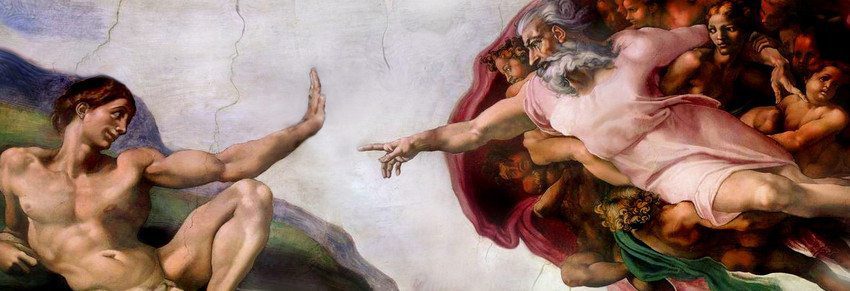 There can of course be many reasons why we do not wish to believe in God, one of the most common of which is the adoption and embrace of lifestyles which are considered sinful. It might be much easier for us to dismiss the reality of sin, which is only possible if we dismiss the Commandments of God, than to change our sinful ways. We tell the Church to go to hell because we refuse to believe that we might be going there ourselves. Another reason might be an unhappy encounter with a Christian or with Christianity, perhaps early in life, which has embittered us against God and those who believe in Him. Such people, scarred by the failure of Christians in their lives, are unable to distinguish between the truth of the Gospel and the failure of Christians to live in accordance with it, throwing the Baby Jesus out with the dirty bathwater of Christian weakness and hypocrisy. These are all motivations for the ignoble form of atheism, which have precious little to do with reason and everything to do with an irrational desire that God does not exist. Such atheism, which is the common or garden variety, has little to do with genuine reason and much to do with the pride and prejudice, and the ignorance and arrogance, of its adherents.
Since the ignoble form of atheism is ultimately irrational, relying on rhetoric, polemic and sophistry, as opposed to genuine rational discourse, it is very easy to debunk. Three books which debunk this ignoble atheism with relative ease are Answering the New Atheism: Dismantling Dawkins’ Case against God by Scott Hahn & Benjamin Wiker (Emmaus Road, 2008), God is No Delusion: A Refutation of Richard Dawkins by Thomas Crean OP (Ignatius Press, 2007), and The Catholic Church and Science by Benjamin Wiker (TAN Books, 2011).
The noble form of atheism demands and deserves more respect. For those seeking a truly edifying encounter with atheistic nobility, so to speak, I can think of no better place to find it than in Peter Kreeft’s wonderful Letters to an Atheist (Rowman & Littlefield, 2014). Kreeft, as a Christian philosopher of the highest order, begins his engagement with his atheist interlocutor with the common ground that they share: “we are in deep agreement about two absolute, inherent, self-evident values, truth and love, even though we are in deep disagreement about whether God exists or not”. Kreeft’s “proposal of friendship and dialogue” is accepted by the noble atheist, enabling the engagement with reason and reality to commence.
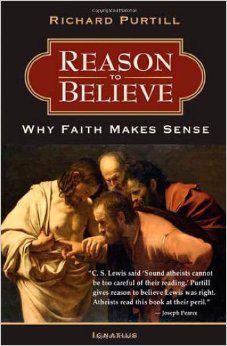 Another engagement with noble atheism is provided by another great Christian philosopher, Richard Purtill, in his book, Reason to Believe: Why Faith Makes Sense (Ignatius Press, 2009). As with Kreeft’s volume, Purtill treats the arguments of atheism with respect, thereby defeating the noble variety of godlessness on its own terms. I can think of no better way of recommending Purtill’s book than the words with which I chose to endorse it when it was published: “C. S. Lewis said ‘sound atheists cannot be too careful of their reading.’ Purtill gives reason to believe Lewis was right. Atheists read this book at their peril.”
Yes indeed, Lewis was right. Atheists cannot be too careful of their reading. The ignoble variety, afraid of having their pride pricked and their prejudice exposed, will run a mile before opening any good book that might make them question their presumptions. The noble variety, seeking the truth fearlessly wherever they might find it, will accept the challenge that Kreeft and Purtill offer, accepting the quest for truth, regardless of the perils involved, because, like the noble Turnbull in Chesterton’s novel, they know that the pursuit of truth and love, unified in the love of truth, is an adventure that no truly reasonable man will refuse. Such men are not as far from the God in whom they do not believe as they think, and are getting closer to Him with every honest step in pursuit of that which is truly reasonable. They are our noble allies in a world full of falsehood and self-deceit.
Books by Joseph Pearce may be found in The Imaginative Conservative Bookstore.




In seeking to support my Catholic faith with reason, I was introduced to Classical theism by Frank Sheed in “Theology and Sanity”. That has led to reading philosophers such as Edward Feser, and most recently Michael Augros (“Who Designed the Designer?”), from whom I have profited greatly.
I’d also recommend “Atheist Delusions” by David Bentley Hart.
Nice piece, Mr. Pearce.
You write: “[T]he noble atheism which genuinely seeks for the truth is outgunned by the ignoble atheism . . . ”
Of course it is. Humanity being what it is, the noble anything is generally outgunned by its ignoble counterpart (if only numerically). The ignoble atheists outnumber the noble atheists, and the ignoble theists outnumber the noble theists.
I might add this. I suspect that the “noble atheist” is never as fully an atheist as the “ignoble atheist,” as he (or she) retains the humility to know that one’s assessment of the truth is necessarily contingent , and is subject to revision upon encountering new arguments, or upon further reflection.