
Do we use our increasingly sophisticated gadgetry and expanding knowledge in an elvish, creative, and artful way to foster beauty and truth? Or do we use technology to manipulate, make money, and gain more power in the world?
 One of the stress points of the modern age is the pace and power of technology. Will our knowledge and gadgetry outstrip our ability to control and channel it? The theme of this threat is at the core of the popular Terminator science fiction franchise, and it has echoed through modern culture since the fateful and fatal days of August 1945 when the world woke up to the reality of utter devastation at Hiroshima and Nagasaki.
Having survived the nightmare of the first World War, J.R.R. Tolkien knew well the tension of technology and the threat of the machine. In a long letter to Milton Waldman, who he had hoped would publish The Lord of the Rings, Tolkien explains the use of magic in his great myth and how it relates to machinery.[*] Neither a dullard nor a Lollard, Tolkien had thought through, with great clarity, the difference between the magic of the elves and that of Mordor.
He observes that the hobbits do not understand the difference between the magic powers exercised by the elves and that of the Dark Lord Sauron: “the Elven queen Galadriel is obliged to remonstrate with the Hobbits on their confused use of the word [magic] both for the devices and operations of the Enemy and for those of the Elves.” Tolkien says the lack of a proper word (other than “magic”) for the work of the elves indicates the same confusion in our own minds and mythologies.
He then goes on to explain the difference: “Their [the elves’] ‘magic’ is Art, delivered from many of its human limitations: more effortless, more quick, more complete (product, and vision in unflawed correspondence). And its object is Art not Power, sub-creation not domination and tyrannous re-forming of Creation.”
Tolkien’s distinction elucidates the dilemmas we face as technology snowballs and threatens to blow up in our face. Put simply, the magic of Mordor is the machinery of murder. It is the pursuit of power for its own sake, and as such it constantly perceives the natural world merely as a raw material to be exploited, distorted, and destroyed. In Peter Jackson’s film version of Tolkien’s masterpiece, we see this machinery of murderous magic in full display as the twisted wizard Saruman destroys Fangorn—chewing up the forest to fuel his machines of war. The realms of the Elves, in contrast, at Rivendell and Lothlorien, are havens of harmony, beauty, and peace created by elven magic.
In his book on miracles, C.S. Lewis made a similar distinction—not between elven magic and machines, but between magic and miracles. Magic is always a prideful attempt to distort or dominate nature for the magician’s own uses. Lewis’ thought is illustrated in the Narnia volume, The Magician’s Nephew. Digory’s uncle Andrew is the “minor magician” who uses magic to manipulate the children and to cause havoc which, Aslan warns, may lead to total annihilation. Miracles, Lewis asserts, never distort or destroy nature. Instead, they lead to a restoration, healing, or completion of the natural order. So, a healing miracle corrects what went wrong or what had become diseased. Our Lord’s nature miracles bring abundance and peace: A storm is calmed or bread and fish are multiplied. The miracles are “Elvish magic” because they are artful and creative, not manipulative and exploitative.
The distinction elucidates our own continued, modern relationship to technology. Do we use our increasingly sophisticated gadgetry and expanding knowledge in an elvish, creative, and artful way to bring light, beauty, and truth to the world, or do we use technology to manipulate, make money, and thus gain more power in the world?
Finally, Tolkien’s distinction unlocks a proper understanding of the ecology movement. Many conservatives seem instinctively opposed to the aims and ambitions of the “Green” campaign. Certainly, to place the preservation of the natural world at the top of the list of political priorities is a misjudgment. However, there is a proper critique of the modern machinery of destruction of the natural world simply for profit and power. Where does our passion for technology end and our responsibility to the preservation of the natural world begin? Shall we continue, like Saruman, to ravage Fangorn, or shall we, like the Elves, use our technological magic to create worlds as beautiful, bright, and free as Rivendell?
This essay was first published here in May 2021.
The Imaginative Conservative applies the principle of appreciation to the discussion of culture and politics—we approach dialogue with magnanimity rather than with mere civility. Will you help us remain a refreshing oasis in the increasingly contentious arena of modern discourse? Please consider donating now.
* In The Letters of J.R.R. Tolkien, ed. Humphrey Carpenter and Christopher Tolkien. Houghton Mifflin, 1995.
The featured image is courtesy of Pixabay.


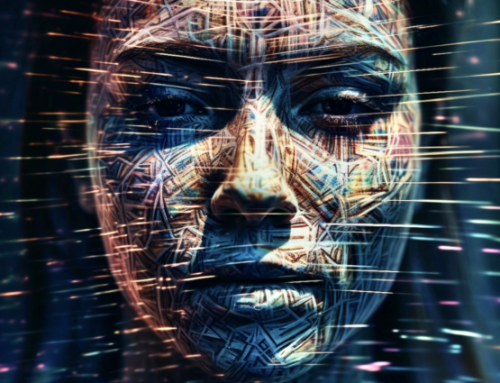
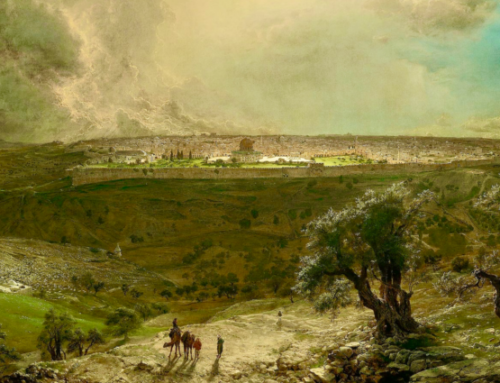

“There was a time when Saruman would walk in my woods, but now he has a mind of metal and wheels. He no longer cares for growing things.”
~Treebeard
An interesting take on the different kinds of magic in Tolkein. Still, I am inclined to think that a more apt for our times comparison would be between the magic of the elves and the greedy magic of the dwarves, delving for treasure and accumulating wealth heedless of the environment and the needs of others.
Nice essay. I had a recollection of the moment when Henry Ford was a kid and he heard a great clanking and hissing and spewing from the dirt road in front of his house. He stood awe struck to see a steam ‘tractor’ creeping down the road. He was changed forever (magical?) and so were we.
Meditations on the Tarot A Journey into Christian Hermeticism by The Unknown Author addresses Magic in the 3rd Letter. Essentially, the only legitimate form is Sacred Magic. The example given is the healing of Aeneas by Peter (Acts ix, 32-34) “And Peter said to him: Aeneas, Jesus Christ heals you; rise and make your bed. And immediately he rose.”
“Thus miracles require two united wills! They are not manifestations of an all-powerful will ordaining, but are due to a new power which is born whenever there is unity between divine will and human will. Peter was therefore certainly there for something at the healing of Aeneas at Lydda. The divine will needed his will in order to give birth to the power which raised the paralyzed Aeneas from his bed. Such an action, where there is simultaneously an accordance of divine will and human will, is exactly what we mean by ‘sacred magic’ or ‘divine magic’.” Pg 56
Great essay!