
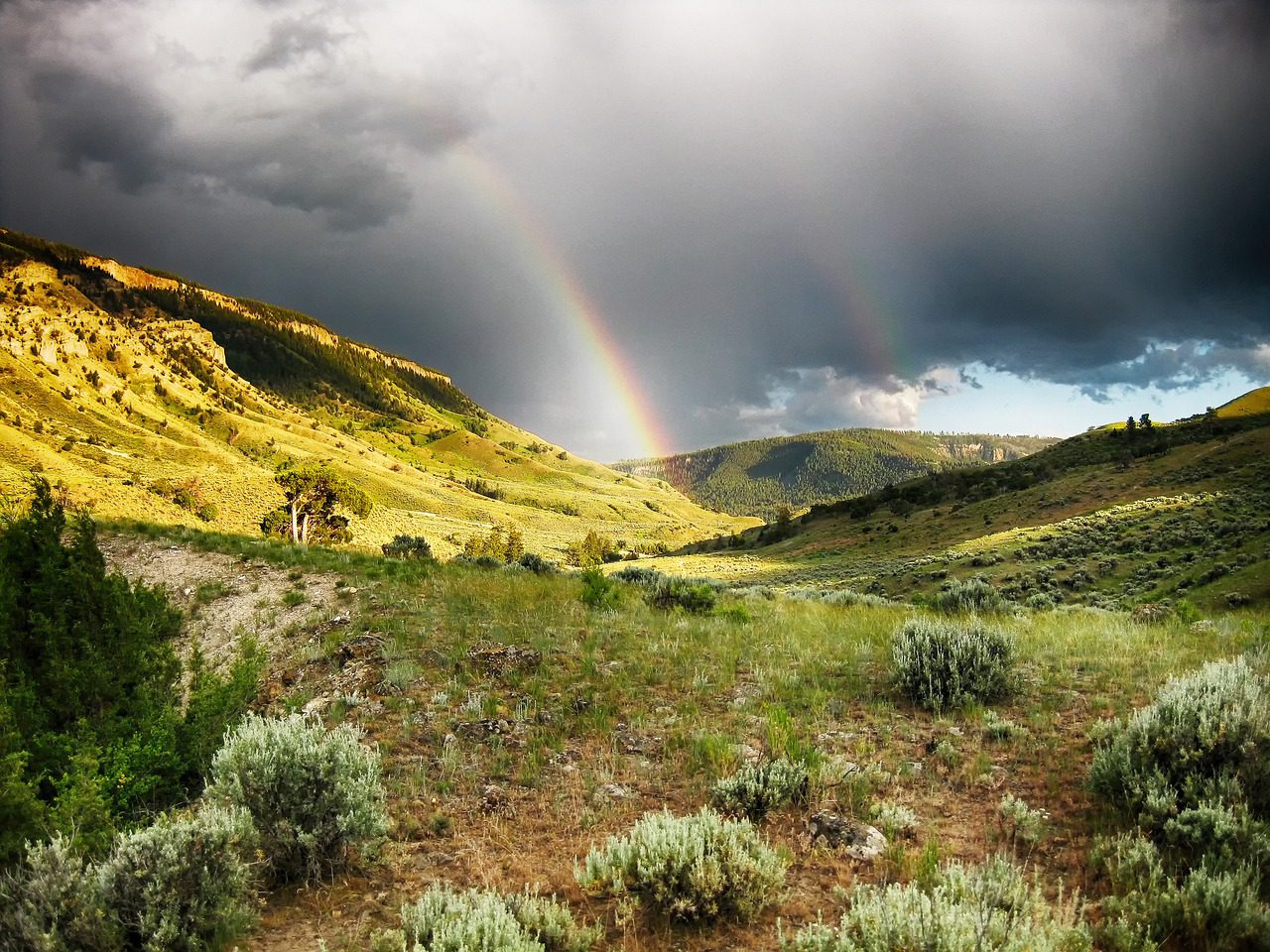
This is the beginning of an extraordinary adventure, one that will bond the freshmen to each other for life and form the way that they experience the world of the mind and the tradition of the West, which is their home and birthright. I mean the West, of course, in the broad cultural sense, but also the American West, the cowboy heritage, the frontiers, the sense of what it takes to live without the amenities of the modern world always at hand.
 At the beginning of each year’s Freshmen Welcome Week, I have the opportunity to address the newest WCC parents, many of whom are experiencing Lander and the College for the first time in person. This year, I spoke to them about what they (and their children) should expect in the coming years, and about how the next few weeks will shape the lives of their children forever. Hyperbole? Not at all!
At the end of Four Quartets, in a poem called “Little Gidding,” T.S. Eliot brings his great cycle to an end by writing,
We shall not cease from exploration
And the end of all our exploring
Will be to arrive where we started
And know the place for the first time.
He seems to be talking about a great circle that we trace in life—journeying and journeying only to end up where we started.
So why is it that these lines do not convey futility and hopelessness? Eliot says explicitly, elsewhere in the poem, that “in our end is our beginning,” and the reason the lines strike home is that we all experience this phenomenon in one way or another. The thing that we hope to find is what starts us out in the beginning. What we already have is what we seek. In the Odyssey, which your freshmen will read in the middle of the first semester, Odysseus has to find his way home after 20 years. He longs to return to Ithaka, but year after year he finds himself farther and farther away. You probably remember his dog Argos, who looks up at Odysseus, who is disguised as a beggar, wags his tail, and dies. Perhaps this is the recognition that insures Odysseus that he is in the right place. Much has changed in the visible character of his household and his island kingdom. In fact, things are so different that coming home is both a reassertion of his identity and a new discovery of who he really is.
Tonight is the beginning of an extraordinary adventure, one that will bond the freshmen to each other for life and form the way that they experience the world of the mind and the tradition of the West, which is their home and birthright. I mean the West, of course, in the broad cultural sense, but also the American West, the cowboy heritage, the frontiers, the sense of what it takes to live without the amenities of the modern world always at hand. One of the first experiences of freshmen will be leaving behind the means of easy communication—the cell phone or the laptop—and entering the same mountain wilderness that the native Americans used to inhabit, the one that the mountain men of two centuries ago explored, leaving behind names like Carson and Bridger and Colter. Put simply, it will change their lives. These extraordinary landscapes will become part of their memory and imagination for the rest of their lives, and when they come back down from the mountains, they will read the books that have never ceased to form the mind of our civilization. They formed you, I suspect, as they formed me. Now these freshmen will find their way into our civilization in a new way, newly responsible for the heritage and the homecoming.
You parents and grandparents surely remember—as I do—the first days of college. I went to the University of Georgia, and I remember counselors who had been instructed to take groups of us—students who, like themselves, were apparently chosen at random—and to put us through exercises that felt awkward at the time and feel just as awkward fifty years later. You know what I mean: artificial group things that elicited compliance and perhaps a rare moment of lukewarm pseudo-trust. How anyone was supposed to learn from such experiences is beyond me. What your freshmen are going to do is astonishingly different, so much so that I won’t say any more about it, because the experience they have will speak for itself.
This moment tonight will be eclipsed by all the things to come in the next four years, but perhaps not entirely. Perhaps something about it will become a fixed point in memory, a strong recollection—that hot first evening in Lander when their parents and siblings were there and the faculty and administration gave talks. Maybe they will look back at this moment and remember that this was the night they realized with a flutter in the belly that they were on the brink of something new, something that since then has become so much a part of them that it will carry them into their lives under the protection of Our Lady and the real presence of Our Lord Jesus Christ.
I sincerely hope that these next weeks will be all that I’m saying and more. Your children will be beginning an integrated education with no electives and no majors. It will call upon all their resources and challenge them as the Cyclops or the Sirens challenged Odysseus—well, by analogy. Some things will be easier than others—maybe they’re better at Latin and math than at writing sonnets, maybe not. But they will come to know themselves and their capacities in ways that are deeply and honestly real.
Republished with gracious permission from Wyoming Catholic College‘s weekly newsletter.
The Imaginative Conservative applies the principle of appreciation to the discussion of culture and politics—we approach dialogue with magnanimity rather than with mere civility. Will you help us remain a refreshing oasis in the increasingly contentious arena of modern discourse? Please consider donating now.
The featured image is courtesy of Pixabay.




Leave A Comment