
Historian Francis Parkman was a romantic, and readers today might be skeptical that any such person as Isaac Jogues could have existed as Parkman “imagined” him. And imagine him he did, from the vantage point of enthusiasm toward the past and a warm regard for the heroic.
 There’s serendipity here in as much as my wife and I tend to seat ourselves at church in the same place always: left side near the Virgin Mary chapel, but in front, close to one of the pillars that houses a speaker… but that speaker has been absent for some time. It’s unclear why. We are usually just to the left of Richard and Stella but in front of Emil and Teresa. To our left is another person, a slender woman, introverted, I suspect, but she may also have suffered a great loss; she fingers her beads nervously and never looks up. If she smiles it’s so brief as to be un-noticeable and she seems folded in on herself.
So, once or more a week we slip into our usual spot, but not for the Latin Mass, which is for a very different sort of parishioner.
The bulletin is good enough to tell us where we happen to be in the liturgical year, and thus we pluck the pew book, the missal, from the shelving in front of us, which also contains other stuff: reading glasses from someone, a pink hair ribbon, some Cheerios, an old Covid mask. It’s an archeological dig. Which is what I need to do with the missal.
The pew book is a hefty 832 pages, and is there because the church offers Ordinary Form Masses. The argument, if that’s the right word, is that the Jogues Missal is an ideal tool for priests who are seeking to move their community toward a more elevated, solemn, beautiful, and traditional celebration, the Ordinary Form of the Roman Rite. It’s printed in large readable type, and my impression is that it’s tastefully done and appropriate in an age when liturgical formation is desperately needed. It’s also nicely illuminated with 64 full-color pages and lovely religious artwork and stunning pictures of a priest celebrating. I’ve been led to understand that it’s the true liturgical vision of the Vatican II fathers, and with both Latin and English together on the same page.
I’ve been handling this book now over the seven years we’ve been parishioners, while harboring a mental itch because I knew that somewhere I had read about Isaac Jogues, Society of Jesus, at one time or another. It took some mental digging.
Wallace Stegner would on many occasions come from Stanford to the University of Utah, and I would in small seminars study western American history with him. We read The Oregon Trail, of course, which I had also read as an undergraduate, but Wallace remarked that Francis Parkman was a much-neglected American historian. I recall reading Samuel E. Morison’s little booklet on Parkman and wrote a seminar paper on Parkman’s LaSalle as a quest romance, a better version of which was published some years ago in the Colby Library Quarterly. My sense is that these days he might be accused of playing fast and loose with facts and filling in whatever gaps there may be with his romantic imagination. And his prejudices are those of his time, nationality, and Brahman class. Bancroft and others were, like Parkman, developing the theme of the Germans in which history reveals the advance of such peoples as the Anglo-Saxons. I do recall, however, Parkman’s sympathy for the Jesuits, likely based on their attraction to adventure and their manliness. Safe to say he wrote about the biographical explorations of outstanding men rather than about social forces, but he also included critiques on renegades, especially the Iroquois. The missionary who thought himself the truest of true soldiers of heaven was a fit topic for his wilderness pageant, and Father Jogues, like La Salle, had a heroic personality that stands out in clear relief.
***
Then some years later at a small college in Arkansas where I taught for a bit, I would on occasion venture to the basement for some study privacy among some old sagging book shelves and stacks. Against one wall were some shelves simply labeled “Old Books.” I browsed and, lo, there was a complete set of Parkman’s works, the Frontenac Edition, number 783, 16 volumes, most of the pages uncut, published in 1899 but not on conservation grade paper; a century and a quarter later the pages are fast becoming brittle. I mentioned the shelving to the librarian who said I could have the old books should I wish. I did so wish.
Browsing, more recently, The Conspiracy of Pontiac, The Pioneers of France in the New World, and then The Jesuits in North America in the Seventeenth Century, suggested a look-see into the index and there, in the second volume, lengthy pages devoted to Father Isaac Jogues, his life in France and the wilderness of New France, that area of Continental North America embracing the shores of the St. Lawrence River, gradually expanding west to include much of the Great Lakes Region. The time frame is generally from 1534 when Cartier entered the Gulf of St. France and, so goes the argument, took possession of New France for King Francis I. Roughly a century later, the Jesuits conceived plans to establish missions in what was known as the Huron territory and also among the Iroquois, traditional enemies of the Huron.
If I have the story correct, eight Jesuits were murdered over the seven years between 1642 and 1649 and are known as Saints martyrs canadiens.
But how best to approach the story?
I recall reading Hayden White’s introduction to his Metahistpry, “The Poetics of History,” his study of the historical consciousness in the nineteenth century. He does not mention Parkman directly but his question about what it means to think historically and what are the historical methods of inquiry is to pose the same question to Francis Parkman’s confident mood. Here it’s important to note that White utilizes Northrop Frye, his Anatomy of Criticism, and his levels of literary conceptualization applied to history, including modes of emplotment, modes of argument, and modes of ideological implication, all elements of the historical field that effect the theory of a historical work.
As for modes of emplotment, Parkman has usually been characterized as romantic, but also when giving a historical account of aspects of the epic. As for the point of it all, the argument, or what it adds up to, Parkman establishes the vividness of the Jesuit mission as a drama of self-identification, which White notes is symbolized by the hero’s transcendence over the world of experience, the triumph of good over evil, and which would lead to ideological implication, the social change of the Indians, a structural transformation of their paganism on a new basis, a Christian community held together by a higher sense of their common humanity.
Father Jogues appears in Parkman’s history first as a footnote to a passage concerning Algonquin mythology, “Jouskeha,” a spirit who “raises corn for himself, and makes plentiful harvests for mankind. Sometimes he is seen thin as a skeleton with a spike of shriveled corn in his hand, or greedily gnawing a human limb” (i,72). Parkman’s anthropology continues as he notes that “Jouskeha” is often understood as the creator of the world and regarded as supreme. It is paganism with tremendous influence among the Algonquin, and Parkman argues further that in these primitive natives one finds political and social instruction of the people as the chosen race demanding human sacrifice. Parkman’s first mention of Father Isaac reads as follows: “Father Jogues saw a female prisoner burned… and two bears offered to [Jouskeha] to atone for the sin of not burning more captives.” Parkman’s source is a letter by Father Jogues dated August 5, 1643.
The earlier years 1636 and 1637 continue with anthropological discussions concerning pagan disinterment of the dead, lowered from their scaffolds after twelve years. Each family reclaimed its own and began a process of removing whatever flesh remained on the bones. The belief—if that’s the right word—was that a soul still resided in the remains. Parkman writes that the “spectacle was frightful” (i,161). Funeral games followed during the time in which the remains of dead relatives were bundled, “some made up into clumsy effigies,” and hung from the rafters, “more than a hundred.” Those early Jesuit priests “repaired to [the] spacious bark” house to spend “a night,” Parkman writes, during “which the imagination and the senses conspired to render almost insupportable” (i,163). For the Jesuits, the ceremony, the ritual, was so “dreary and lugubrious, that it seemed… the wail of despairing sounds from the abyss of perdition.”
The Jesuits were to witness other more terrible rituals, but the scene is a dramatic foreshadowing of what awaits Father Jogues, who was sent on his mission in service of God and Holy Mother Church, which Parkman notes owned a more noble and purer part that gave life to the early missions of New France. And it was to this gloomy wilderness that Father Jogues journeyed with no expectation other than toil, solitude, privation, hardship, and death and always under orders and always with the knowledge that their version of French Paradise for the Mohawk, the Huron, and the Iroquois wold be slow to become conviction. The terms, for many of the natives, were too hard.
It was to the Huron mission that Father Jogues journeyed to confront the primitive Indian idea of a Supreme Being. The system of polytheism suggested a God who owned no attributes of moral good, who did not dispense justice for this world or the next, but instead who left all mankind under the power of various subordinate spirits who control the universe.
The problem for Father Jogues and other Jesuits was that the Indian language did not include words for the Christian conception of God. What was fortunate was Father Jogues’ natural aptitude for learning the Indian languages, by which he could teach the Huron how to pray to the Great Spirit and clothe that Spirit with the attributes of moral good (i,75). “Nature had given him no especial force of intellect or constitutional energy, yet the man was indomitable and irrepressible as his history will show” (i, 95).
***
These early episodes by Parkman should be regarded as anticipatory exposition, or what will await Father Jogues at the Canadian little mission settlements and the Indian lodges where “scalps were hung like little flags over the entrances” (i, 101).
Parkman makes the argument that undeniably, at least among the Huron, the faith “was making progress” although it should not be “supposed that its path was a smooth one” (i, 174). More so since the business of the Indian chiefs “is mainly to do the Devil’s bidding, preside over the ceremonies of hell and excite the young Indians to… seamless indecencies” (i,175).
Among the converts backsliding was common, especially since the bond between the Huron and Jesuit missionaries was greatly weakened by various slanderers who gave out the story of a young baptized convert girl, who then died but returned to life and gave a deplorable account of the French Jesuit heaven.
The issue became more complicated for Father Jogues and his fellow missionaries when the Huron suffered a tremendous blow, when just before dawn, “a legion of devils” descended upon the Huron, cutting them down with knives and hatchets, killing many, reserving the rest for a worse fate. Parkman calls it (Iroquois) religious terror against which Father Jogues must contend.
But the mission is all-important, and from Old France to New France more Jesuits crossed the Atlantic to urge the work of conversion. Parkman writes that such was “a self-devotion more constant and enduring [and] will scarce find its record on the page of human history” (i,173). Was it all, however, less a service to God and more a service to themselves, a sophistry of the human heart perhaps even earthly pride as “life-springs of the soul?”
Which suggests that Parkman found it necessary to spend a few sentences critiquing the “mighty Church of Rome… heralded as infallible and divine… prodigies of contradiction,—now the protector of the oppressed, now the right arm of tyrants; now breathing charity and love, now dark with the passions of Hell; now beaming with celestial truth, now making hypocrisy and lies; now a virgin, now a harlot; an imperial queen, and a tinseled harlot” (i,174).
Having so vented, Parkman returns to his story by suggesting that it was (the Church’s) nobler and purer part that gave life to the early missions of New France. Thus the Huron and the Jesuits, that gloomy wilderness, those hordes of savages became a mission that had nothing to tempt the ambitious, nothing but obscure toil, solitude, privation, hardship, and a martyr’s death which would become the reward of the newcomers—among whom was Father Jogues, who scarcely after arriving was attacked by a contagious fever which left him prostrate.
The disease did not prove fatal to the missionaries but visited the Huron towns with “tenfold vengeance” (i, 176). And with it small pox which led to universal terror. The missionaries became physicians, visiting smoky dens, the inhabitants seated around their fires in silent dejection. Parkman writes that once the body was cared for the Jesuits addressed themselves to the soul. But the manner might be questioned especially when the missionaries enlarged less on the joys of heaven but rather the pains of Hell which Parkman notes was “set forth with [the] best rhetoric” since “pictures of infernal fires and torturing devils were readily comprehended” (i, 177).
There’s a rigidity however, with the Hurons, who argue quite well that Heaven is a “good place for Frenchmen,” but they wish to be among Indians. And often the argument became hopelessly perverse, nature triumphing over grace. “‘Which will you choose,’ demanded the priest of a dying woman. Heaven or hell? ‘Hell if my children are there, as you say,’ returned the mother. ‘Do they hunt in Heaven, or make war, or go to feasts?’ asked an anxious Indian inquirer. ‘Oh no.’ replied the Father. ‘Then,’ returned the querist. ‘I will not go. It is not good to be lazy.’” The problem was also compounded because of the antagonism between Huron and Iroquois.
When the priest, “with contentment in his heart” brought water in a cup or in the hollow of his hand and prepared to baptize a convert with the mystic drops as if to snatch him from an eternity of woe, another problem emerged when an Iroquois was baptized in the presence of a Huron, who would then argue that if the Iroquois got to Heaven before the Huron, he will “see us coming and will drive us out” (i,178, 179).
The terms were too hard. The Jesuits were often regarded as sorcerers, and young Indians would rush forward with tomahawks to brain the priests, or with brands from the fire telling the priests they should be burned alive. But in the face of this, believing that the persecutions were the fury of the Devil driven to desperation by the Jesuits, there persisted an “unspeakable happiness for us in the midst of this barbarism.” To hear the roaring of the demons, and to see Earth and Hell raging against a handful of men and not a single one flinching or hesitating in their mission—among which Parkman notes was the “all-enduring Jogues” who “bore himself with a tranquil boldness” (i, 216). And as of yet no priest had been put to death or received the maxim that the blood of the martyrs is the seed of the church. Still, the difficulty of daily life might be accepted as a living martyrdom, what with abuse and threats without end, the smoke, “the fears, and dogs of the Indian lodges, which were little images of Hell.” And all of this persisted for years to the point, Parkman writes, “many might prefer the stroke of a tomahawk.”
But it’s in the second volume of the history where Father Jogues is more center-stage, beginning with the new and more hazardous mission among the Algonquins, which began, Parkman writes, in “the early morning of the second of August 1642” (ii, 29). Twelve Huron canoes were moving along the northern shore of the St. Lawrence, and among them was Father Jogues, who had previously been on a wild and unknown pilgrimage until finding himself alone in a miserable cluster of bark huts, half-buried in snow, and where savage children “seeing the black apparitions [believed] that Famine and Pestilence were coming” (ii,33). He was an unwelcome guest. But nowhere was the power of courage, faith, and an unflinching purpose more strikingly displayed than in the record of Father Jogues’ missions into such places, where squaws called on the young men to go out and split their heads. They escaped, but a more distant and perilous mission was waiting.
***
Parkman adds to this episode that Father Jogues in one of the leading canoes, age 35, is from Orleans. He had an oval face, “and the delicate mouth of his features indicated a modest, thoughtful, and refined nature. He was constitutionally timid, with a sensitive conscience and great religious susceptibilities.” Father Jogues was a finished scholar and might have gained a literary reputation, Parkman adds, but he had chosen another career, and one for which he was but ill fitted. “None of the indians,” however, “could surpass him in running” (ii, 30, 31).
Parkman owned a great flair for language and drama but also carefully researched the archives of France, Canada, and the United States. Although a modest skeptic a good part of his historical writings figure prominently with the Catholic Church. Romantic in nature, Parkman had an ambiguous attraction to the ancient faith, reverenced largely for the generations of rare and great men. Considering then, for the moment, that his reading audience would not be Catholic but Protestant, his moments of antipathy toward matters Catholic are buttressed by the self-sacrificing zeal with which Jogues and his close friend René Goupil toiled, wading through sodden snows, dark and dripping forest, and barbarous Indian villages.
Once the canoes reach the western end of the Lake of St. Peter, the story of Father Jogues becomes incredibly dramatic: “[T]hey kept near the shore to avoid the current, and the shallow water before them was covered with a dense growth of tall bulrushes. Suddenly the silence was frightfully broken” (ii, 32).
Father Jogues leaped into the bulrushes and attempted to grab and hide his companion Goupil, who had been seized by the Iroquois, along with several Huron converts. He had no heart to abandon his companions, including a neophyte companion, Couture, who was seized upon by the Iroquois, stripped of all his clothing, fingernails stripped away by Iroquois teeth, his fingers gnawed as if by the teeth of famished dogs. Father Jogues rushed to his friend, but the Iroquois dragged him away and beat him senseless. When he revived, they again lacerated his fingers with their teeth, leaving the ends as boney protrusions.
It’s harrowing in its cruelty: more so since the Iroquois faces would have all been stained with blood. It went on, and when evening came, they were forced to lie on pieces of bark, their arms and legs bound to four stakes in the ground and wholly naked. Five or more days were spent in this manner, which resembled Christ’s own passion, but which was also followed by ritual cannibalism. For Father Jogues, his hands continued to be mangled, and fire was applied to his body by children who amused themselves by placing live coals and red-hot ashes to the naked bodies of their prisoners. Parkman adds that the torturous details became as monotonous as well as revolting (ii, 38). Father Jogues, however, even in the midst of his pain and exhaustion, took the opportunity to convert and baptize the Huron prisoners with rain drops shaken from the husks and ears of green corn.
Parkman’s historical rigor might be questioned here with regard to the question of cannibalism, fact or fiction. Parkman’s sources are, however, less anthropological science and more Jesuit letters. It’s more likely that if cannibalism did exist, it did so more as a ritualistic belief that such was a religious duty and done so during the frenzied activity of torture and as part of a war custom.
Parkman continues his narrative by describing the depth of Father Jogues’ faith who, half dead and filled with exhaustion, continued to suffer patiently for the sake of Christ and the Virgin.
This part of the narrative becomes most poignant when one sullen Indian suddenly drew his tomahawk and buried it in the head of Father Jogues’ fellow priest Father Goupil, who “fell, murmuring the name of Christ. Father Jogues dropped on his knees and, bowing his head in prayer, awaited [his] own blow.” Father Goupil’s murderer ordered Father Jogues to stand up and go home; he did so, but not until he had given absolution to his still-breathing friend, whose body was then dragged through the town amid shoutings and rejoicings.
Father Jogues spent a night of anguish and desolation, but in the morning, reckless of his own life, he went in search of Goupil’s remains. He discovered the corpse had been tossed into a neighboring ravine at the bottom of which ran a torrent. With an older Indian he found the corpse, stripped naked and gnawed by dogs.
Reverently, Father Jogues dragged the body into the water and covered it with stones, resolving to return the next day and properly bury his friend. With the night came a storm, and the next day all Father Jogues could find was a roiling flood and a body nowhere to be seen.
As for the suffering of Father Jogues, Parkman writes that “crouched by the pitiless stream, he mingled his tears with its waves, and, in a voice broken with groans, chanted the service of the dead” (ii, 42).
But it was the Indians and not the flood that had born away the remains of his friend. Later in the following spring, some Mohawk children led him to where the remains were lying further down stream. It was a lonely spot, but Father Jogues went to find what may have been left. He found the scattered bones, stripped bare by the fox and birds, and tenderly gathering the bones, he hid them in the hollow of a tree, hoping that someday he could retrieve them and offer a Christian burial in consecrated ground.
His own life was also hanging by a thread, and he expected any time the stroke of a tomahawk, which he would have welcomed. Later in the year, after months of captivity, a party of Indians set off on a deer hunt ordering Father Jogues to go with them. He followed them, barely clothed, shivering and famished through the chill of November. He was offered deer meat, which the Indians “dedicated” to” Areskoni,” their god of war, but Jogues refused what had been offered to a demon. When they mocked his God, he took a tone of authority and sternly rebuked them. He was by now a living martyr, and his faith his only consolation and his hope.
He taught those who would listen about the sun, moon, and stars, and from astronomy to theology, daily repeating his prayers and carving the name of Jesus on wilderness trees.
A war party had gone out, but the French had defeated and destroyed the party, which left the remaining population clamoring to appease their grief by torturing Father Jogues to death.
The story continues with vivid descriptions of an existence that became unendurable, more so when war parties returned with his French countrymen, who were made prisoners and then mangled, burned, and devoured. But he soon began to see his captivity as a “Providential intervention” for the saving of souls, less the Iroquois and more the Mohawk.
The stage is being set, however, for his release, since the Dutch had been made aware of his presence and to their “great honor” had made efforts for his release, offering to his captors goods of a considerable value, but without effect.
Rumors also spread that the Indians at the village where Father Jogues had been held were enraged against him and determined to burn him when he returned. He spent the next amount of time in agitation and, as Parkman writes, “full of anxiety lest his self-love beguile him from his duty” (ii, 49). He could escape and avoid torture, but how could be ever hope that the Indians would some time in the future ever again permit him to instruct and baptize.
He made his decision and without raising the suspicion of the Indians decided to escape, but—as if he hadn’t suffered enough—he was bitten severely on his leg by a very large dog. He went back to the Indians, but the excitement and the agitation of his mind and the pain of his wound kept him awake. While his captors were still asleep, Father Jogues made his way outside, where he met a laborer working for the Dutch, who gave him help and guidance along a path to the river. Exhausted and in pain, Father Jogues found more dismay since the tide had ebbed, and the boat he was to use to escape was high and dry. He shouted to another offshore vessel, but no one could hear him. Parkman notes that then his “desperation gave him strength; and by working the boat to and fro, he pushed it at length, little by little, into the water and rowed to the vessel. The Dutch received him kindly and hid him in the bottom of the hold” (ii, 51).
***
The time is 1642 and a bit of an hiatus for Father Jogues, as the Dutch transported him to Manhattan, settled by Dutch Calvinists who were also in the midst of a bloody Indian war. Dressed in Dutch clothing, Father Jogues made a rough and tedious journey to the southern coast of England. Much attention was paid to his mutilated and disfigured hands. On the fifth of January, he reached the coast of Brittany and the Jesuit college in Rennes.
As it was, a letter from Father Jogues, in which he had detailed the account of his capture, had reached France. Parkman notes that the letter had become an engrossing theme of conversation among the French Jesuits. The Father Rector was dressing with his vestments to say Mass when he heard that a traveler from Canada had arrived. The Rector hurried to meet him, and when Father Jogues gave him a letter testifying to his character, the Rector began to ask a series of questions and at length asked him if he knew Father Jogues. “I know him very well,” Jogues replied.
“The Iroquois have taken him…. Is he dead?”
Father Jogues answered, “No… he is alive and at liberty and I am he” (ii 55, 56).
Father Jogues became for the time a center of curiosity and reverence and was also summoned to Paris where Queen Anne of Austria wished to see him. She kissed his mutilated hands, and the court thronged around him. Parkman here writes that the honors were unwelcome to Father Jogues, who was a modest and simple-hearted missionary who wished only to return to his work of converting the Indians.
The problem was the deformation of his hands inflicted by the Iroquois, which prevented him from handling the precious host. With the dispensation by the Pope, however, the privilege was restored, and with the coming of spring Father Jogues sailed again for Canada.
Parkman writes that upon the return of Father Jogues, two “forces were battling for the mastery of Canada: on the one side, Christ, the Virgin, and the Angels, with their agents the Jesuit priests; on the other, the Devil, and his tools the Iroquois.” He adds that never “before had the fiend put forth such rage; and in the Iroquois he found instruments of a nature not uncongenial with his own” (ii, 57).
What’s crystallizing here is Parkman’s romantic concept of history, which is often regarded as the conflict in the New World between Catholic France and Protestant England and again best summarized by Hayden White in his Metahistory. In this work, White argues that the beyond the surface level of the historical text there is a structural level, deeper content which would be understood as disambiguation by later scientific historians, who would disavow historiography that creates rather than reflect history. Parkman as historian is at pains to imbue historic action with both aesthetic and ethical purpose through his method of emplotment.
It’s worth with a moment, therefore, to consider Parkman’s poetics of history which should be understood again as romantic but also with a mode of argument offering the reader an epic plot structure with all the vitality and color suggesting that Parkman should best be likened to Homer but with cavalcade of heroic missionaries who battled with the merciless scalping parties of Iroquois whose shifting shadows in the forest wilderness symbolized the savagery of Satan’s minions.
Once back in Canada Father Jogues was chosen to lead an errand Parkman calls “half political, half religious” since he was to found a new mission “christened” in advance with a proper ethical name, the Mission of the Martyrs. Father Jogues felt, however, a presentiment that his death was near and writing to a friend that he would undertake the mission but he would not return.
His presentiment was awarded when traveling through the forest lands of the Mohawk he was seized, stripped and led in triumph to a Mohawk village. A crowd surrounded him beating him with sticks and fists.
Parkman writes, sparing no details, including more cannibalism:
One of them cut thin strips of flesh from the back and arms of Father Jogues, saying as he did so, ‘Let us see if this white flesh is the flesh of an oki.” [*] “I am a man like yourselves,” replied Father Jogues but I do not fear death or torture. I do not know why you would kill me. I come here to confirm the peace and show you the way to heaven, and you treat me like a dog.”
“You shall die tomorrow,” cried the rabble. “Take courage… we shall not burn you. We shall strike you… with a hatchet and place your [head] on the palisade, that your brothers may see you when we take them prisoners” (ii, 124).
His death was as follows: It was the eighteenth of October 1646. His wounds were smarting while he sat in one of the lodges. An Indian entered and invited him to a feast. He rose and followed. When he entered a different lodge, he “bent his head to enter when another Indian, standing but hiding, at the side of the doorway, struck [Father Jogues] with a hatchet…. The hatchet… sank into the missionary’s brain. He fell at the feet of his murderer who at once finished the work by hackling off his head” (ii, 125).
His body was then thrown into the Mohawk River, while his head was displayed on one of the points of the palisade that enclosed the town.
Parkman eulogizes Father Jogues as one of the purest examples of Roman Catholic virtue this Western continent had ever seen. His humility was seen as a crowning virtue, more so since he regarded himself as nothing and lived solely to do the will of God, and yet knew neither hesitation nor fear. But with all his gentleness, he had also warmth and vivacity of temperament.
Parkman does not suggest that Father Jogues had earned a martyr’s crown. One might suspect he would be intrigued by the number of St. Isaac Jogues churches and schools and by the spreading of his fame over time. Two hundred and seventy-nine years after his death, he was beatified by Pope Pius XI, and he was canonized in 1930.
And there’s the pew book.
As for Parkman’s romantic history: It’s awkward these days to inspire critical reflection on historical writing, which must be apprehended in idealistic forms as opposed, say, to pragmatic and progressive forms, which would be skeptical that any such person as Isaac Jogues could have existed as Parkman “imagined” him. And imagine him he did from the vantage point of enthusiasm toward the past and a warm regard for the heroic, which is likely why Wallace Stegner believed him under-appreciated.
As for me, at least once a week or more I shall handle that St. Issac Jogues pew book with much more appreciation.
The Imaginative Conservative applies the principle of appreciation to the discussion of culture and politics—we approach dialogue with magnanimity rather than with mere civility. Will you help us remain a refreshing oasis in the increasingly contentious arena of modern discourse? Please consider donating now.
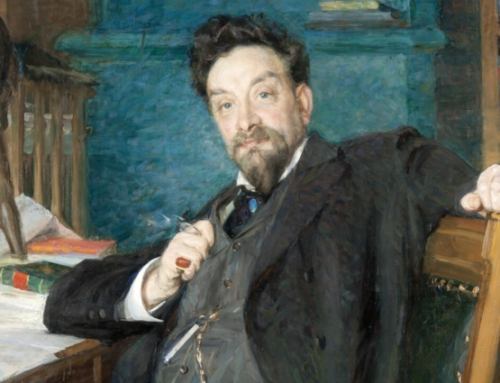
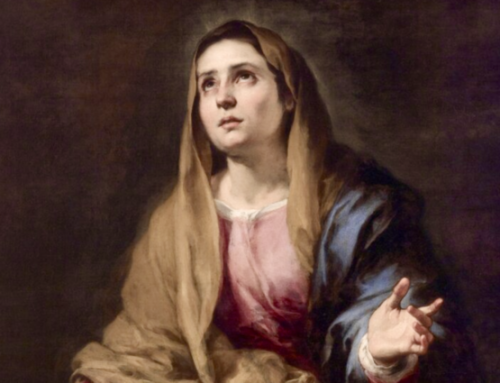
The featured image is an 1895 painting of Father Isaac Jogues S.J., and is in the public domain, courtesy of Wikimedia Commons.
[*] The term is unclear in this context but likely a personal name for someone an Indian would have thought a clumsy lower person than a warrior.


Editor – I have a copy of Saint Among Savages – The Life of Isaac Jogues by Francis Talbot, S.J.. Copyright 1935 Harper & Brothers. Long out of print, I believe.
I read the book with particular interest, as I live within an hour of “Ossernenon.” the Mohawk village where the saint was martyred. It’s now known as Auriesville, and is home of the Shrine of the North American Martyrs.
I would be happy to send him the book, if Mr. Sundahl were interested in reading it.
What a kind offer Stephen; I suspect your copy is a rare book and best kept by you. I would be guilty if something happened.
One of my most favorite saints! The horrors he went thru in North America. I am so grateful, that even back then when Protestants and Catholics did not get along, the Dutch Protestants stepped up and helped this poor priest make it back to Europe alive!
The book Saint Among Savages – The Life of Isaac Jogues by Francis Talbot is readily available online or in any Catholic bookstore. It is not a rare book but still in print. I have read it more than once and although modern scholars and Christians today may find it incredulous, their were many such priests and laymen who risked everything to serve Christ and bring the Gospel to those who had never heard the good news. Father Pierre-Jean De Smet is another selfless priest who served the Native Americans in the Rocky Mountains and brought salvation to so many despite terrible hardships. Father Jean de Brébeuf is another priest who sacrificed himself for the Gospel and his Lord. These men and many others exemplify heroic virtue in serving Jesus Christ and God instills his children of the Church with such virtue for His glory.