
Marriage for Tolstoy’s heroic men is not the be-all and end-all of a life well lived. Romantic love compromises marriage, to the detriment of both women and men. The well-married are good at the prosaic love of family life, not just falling in love. They find romance and fulfillment in joyfully executing the necessities of a household.
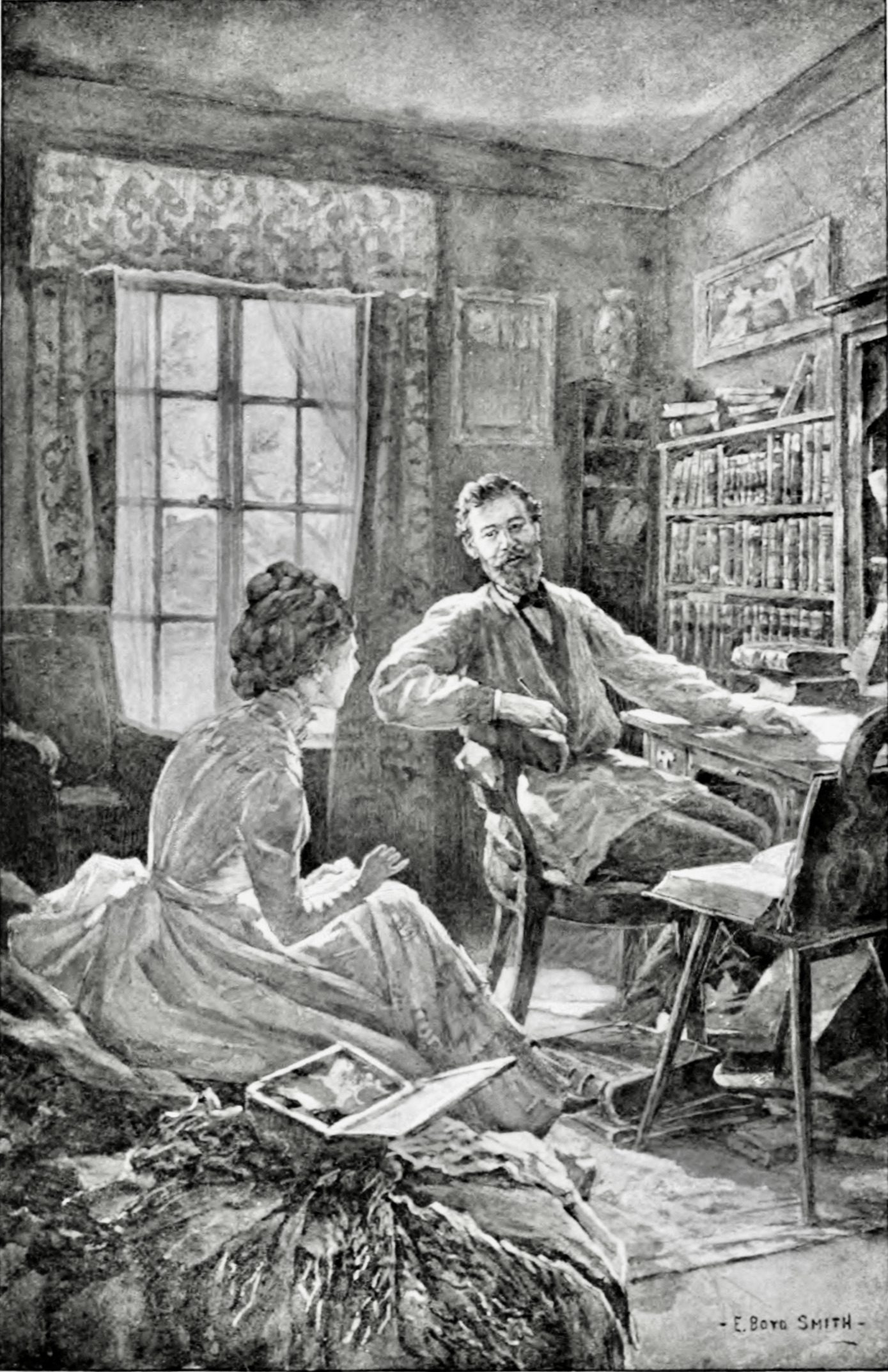 “In order for a book to be good,” writes Leo Tolstoy in his notebooks, “one must love its main basic idea, as in Anna Karenina I love the idea of a family.” Throughout the novel, Tolstoy presents heroes of family life, but also its losers and villains. Anna herself is the chief villain, throwing away a good enough marriage to Karenin, in the vain search for a forbidden love with Count Vronsky. Vronsky, at first very much a playboy, rises some to the challenge of being Anna’s mate, but ultimately cannot accommodate Anna’s demanding Romantic love. She ends up going crazy and then throwing herself under a train. He enlists in the army hoping to die on the front lines. They are done in not by society’s oppression, but by their own false and tumultuous idea of Romantic love.
The Anna-Vronsky affair contrasts with the marriage between Kitty and Levin, consummated at the novel’s midway point. Their marriage combines a Jane Austen-like story about falling in love with a down-to-earth glimpse of what marriage and family life are after the rice has blown away. Kitty and Levin are heroes of family life: Kitty overcomes her vanity to beautify a home, manage a household competently, and comfort Levin’s dying brother, while Levin overcomes his Romantic vision of conflict-free life to realize how hard it is to maintain a family’s self-respect. They learn to deal with jealousies and reconcilable differences throughout the rest of the novel.
While headliners like Anna-Vronsky and Kitty-Levin capture readers’ attention, Tolstoy masterfully uses minor characters to deepen our understanding of family life. No character is more important in this respect than Vronsky’s friend Serpukhovskoy, who appears only three times in the novel. Serpukhovskoy was Vronsky’s playmate as a youngster and his classmate in the academy. Unlike Vronsky, however, he has risen, at an extraordinarily young age, to the position of general in the military. He is now on the cusp of becoming a man of state, looking to transform Russia from a noble feudal society to a noble, patriotic modern society. He sees Vronsky as a potential ally in this effort.
Serpukhovskoy meets Vronsky at an opportune time. Vronsky has impregnated Anna, but Karenin has not yet sought to divorce Anna—everything could be turned back. Anna’s demonic jealousy has reared its head to Vronsky, and she is beginning to be exhausting to him. At the same time, Vronsky is envious of Serpukhovskoy’s success and wants to defend his tumultuous relation with Anna. In fact, prior to the conversation, Vronsky “made up his mind that he was happy in his love, and having sacrificed his ambitions for it” (Part 3, Chapter 21).[*]
Serpukhovskoy tries to convince Vronsky otherwise. He alone has the moral authority and stature to discourage Vronsky from throwing his life at a forbidden, all-consuming love with Anna. (Vronsky’s mother, who approves of court affairs generally, thinks Vronsky has taken his time with Anna too far. Vronsky’s broker, also a rake, also has his worries.) Serpukhovskoy is ambitious and conscious of his competence in matters of state. “In my hands,” he tells Vronsky, “power of any kind, if I ever possess it, will be used in a better way than in the hands of many whom I know.” Vronsky disclaims that a life of ambition alone would be worth it or that he wants power at the present time.
Vronsky claims to speak for balance, but Serpukhovskoy will have none of it. Vronsky is wasting his best talents on whiskey, woman, and gambling. Vronsky will not, Serpukhovskoy contends, “remain satisfied” in his love “for long.” From here Serpukhovskoy unleashes a torrent of wisdom about how manly ambition relates to married life and women. Exclamation marks pepper his tirade. While many in the story counsel Anna away from her adultery, only Serpukhovskoy really has the stature to counsel Vronsky away from it. Vronsky respects Serpukhovskoy. Serpukhovskoy has Vronsky’s best interests at heart.
For ambitious men, marriage provides the best perch from which to achieve one’s ambition. Insecure women are consuming and demanding, so it is “difficult to love a woman and do anything else.” To achieve one’s ambitions and “to love in comfort and unhampered, the only way it so marry!” For Serpukhovskoy, marriage is like carrying a back pack. “If you had to carry a load and use your hands at the same time, it would be possible only if the load were strapped on your back: and that is marriage.” Carrying a load with your hands is akin to having a mistress. When she belongs to another, it is like stealing a load from another and running with it in the open. That is what Vronsky is doing—and it will take up his time and energy.
Carrying the load on your back reflects a prosaic love, built around necessities and common life. Handling life’s necessities and building a family with a good woman is the ground for living well. With an orderly household, one can accomplish great things. Aim for good-enough and you can, in a sense, have it all. Life dedicated to Romantic love delivers instability and distraction. Marital love provides a solid basis for achieving even greater things outside the family. Certainly the book as a whole reflects this teaching.
Vronsky affects to relish the beauty of disordered, demanding women. He says that Serpukhovskoy has “never loved.” Serpukhovskoy could care less about this claim. He is seeking “independent men” of ability and stature to undertake serious reforms in Russia. Men who are independent of public opinion and not easily swayed by the careless whispers of high society.
Serpukhovskoy asks for carte blanche to pursue promotions and positions of responsibility for his friend Vronsky. Vronsky demurs. Perhaps next time. He goes home to Anna, who is agitated about having told off her husband. They exchange the clichés of Romantic love: Vronsky will “devote [his] life to [Anna’s] happiness.” For Anna, “There is only one single thing in the world for me: your love!” As Vronsky exchanges these sweet nothings with Anna, his conversation with Serpukhovskoy—and his regrets about sacrificing the public side of his nature—flash through his mind.
Vronsky’s commitment to Romantic love for Anna ruins his life—and hers. The Karenins, estranged already, separate shortly after Vronsky visits Anna at the Karenin home. This sends Karenin into seeking a divorce, which he seeks until Anna nearly dies in childbirth in Book 4. Karenin’s noble care for Anna and Anna and Vronsky’s child as she recovers temporarily reconciles Anna to Karenin. Vronsky tries suicide—thinking “Ambition? Serpukhovksy?” as he pulls the trigger, but survives the gunshot to his chest.
Thinking his relation with Anna over, Vronsky then actually gives Serpukhovskoy carte blanche and gets a commission in Tashkent, an important post. But after Anna recovers, they run off to Italy to live as artists and pseudo-intellectuals. From that point on, all of Vronsky’s projects end up being vanity projects, designed to impress Anna while filling the ambitious hole in his soul. Never satisfied, they move from place to place as their Romantic love burns out. Both end up dead.
Throughout the book, Tolstoy presents heroes of family life—Vronsky’s sister-in-law, Varya, who nurses him to health after his suicide attempt; Dolly, Kitty’s sister, who is married to Anna’s catty brother; Lvov, the diplomat, whose lovely family so impresses Levin. These glimpses of marital heroism complement the overall impression of Tolstoy’s most pro-family book. The well-married are good at the prosaic love of family life, not just falling in love. They find romance and fulfillment in joyfully executing the necessities of a household.
Romantic love compromises marriage, to the detriment of both women and men. Marriage for Tolstoy’s heroic men is not the be-all and end-all of a life well lived. It is a private nurturance for public men or ambitious men as in the case of Serpukhovskoy. It is ground philosophic contentment in the case of Levin.
Scott Yenor’s Recovery of Family Life: Exposing the Limits of Modern Ideologies is recently out in paperback from Baylor University Press.
[*] All references are to Tolstoy, Anna Karenina, Translated by Louise and Aylmer Maude (New York: Everyman’s Library, 1992).
The Imaginative Conservative applies the principle of appreciation to the discussion of culture and politics—we approach dialogue with magnanimity rather than with mere civility. Will you help us remain a refreshing oasis in the increasingly contentious arena of modern discourse? Please consider donating now.
The featured image is “Anna Karenina” (1899) by Levin and Kitty, and is in the public domain, courtesy of Wikimedia Commons.





Stiva isn’t catty – just a weak, charming womaniser, who causes his wife much sorrow. Levin has much of his author in him: honest, sincere, tormented, desperate for an authentic relation rather than a society one. Vronsky’s and Anna’s is passion is about lust, not love. Lust can’t endure. Interestingly, Anna tells Dolly, her sister-in-law, that she has taken steps to prevent another pregnancy. Dolly is scandalised; she instinctively sees that contraception strikes at the heart of true married love – but not, obviously, of lust. I had an interesting discussion once with a woman who thought Tolstoy destroyed Anna deliberately, not accepting her need for Romantic love. I said that Anna destroyed herself; Tolstoy only created a woman who, for all her beauty and grace, was consumed by inner demons. Her marriage to Karenin – seemingly an older man – was probably arranged for her. It is not exactly a ‘good enough’ marriage; their sexual incompatibility is implied and their lack of communication painful to read. Anna is selfish; she is not prepared to make the sacrifices that married love requires and that Dolly makes, in order to protect her home and her son, Sasha, whom she loves – but selfishly. Still, literary romance is not about domestic married love; it is about an all-consuming passion that destroys its participants. Madame Bovary is the same; also Wuthering Heights.
Wow, amazing essay! Thank you! I have to agree with Francis the commenter as well… it is uneasy ground to stand in judgment of a young woman in an arranged marriage not at all suited to her personality, gifts, age, liking! Not condoning Anna at all, the flaws and sins are all there in the story for our grasp of their disastrous effects. I’m not a rad-feminist by any means. But there are some things it took even Christian civilization centuries to rise up to… the end of slavery, the treatment of the disabled and handicapped, penal reform, and in many ways, the view of woman as a person too. “New Polity” had a fantastic essay about marriage being the exposure of two sinful natures to one another to the marriage’s life or death, whereas remaining single, our deeper sins and flaws might always remain hidden and never dealt with openly.
Thanks both of you. I do not think it is right to say that the marriage between Karenin and Anna is arranged. It is discussed only late in the book where the story of Anna’s aunt kind of trapping Karenin into the marriage is told. He marries her because he is convinced that not marrying her would compromise her. We find this out only after we have determined we should hate Karenin. The only arranged marriage in the book is Kitty’s mom and dad, which was not an unhappy one. There is a treatment of this on pages 52ff., where Tolstoy compares the French way of arranging marriages, with the Russian way of using a matchmaker, to the Enlightenment-English way of letting the parties decide. All have their drawbacks, after all. And Tolstoy surveys them.
I also think that it is wrong to say that Anna and Karenin had a bad marriage. One of Tolstoy’s brilliant techniques is to make us see the world through Anna’s eyes. Consider carefully when Karenin confronts Anna about appearances in Part 2 Chapter 9 and following. She marvels at her own capacity for deception and the impenetrable armor of lies she begins to wear. Right after that, Tolstoy writes: “but for him, how knew her–knew that when he went to bed five minutes later she noticed it and asked the reason–knew that she had always immediately told him all her joys, pleasures and sorrows–for him, her reluctance to notice his state of mind, or to say a word about herself meant much” (p. 172). As she then she lies and ies, he finally breaks it all down, “I am your husband, and I love you.” (p. 173). Look at part 2, Chapter 26, where Tolstoy tells us that Karenin had “always been a considerate father.” Our bad opinion of Karenin is due to Anna’s description of him, not reality. He has faults to be sure and he is kind of unemotional and too caught up in his work, BUT it is Anna who hates him and makes us hate him. He is not a bad man. And the marriage WAS NOT bad, I would submit, until her trip to Moscow and her falling for Vronsky.. I could pile up more evidence for this, but see Gary Saul Morson, “Anna Karenina in our time,” pp. 108-115 .
One other word. I called Oblonsky catty in the sense that he has the morals of an alley cat or just like Loretta Lynn uses it in the great song “Fist City,” then she talks about her man “cattin’ around with a kitty.” Perhaps that is too obscure a use. But it is what I meant. Sorry for the confusion on that.
Karenin is really boring and full of his own importance., a bit like Casaubon in Middlemarch ..
I don’t agree with you that society had nothing to do with their misfortune. We are social animals, and there are many psychological reasons why we need people around us to bounce our thoughts off of. Our brains are far too complex to figure everything out alone.
Anna was cast out of an (equally corrupt) society and left alone to slowly drown in her fears and jealousies. And Vronsky, as a young man, wasn’t equipped to deal with her mental state. I think almost everyone brought a piece of Anna’s and Vronsky’s misfortune to the table.
I believe that if Anna had more to do than take morphine and read while waiting for Vronsky to come home, she would have given him the space he needed so much — and they might have lived, for lack of a better expression, a happier life.
Very good overview, and I agree, this book is very pro-family. I also enjoyed the perspective you shared that romantic love compromises marriage, and falling in love does not make one good at love.
It was tragic to me how Karenin was portrayed in the novel. Like he was a cruel and very cold man. Of course, he is flawed, as all the characters are, but I thought, generally, he was a very wonderful man – just dispassionate. and focused on his career. I did feel very conflicted near the end of the novel, when he refuses Anna a divorce and denies her the ability to see her son – it was hard, at the end, to determine if it was for good intentions toward his son, to be cruel to Anna, or because of the unbearable influence of Countess Lydia.
In addition, I never thought that Tolstoy could draw out pity from me for Vronsky, but at the end of the novel, Anna’s use of her own suicide to punish him was more than I could bear. I think this novel portrays how passion, broken promises, and obsession cannot only destroy oneself, but so many around you. Thank you for sharing your thoughts, I love discussing this novel, it is so rich.