
It is important that we put away the tinsel and the lights, and for the Little Drummer Boy to put away his drum, so that we may see the story of the birth of Jesus Christ with as much historical accuracy as possible.
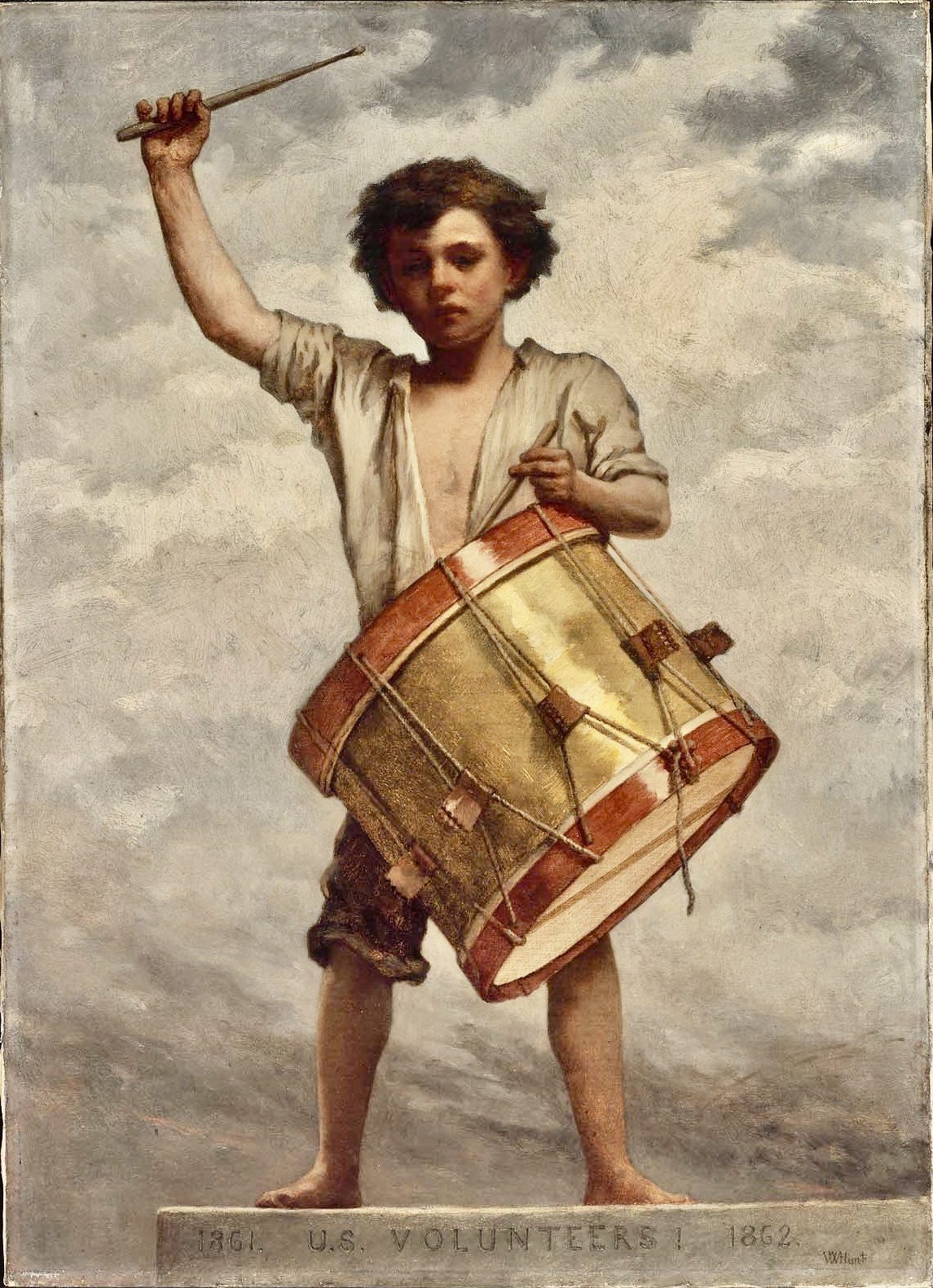 Now is the time for a cringe-confession. I was once the Little Drummer Boy.
If old family photos are anything to go by, I was a cute kid. The pastor’s wife was putting together a little Christmas pageant and had written a script focussing on the legendary little drummer boy, who had nothing to offer the Christ-child but his drum. So, (being about nine years old) I was got dressed up in a shepherd’s costume, and the props lady found an old drum from somewhere, and at the climax of the play yours truly marched up the aisle solemnly tapping on my drum. Not a dry eye in the house… and a star was born!
I recount the anecdote because the Little Drummer Boy is a prime example of the legends and myths that have accumulated around the Christmas story. Christmas is well symbolized by the Christmas tree. If the bare conifer is the simple story told by St Matthew and St Luke, the tree smothered in lights, baubles, sweets and sheltering a mound of gaudily wrapped gifts is the symbol of twenty-first century Christmas.
Who can resist the basic story? It has all the heartwarming elements of a Hallmark movie: a starry night, magical wizards from an exotic land, a long journey, pitiful homeless folk, simple peasants, cuddly lambs and dozy donkeys, a gentle ox and a surly camel and most of all, a mother and her newborn baby. The charming tale is just the sort to enter into the realm of folklore, and as it is ecclesiastical folklore it carries extra cultural weight.
Because of its charming human elements, the infancy narratives have also attracted the decoration or extra elaboration I likened to the decorated Christmas tree. These accretions accumulated in four different ways.
First were the actual traditions themselves. Matthew and Luke recorded the events of Jesus’ birth at least fifty years after they took place in Bethlehem. I believe the stories they heard were essentially historically accurate, but the process of oral tradition may have added or omitted details.
A good example of this is the detail that we all accept as part of the story: that the Virgin rode a donkey from Nazareth to Bethlehem. In fact this detail is missing from the Gospel accounts. It entered the story from the early-second-century, non-canonical Gospel of James (aka The Protoevangelium of James). The oral traditions from the Bethlehem and Jerusalem communities would have been reliable—even if flexible in detail.
Interpretation
In addition to the accumulated traditions, the historical story of Jesus’ birth was elaborated by theological interpretation. This interpretation of events began with Matthew and Luke, continued into the writings and preaching of the early Church, and has continued for the last two thousand years. Preachers read their own theology and their own current issues into the stories told by Matthew and Luke.
Interpretation of the events is clear in Matthew and Luke because both evangelists are obviously telling the story to show that Jesus of Nazareth is the Messiah, the Son of David, the Son of God, our Savior. Matthew and Luke show how the details of Jesus’ birth fulfill Old Testament prophecies. Their interpretations of the events color the way they tell their stories and help them decide which details to include. So, for example, they tell us about Bethlehem, the city of David, in order to reveal that Jesus is the Son of David.
Later preachers and teachers interpret the story further, and in so doing, they add details to the story. For example, they see in the story of Jesus’ birth a fulfillment of Isaiah 1:3, “The ox knows its master, the donkey its owner’s manger, but Israel does not know, my people do not understand.” Because they connect this verse with Jesus’ birth, the ox and the ass make their entrance into the Christmas story. In fact, as British scholar Margaret Barker has discovered, “The ox and ass do not appear in a nativity text until the Gospel of Pseudo-Matthew compiled perhaps in the eighth century.”[1*] Matthew and Luke don’t mention an ox or an ass in the Christmas scene. Later interpretations add that detail.
An example of modern interpretation becoming part of the story is the idea that Mary and Joseph were homeless people. In my new book The Secret of the Bethlehem Shepherds, I explain why this is inaccurate. Nevertheless, it is an easy mistake to make, and because it fits in with our Christian compassion for refugees and the homeless, it has become part of the larger Christmas story.
Legend
Along with the additions of tradition and interpretation, the Christmas story is elaborated by legendary elements. In The Lord of the Rings, Galadriel says, “History became legend, and legend became myth.” Legend is the further speculative elaboration of the historical account over time. An example of legend is the story of King Arthur. Historians believe there was a real British chieftain named Arthur, but the stories told about him soon grew over time and became legends. The legends engendered poems, novels, and even Broadway musicals and Disney films, so more legendary elaborations accumulated. The legends were rooted in real events, but they morphed into fantasy.
Legendary elements also attached themselves to the stories of Jesus’ birth. The legends came about as the stories were retold in different historical and cultural contexts. They then became part of the generally accepted story that was passed down to further generations.
An example of a legendary aspect of the Christmas story is the rustic nativity scene in a rundown cattle shed that gives all of us our much-loved nativity scene. This aspect of the Christmas story comes to us from St. Francis in thirteenth-century Italy.
Wanting to make the Christmas story more relatable to the people of his age, St. Francis set up a Christmas crèche. He naturally assumed that the stable where Jesus was born was similar to the barn-like stable of his day. In fact, the stable in first-century Bethlehem was very different, but the “lowly cattle shed” we all take for granted was a legendary element that was added to the story much later.
More recent examples of the legendary being added to the basic narrative brings us to my debut as the Little Drummer Boy or stories like “the littlest shepherd,” the fourth wise man or the donkey whose baby grew up to be the donkey Jesus rode on Palm Sunday.
Myth
By myth, most people mean a fairy tale: a made-up, untrue story. A better understanding of myth, however, is “a story with multiple levels of meaning.” The story itself could be either pure fiction or the narrative of a historical event. The Gospels are mythical inasmuch as multiple levels of meaning are embedded in historical stories. In addition to the historical level of meaning, there is a moral level, a theological level, and an allegorical level.
Sometimes the theological or moral levels of meaning have prevailed over the historical, and because preachers and teachers wish to emphasize the deeper levels of the story, this process has added more decoration or elaboration to the story.
A good example of this process has to do with the swaddling cloths. Some preachers suggest that the Christ child was wrapped in swaddling cloths and born in a cave because it was a tragic pointer to the fact that one day that Baby would be wrapped in a linen shroud and laid in a cave after His death. This is a nice preaching point, but to add it to the Christmas story is to add a level of meaning and myth.
There is nothing wrong with this per se, but we should be aware that this is an elaboration on the story and not a part of Matthew’s and Luke’s accounts.
The infancy stories have accumulated more elements of tradition, interpretation, legend, and myth than any other parts of the Gospel. Because of this, many scholars have rejected the stories of Jesus’ birth as total fictions—fanciful tales invented by Luke and Matthew to make Jesus more of a supernatural hero.
Most of what they are rejecting are the levels of tradition, interpretation, legend, and myth that have become attached to the basic stories.
While it is understandable to reject these accretions, it is an amazing lapse in scholarly professionalism to conclude that the entirety of the infancy narratives of Luke and Matthew are therefore no more than charming parables or fanciful legends. This was my core reason for researching both the identity of the magi and the historical background of the Bethlehem Shepherds: to put away the tinsel and the lights, and for the Little Drummer Boy to put away his drum, so that we may see the story of the birth of Jesus Christ with as much historical accuracy as possible.
Fr. Longenecker’s most recent book The Secret of the Bethlehem Shepherds is published by Sophia Institute Press.
The Imaginative Conservative applies the principle of appreciation to the discussion of culture and politics—we approach dialogue with magnanimity rather than with mere civility. Will you help us remain a refreshing oasis in the increasingly contentious arena of modern discourse? Please consider donating now.
The featured image is “The Drummer Boy” (circa 1862) by William Morris Hunt, and is in the public domain, courtesy of Wikimedia Commons.
[*] Margaret Barker, Christmas: The Original Story (London: Society for Promoting Christian Knowledge, 2018), 77. Note: The gospel of Pseudo-Matthew is one of many “apocryphal” gospels written much later than the Gospels themselves that elaborate on the Gospel stories and are written by anonymous authors who assumed the names of the apostles to give their writings added authority.



I’ve always thought of “The Little Drummer Boy” as inspirational and a heartwarming story. But in light of where the leads us, to Moralistic Therapeutic Deism, I am persuaded to accept your position that going unchecked, the myths that dilute the true Christ story, when combined in total, have a damaging impact.
Our most recent confusion-creating myth is “The Chosen”. TV series. Separate fact from fiction from that one with someone who believes that the show is entirely fact-based because, “why would these good Christians make stuff up.” Or, “Well they have a priest and a rabbi making sure everything is accurate.”
In a world information overload, returning to the true and beautiful becomes more and more necessary.
Amen.
Always love your articles, Father
While it would certainly be a severe and unmerited stretch to compare “The Little Drummer Boy” to, say, the “Illiad,” the author’s logic would appear to have us jettison the “Illiad” (and other forms of art beyond literature) because they are not accurate. Poetics is the fourth realm of logic, “preceded” by science, dialectics, and, and rhetoric. Each serves an important role in guiding us to truths—whether they be immediate narrow truths through observations of material reality… to the much deeper truths arrived at through philosophical reflection and (in the case of poetics) imitation of truths/narratives much too large to be captured within the narrow confines of “accuracy”. Poetical works help to *move* us in the direction of truths too sublime, too magnificent, too blindingly real to be captured by “accuracy”. Poetics is not about producing CSI (crime scene investigation)-level knowledge: it is about helping to partly reveal the “objects” for which our deepest yearnings seek. Few folks, I would guess, take “The Little Drummer Boy” as an historical account. Rather, they are *moved*. More often than not, we are calcified creatures who avoid being moved so deeply. Poetics is about opening us to want to climb out of our Platonic caves… and to endure, perhaps through catharsis, the blinding pain of the Sun by whose light we might be able to see (understand) all things. You want to know what *really* moves me about “The Little Drummer Boy”? The conversion of Aaron is a tear-jerker par excellence. Nonetheless, before he enters Jerusalem, something much more profound “convicts” me: Aaron, turning around, “saw a small army of poor shepherds” quietly and in the middle of the night streaming toward the city—invisible to the powers that be. Every single year this reduces me to rubble. Every single year. Why? Because it makes me question whether I’ll ever be able to overcome my own narcissism to permit myself to be moved to follow the star to Jesus. Can I set aside, for just a moment, my scientific and engineering training and experience that drive my own quests for accuracy… so that I may simply abide in the presence of a child in the humblest of circumstances, against whom we creatures will commit deicide? So, please, spare me the calls for accuracy… when, indeed, I am enjoined to stare at, abide in the presence of, and worship Truth Itself. Let art be art. Please have a prayerfully reflective Advent, a Holy Christmas, and a Blessed Advent.
An interesting article. The Gospel of Mark was presumably written first. Luke and Matthew probably had a copy of Mark by their side, or likely memorized. They independently included the virgin birth as something necessary for us. I am grateful and respective of their very different additions.
I, for one, will continue to include the good myths when they amplify the narrative, just like the myths about Washington.
The lesson of the drummer boy teaches that Christ will take our humblest offerings as true homage. The fourth Magi likewise teaches that we find Christ in the way that we live our lives.
But it is also good to recognize the original, as the original. And to consciously separate the original from myth.
Thank you. Thank you THANK YOU. You captured and expressed perfectly-with precision accuracy- and still with charity if not perfect humility-my gut reaction to Fr. L’s article. Sadly, my own reaction was less charitable and/or refined. I must return to the manger, the cave; beside the ass and the ox. There to contemplate and be moved, to swoon even, in the glory of God most high.
This is rather off topic, but two pieces of music I have always loathed are The Little Drummer Boy ( especially as sung by the Osmond brothers ) and Ravel’s Bolero. While performing in the Knoxville Symphony’s Christmas concert at some point in the 90’s, the orchestra performed a strange amalgamation of these two called “The Little Bolero Boy.” It did not make my Christmas any merrier.
Alexander: I am not calling for the abandonment of all the accretions to the Christmas Story, but that we might be aware that the various forms of elaboration are not in the gospels and while they often add a dimension to our understanding and appreciation they also, often obscure the historicity of the original.
Stephen, The best comment I remember about Bolero is that “It sounds like a something unraveling.”
You mention the fourth wise man as an added legend. The specific number of three is also added legend, along with other details like their names. These details arguably detract from the intended symbolism of the wise men as representative of discerning Gentiles who would be drawn toward the light of Christ.
Agreed, but I have heard the myth/ legend/ folklore that the 3 magi were really travelers from the Babylonian Jewish diaspora. That the specific word “magi” was only used in reference to the remnant in Babylon by Danial, and that perhaps the same word was used only twice in the Bible. Perhaps, this is another wrinkle where Fr. Longenecker can enlighten us…
The theory I propose in my book The Mystery of the Magi is that the Magi were Nabateans, and in a chapter on the origins of the Nabateans I point out that they were a blend of the local Arabian tribes, Babylonians and Jews from the Babylonian diaspora who had settled in Arabia, so yes, they would have been descendants from the diaspora.
I am sure you all know where this comes from.
‘Why, yes, I do, every day. But it isn’t that,’ He turned
back to the pages of the Jews of the World and said, ‘Another
naughty scout-master.’
‘ I suppose they try and make you believe an awful lot of
nonsense?’
‘Is it nonsense? I wish it were. It sometimes sounds
terribly sensible to me.’
‘But my dear Sebastian, you can’t seriously believe it all’
‘Can’t I?’
‘I mean about Christmas and the star and the three
kings and the ox and the ass.’
‘Oh yes, I believe that. It’s a lovely idea.’
‘But you can’t believe things because they’re a lovely
idea.’
‘But I do. That’s how I believe.’
I was very concerned when I read the title. I knew the drummer boy wasn’t really there, but since I also played that part when I was in kindergarten, I am a bit sensitive about the subject. So I did find a factual inaccuracy in your article…..as a 5 year old I am pretty sure I was the cuter drummer boy. Regarding traditions crowding the truth of the incarnation…..I have often taken the wise men in the nativities at our church. I wouldn’t keep them, just put them a 2 year walk distance away. Have a blessed Christmas
Okay, I get your point, but the line “I played my best for Him” still gets me every time…
To be further nitpicky 🙂 Tolkien’s Lord of the Rings doesn’t have the line “legend turned into myth, etc” said by Galadriel in Peter Jackson’s movie version of “The Fellowship of the Ring”. Rather, it was a line created by Jackson’s script writers (possibly taken from/inspired by a line from “The Wheel of Time”) to help the audience grasp the immense passage of time between the opening battle between Sauron and the united armies of elves and men and the time of Frodo’s adventures.
But, I do understand what you are saying about accretions to the Gospel accounts of Jesus’ birth. Of course, although the Gospels are sufficient, still such additions speak to different times and peoples that help them relate to the Gospels by the use of spiritualizing them or adding elements that fill in the more human elements to which we can all relate.
Dear Father, thank you for the thoughtful article. I would hazard a guess that no one actually believes the Drummer Boy was a part of the narrative.
I do take slight umbrage at the swaddling clothes detail. As Mr. Sich points out, these poetic additions if they be so, help us climb out of our Platonic caves.
What mother, I have often reflected upon, would swathe her newborn and lay Him in a rough fodder trough? Not me by a long shot! Well… the perfect mother who from the first moments is already surrendering her (annihilating the “her”) Child to the world. Having given birth to many children, this meditation is powerful.
As to the cave, does it really matter what shelter it was? As my husband seriously jokes: knowing scripture, knowing the (approximate) due date, knowing they will be stuck there for at least 40 days if not longer, he would have gotten an Airbnb, stocked it and waited. Not so the just man Joseph. What a lesson in humility! Not to mention they were probably some of Joseph’s relatives saying “sorry, no room.”
Anecdotally on the flip side of the Christmas pageant craze:
I had one son born just before Christmas. He fit into the dolls cradle being used. It is a leap into faith to actually kneel before a newborn boy (wet diaper et al) and feel in one’s body the stance the Blessed Virgin took before her Divine Son. These physical reminders of that blessed night bring faith from head to heart.
Yes, they are add-ons and properly regarded thusly. I loathe the song but having heard the versions by Denyce Graves in the early 2000s and the one from 2019, sung in German by Stefan Mross and Anna-carina Woitschek bring me to tears as does Daniel O’Donnell’s “The Gift” because I listen to the words and the meaning behind them, a simple gift, all that someone has, freely given, expecting nothing in return.