
It seems unlikely that we can properly understand Lockean liberalism, much less pass an informed judgment upon it, without first meditating deeply upon the nemesis against whom Locke reacted: the divine-right monarchist, Sir Robert Filmer.
Patriarcha: The Complete Political Works by Sir Robert Filmer (318 pages, Imperium Press, 2021)
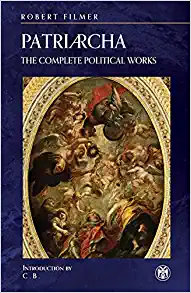 By and large, establishment conservatives defend the legacy of John Locke as if he were one of the apostles and Two Treatises On Government were the truth that sets us free. Meanwhile some dissidents – especially certain Catholics – find liberalism so alienating that they repudiate the Anglo-American heritage altogether and seem even to welcome its prospective annihilation by successive migrant tsunamis. Whatever we make of Locke, however, it is worth recognizing that he is not the only iconic English thinker, nor is liberalism the only authentic thread of English socio-political thought. Furthermore it seems unlikely that we can properly understand Lockean liberalism, much less pass an informed judgment upon it, without first meditating deeply upon the nemesis against whom Locke reacted – the divine-right monarchist, Sir Robert Filmer.
As the preeminent English monarchical theorist, Filmer was targeted by parliamentary forces during the English Civil War and its aftermath, even though he never played an active part in the military side of the struggle. His house was repeatedly looted, his estate subjected to punitive taxation, and he himself eventually imprisoned in Leeds Castle. Following his release he began publishing writings such as Observations on Hobbes’ Leviathan, Observations on Milton, Observations on Aristotle’s Politics, and above all Patriarcha.
A number of strawmen must be dispensed with before any consideration of Filmer is possible. Whether we find any worthwhile insights in Filmer’s work or not, we can at least concede that he himself did not see his theory as a threat to liberty, as many detractors have claimed:
I am not to question or quarrel at the rights or liberties of [England] or any other nation. My task is chiefly to enquire from whom these first came, not to dispute what or how many they are, but whether they were derived from the law of natural liberty or from the grace and bounty of princes. My desire and hope is that the people of England may and do enjoy as ample privileges as any nation under heaven. The greatest liberty in the world (if it be duly considered) is for a people to live under a monarch. It is the Magna Carta of this kingdom. All other shows or pretexts of liberty are but several degrees of slavery, and a liberty only to destroy liberty.
Along similar lines, in his retort to John Milton, Filmer concedes that “kings have been and may be vicious men, and the government of one not so good as the government of another,” but goes on to insist that “it doth not follow that the form of government is or can be in its own nature ill, because the governor is so. It is anarchy, or want of government, that can totally destroy a nation.”
So even if we do not find Filmer’s case entirely persuasive – this reviewer does not – intellectual honesty requires us to tone down accusations of Filmer’s supposedly totalitarian tendencies. According to Filmer there is little or no natural liberty, for meaningful liberty only emerges from a robust, heathy, and integrated social order. Such an order is only possible when there is a focal point, an apex for civil authority. Perhaps he is totally wrong in his analysis, but even if so there is no need to assume that he “hates us for our freedom,” as George W. Bush might have it.
Others have dismissed Filmer because of his supposedly excessive reliance upon Scripture. Yet the connotations of the expression “divine right monarchy” notwithstanding, Filmer’s theory in its essence revolves around his reading of natural law. After all, Patriarcha‘s alternative title is The Natural Power of Kings:
If we compare the natural duties of a father with those of a king, we find them all one, without any difference at all but only in the latitude or extent of them. As the father over one family, so he king, as father over many families, extends his care to preserve, feed, clothe, instruct and defend the whole commonweath. His wars, his peace, his courts of justice, and all his acts of sovereignty tend only to preserve and distribute to every subordinate and inferior father, and to their children, their rights and privileges, so that all the duties of a king are summed up in an universal fatherly care of his people.
The reader may embrace, reject, or perhaps merely meditate upon the preceding doctrine. What is obvious in any case is that said doctrine does not stand or fall upon the question of how literally we interpret the Book of Genesis. In Filmer’s thought the nation is neither more nor less than a greatly extended family – right or wrong, hardly an unheard-of thesis – and thus the monarch is like the head of a household. Thus we see why Filmer might appeal even to those of us who find his arguments only partially persuasive, and/or prohibitively difficult to apply vis-a-vis the politics of such a dogmatically democratic age.
For the doctrine at stake is one of patriarchy, and so it is especially thought-provoking in a period which has seen families decline even as fatherly authority has been subverted, mocked, and abolished. Even if Filmer does not give us a map for improving American politics, he does force us to think more profoundly about the ubiquitousness of paternal relationships. When Filmer notes that in his own time “the politicians and civil lawyers do not well agree about the definition of a family,” and proceeds to seek a sound definition himself, no traditionalist conservative worth his salt can fail to sit up and take note.
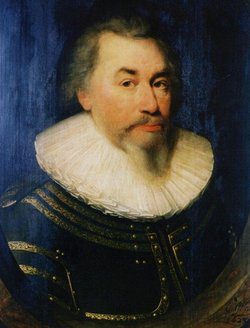
Sir Robert Filmer
None of this is meant to set up Filmer as some sort of political oracle. One need not be a flaming parliamentarian to find that he overstates his case by treating monarchy as the one ideal system for all peoples everywhere. He might also have strengthened his position by reflecting upon the fact that even an absolute monarch is obliged to act through intermediaries, who may temper the judgments of a rash or ill-tempered ruler. Unintentionally or no, he truncates the Fifth Commandment: “We find in the decalogue that the Law which enjoins obedience to kings is delivered in the terms of ‘honour thy father,’ as if all power were originally in the father.” As anyone who ever went to Sunday School can attest, the Commandment in question does not unequivocally endorse solitary sovereignty, even if the father does come before the mother. All told, any reading of Filmer would no doubt benefit from being balanced against that other great alternative English political tradition – Burkean conservatism.
His undeniable limitations notwithstanding, Filmer is to be credited with relentlessly zeroing in upon the fundamental issue – authority – and forcing us to face old questions in disturbing new ways. So it is to be hoped that the recent release of Patriarcha: The Complete Political Works will help Filmer recover his rightful place in English political thought. This edition is professionally done, helpfully footnoted, and includes not only Patriarcha but Filmer’s lesser-known writings as well.
On top of that, the introduction adeptly contextualizes Filmer for those unacquainted with him, and highlights how Locke’s response to Filmer is less powerful than Lockeans assume. Where Locke claims that “authority inheres in the individual as a result of man’s nature as given by God,” Filmer “asserts that man’s nature is inherently structured and marked by authority in the form of patriarchal relationships, again, as determined by God.” In effect Lockean liberalism is just another, less coherent form of divine right theory, as “we have to have the individuals simply appear ex nihilo” and God has to be repeatedly invoked for a variety of purposes convenient for Locke – such as repudiating primogeniture.
The introductory study of Locke’s deficiencies alone warrants sustained attention to this volume. “Advocacy of the individual is invariably a symptom of the expansion of a centralising center of power,” we are warned, “and the advocates are always found in the company of these same centers of power.” However good may have been the intentions of Enlightenment luminaries, in any large community there will always be some person or group wielding disproportionate power, and at times it seems as if the only purpose of parliamentary rhetoric is to obscure who is really in charge. The result? “Centralising power can now expand exponentially and undermine all relationships within society that come between it and the individual, and it does this by hiding itself and focusing all attention to the concepts of liberty and freedom.”
By contrast Filmer,
the famed defender of absolutism, ironically, was of no use as a provider of intellectual justification for the expansive absolute governments of modernity, but this says nothing about the inherent validity of Filmer’s ideas. For far too long the accepted assumption has been that the thought of modern theorists is prima facie correct and that it has triumphed over Filmer’s account due to some process of reason. Filmer was not proved wrong; he was sidelined by a centralizing political structure because he was of no use to them.
Such penetrating commentary suggests that Filmer warrants much more attention, especially from those of us who object to the “expansive absolute governments of modernity.”
The Imaginative Conservative applies the principle of appreciation to the discussion of culture and politics—we approach dialogue with magnanimity rather than with mere civility. Will you help us remain a refreshing oasis in the increasingly contentious arena of modern discourse? Please consider donating now.
The featured image, uploaded by Tomitoch, is a portrait of Robert Filmer (1650). This file is licensed under the Creative Commons Attribution-Share Alike 4.0 International license, courtesy of Wikimedia Commons.


Interesting article, had not known of Filmer, thanks.
Liberal Locke straw-manned Filmer and & the liberal establishment still straw-mans Filmer with the “Royal Absolutist” claim whose sole purpose is to frighten people away from his arguments.
The pre-1688 English constitution Filmer defended was not “absolutist” but rather a mixed constitution (balancing monarchy, aristocracy, & democracy). Legislation required tripartite assent (crown, lords, commons) which alone refutes the claims of Filmer defending “absolutism”. Filmer WAS the defending the English Constitution during a violent and bloody revolution that resulted in the decapitation of the English King and the English Constitution.
In truth Filmer mainly defended the traditional role of the King having the negative or veto power as a judge of last resort. That’s it. The King was sill subject natural law and divine justice, not free to act capriciously. The King as pater familias of his nation had a duty of care and preservation. The King’s authority is above positive law because it creates and interprets it. The King’s supremacy is a constitutional supremacy rooted in natural law, not arbitrary will. The veto exists to keep parliamentary legislation in harmony with natural law and the cosmic order.
Filmer’s target was Parliamentary Absolutism. Parliament, of course, did usurp the Royal Prerogatives (& eventually the Lord’s also) consolidating near absolute power in the name of “the people” without the old constitution’s checks and balances, so the straw-man accusation against Filmer are ironic considering the source.