
Why not imagine what Chesterton would choose for summer reading were he to return for a brief visit from the undying lands, where we can imagine he now makes his permanent residence?
 This is the time of year when people are asked to compile their summer reading lists. The idea of these lists, as far as I can see, is to suggest books that are relaxing, not taxing; slim volumes, not monumental tomes; lighter fare that can be read recreationally, for pure pleasure, perhaps on the beach or while sitting on the porch, sipping a cocktail.
With this in mind, I thought it would be fun to wax whimsical and fantastical on a flight of fancy. Why not imagine what Chesterton would choose for summer reading were he to return for a brief visit from the undying lands, where we can imagine he now makes his permanent residence? What if he were to return this year, on the 150th anniversary of his birth, for a brief holiday, haunting his old haunts? Leaving the timeless realm and finding himself with time on his hands, what would he pick up to read?
One imagines that he would be less interested in the books he already knew and would choose books that had not yet been written when he had departed in 1936 for pastures ever new.
I can’t help but think that The Hobbit would be top of Chesterton’s list. Published only a year after his death, he would surely have relished the prospect of journeying with Bilbo Baggins to the Lonely Mountain. We only need to read the chapter of Chesterton’s Orthodoxy entitled “The Ethics of Elfland” to know that Chesterton and Tolkien were kindred spirits. Indeed, while we’re at it, we’ll add Tolkien’s “Essay on Fairy-Stories” to Chesterton’s reading list. If this wonderful essay is read side-by-side with “The Ethics of Elf-Land” we see how Tolkien’s philosophy of myth is very Chestertonian. We can see Chesterton grunting in assent as he reads Tolkien’s wisdom, nodding in agreement as he takes a sip of burgundy from the glass at his side.
Having trudged from the Shire and back again with the hobbit, Chesterton would surely have wandered next through the wardrobe into Narnia. He would have loved C.S. Lewis as he would have loved Tolkien, and we wish that he could not only walk through the wardrobe but also through the doors of the Eagle and Child pub to join Lewis and Tolkien and their fellow Inklings for conversation and conviviality.
Although it is not difficult to imagine Chesterton enjoying the works of Lewis and Tolkien and indulging them with his larger-than-life presence at the Eagle and Child, it is a little more difficult to imagine that he would feel at home in our own dreary times. Would any books published in the past twenty years have made it onto his summer reading list? Surely, as the creator of the fictional priest detective Father Brown, he would have enjoyed reading the Father Gabriel mysteries by Fiorella de Maria or the Father Gilbert mysteries of Paul McCusker. There is, however, another recent novel that I think he would have really enjoyed. In my mind’s eye, I can see Chesterton refilling his glass from the bottle of burgundy and then, cigar in hand, picking up a copy of The Awakening of Miss Prim by Natalia Sanmartin Fenollera. Putting down the cigar, he opens its pages and is immediately enchanted by the charming tale of a modern woman’s awakening to the wonders of reality. In leaving the city and moving to the haven of a small village inhabited by folk who are truly alive to life itself, Miss Prim discovers the meaning of life in the love of life that she experiences in the lives and loves of her new neighbours.
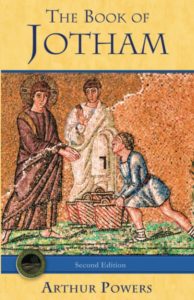 Next on Chesterton’s summer reading list is The Book of Jotham by Arthur Powers. This book is an eye-opener, even for one whose eyes are as wide open as Chesterton’s. As a work of literature, it’s like nothing that he has ever read before, which, considering how much he’s read, is really saying something. It’s a slim volume, barely even qualifying as a novella, a little over sixty pages in length. The moment he begins to read, he is taken out of himself and into the mind of a mentally disabled youth, who presumably has Down syndrome. The youth, Jotham, is one of the disciples of Jesus Christ. He follows Jesus without understanding much about who he is. But he knows that Jesus loves him. And he loves Jesus with untainted purity, with the unconditional love of the truly innocent. He also feels the love of Jesus’s disciples, except, that is, for Judas who doesn’t understand why Jesus tolerates the idiot in their midst. Jotham doesn’t understand why Judas doesn’t understand. Or why Judas doesn’t see the purpose of having him around. Jotham doesn’t understand understanding. He doesn’t see the purpose of anything. What purpose? Jotham only knows that he is loved by Jesus, and by the disciples of Jesus. And he loves them. What is there to understand?
As Chesterton closes the final page of the book, which has only taken him a few short minutes to read, he knows that he has seen through eyes wide open with childlike wonder and, in doing so, has received a glimpse of the kingdom of heaven itself. He smiles, sets the book aside and returns to the place from whence he came.
The Imaginative Conservative applies the principle of appreciation to the discussion of culture and politics—we approach dialogue with magnanimity rather than with mere civility. Will you help us remain a refreshing oasis in the increasingly contentious arena of modern discourse? Please consider donating now.
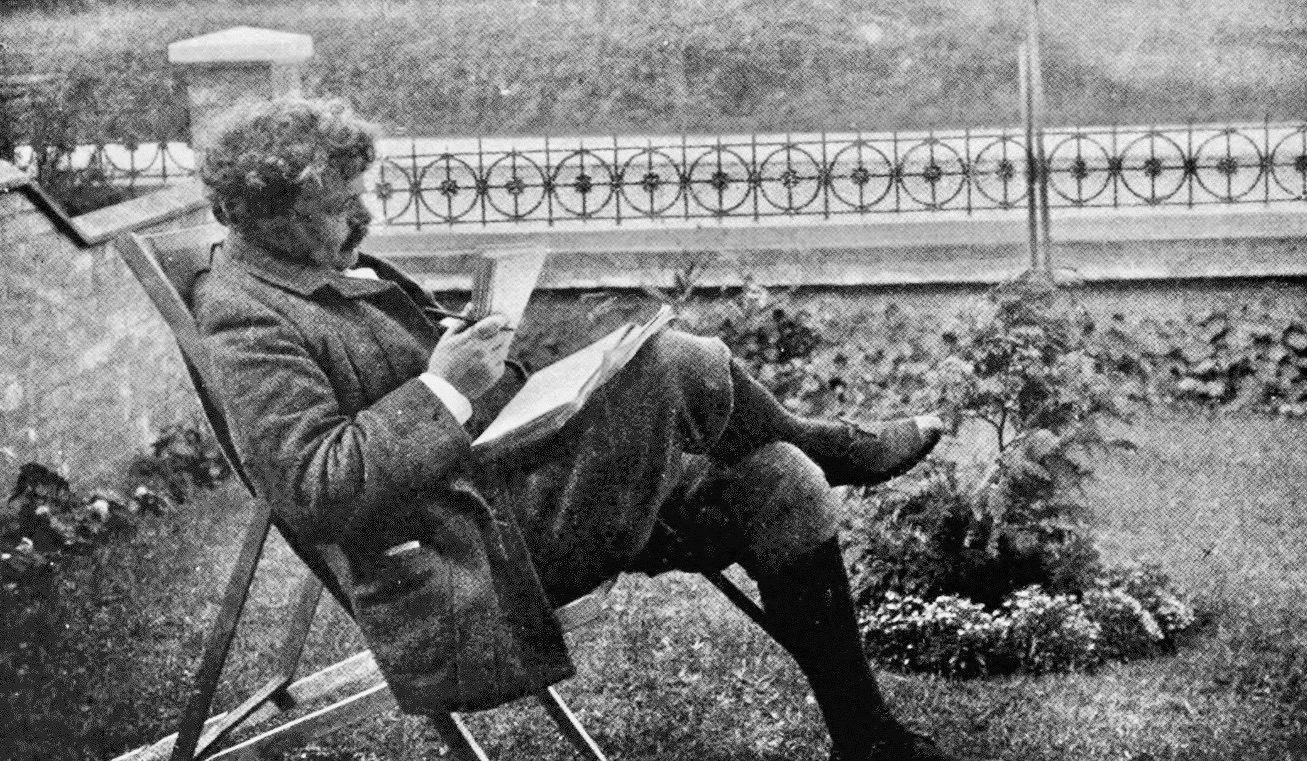
The featured image is a photograph of G.K. Chesterton at the age of 31, and is in the public domain, courtesy of Wikimedia Commons.







As always, thank you Mr. Pearce for the inspiring article.