
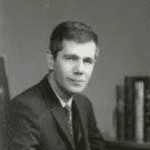
About George Panichas

Dr. George A. Panichas (1930-2010) was a critic whose main concerns and books centered on the relations between literature, culture, and society. He was the author of numerous books, including Growing Wings to Overcome Gravity, The Reverent Discipline (University of Tennessee Press, 1974), The Critic as Conservator (Catholic University of America Press, 1992), Irving Babbitt: Representative Writings (University of Nebraska Press, 1981). Dr. Panichas was also the editor of Modern Age: A Quarterly Review.

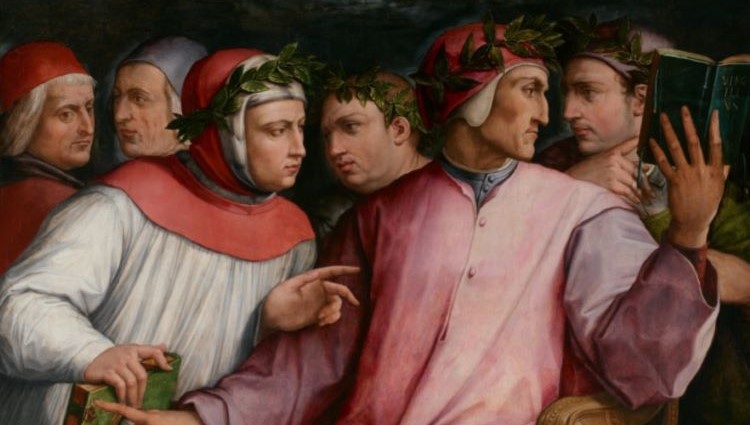
The World of the Poet

By |2021-05-28T12:26:44-05:00June 17th, 2016|Categories: Dante, Fiction, George A. Panichas, Greek Epic Poetry, Homer, Imagination, John Milton, Literature, Moral Imagination, Poetry, Sophocles, Virgil|

Man, it is often said, cannot jump over his own shadow. The poet—and by “poet” I mean a writer of imaginative works in verse or prose—leaps over the universe. Sicut erat in principio et nunc et semper et in saecula saeculorum. I We not only read a novel, we enter into its created world. We [...]
Edmund Burke: A Genius Reconsidered

By |2019-04-07T10:50:44-05:00June 10th, 2016|Categories: Books, Edmund Burke, Featured, George A. Panichas, Russell Kirk|

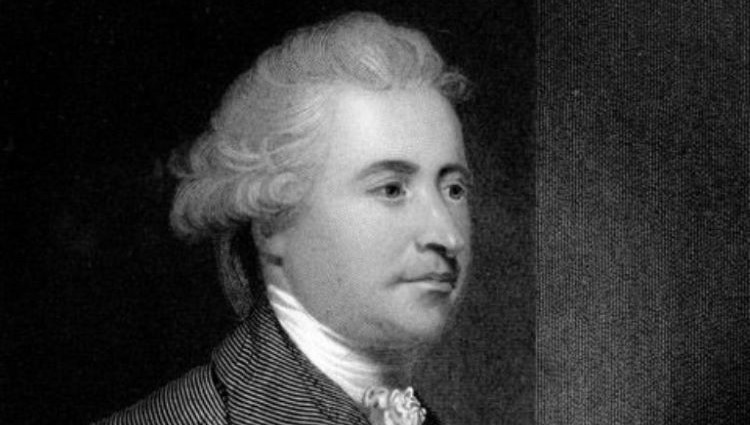
Edmund Burke: A Genius Reconsidered by Russell Kirk (ISI Books, 2009, 2nd edition). Russell Kirk’s book on Edmund Burke, first published in 1967, now revised and hand­somely re-issued, testifies not only to the “enduring Burke,” but also to the enduring Kirk. As a British statesman and political philosopher of “inspired wisdom,” Burke (1729-1797) continues to address our time [...]

Moral Questions of Joseph Conrad’s “Victory”

By |2015-02-23T17:03:23-06:00February 23rd, 2015|Categories: Books, George A. Panichas|

Can a man of moral sensitivity function in a corrupt and derelict world? This is a major question that Joseph Conrad probes in Victory (1915) and that his main character, Axel Heyst, presumably a Swedish baron, depicts through a demanding process of self-examination and self-discovery. Conrad, to be sure, conveys in this novel the fundamental [...]

Aspects of Tragedy: Ancient and Modern

By |2019-06-27T12:48:27-05:00July 12th, 2014|Categories: Classics, Featured, George A. Panichas, Great Books, Greek Epic Poetry, Tragedy|Tags: |

In the ancient world the perimeters of tragic vision and experience were clearly established and recognized. One could be quite clear as to the meaning of tragedy and the manifestations of tragic experience and tragic heroism. One could readily comprehend the noble stature and the transcendent realm of tragedy. One could, in short, measure oneself [...]

The Moral Sense in Joseph Conrad’s Lord Jim

By |2019-04-07T10:51:25-05:00March 25th, 2014|Categories: Books, Featured, George A. Panichas, Literature, Morality|Tags: |

Lord Jim (1900), Joseph Conrad’s fourth novel, is the story of a ship which collides with “a floating derelict” and will doubtlessly “go down at any moment” during a “silent black squall.” The ship, old and rust-eaten, known as the Patna, is voyaging across the Indian Ocean to the Red Sea. Aboard are eight hundred [...]

The Inspired Wisdom of Burke

By |2021-04-13T16:24:37-05:00May 11th, 2012|Categories: Books, Edmund Burke, Featured, George A. Panichas, Russell Kirk, Wisdom|Tags: |

  Edmund Burke: A Genius Reconsidered, by Russell Kirk, with a Foreword by Roger Scruton, Wilmington, Delaware: Intercollegiate Studies Institute, 1997. Russell Kirk’s book on Edmund Burke, first published in 1967, now revised and handsomely re-issued, testifies not only to the “enduring Burke,” but also to the enduring Kirk. As a British statesman and political [...]

Go to Top