A Disquieting Immortality

By |2025-11-30T17:00:32-06:00November 30th, 2025|Categories: Film, Glenn Arbery, John Milton, Literature, Senior Contributors, Wyoming Catholic College|

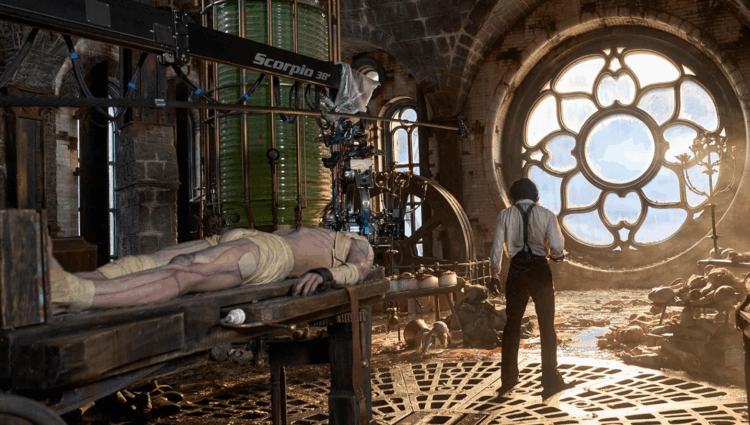
What’s unnerving about Guillermo del Toro’s "Frankenstein" is that it embraces and glorifies the creature in ways that remind me, on one hand, of the Romantic valorization of Milton’s Satan, and on the other, of our contemporary headlong development of artificial intelligence. Like Christopher Marlowe's Dr. Faustus (not a great play), Mary Shelley's Frankenstein (not [...]
The Ancient Liberty of Milton’s Epic Verse

By |2024-12-08T19:24:31-06:00December 8th, 2024|Categories: Christianity, Great Books, John Milton, Liberty, Poetry, Timeless Essays|

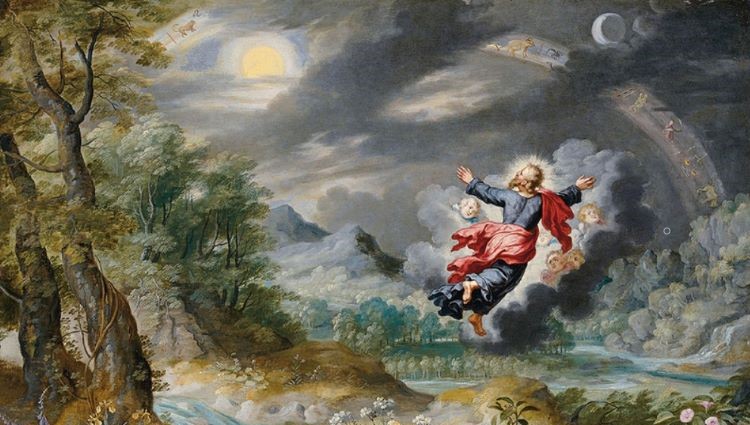
John Milton’s “ancient liberty” is not the liberalism of Thomas Hobbes or John Locke, where the telos governing human liberty is dispensed with. Rather, “Paradise Lost” cultivates Christian virtues by reclaiming an ancient liberty within the traditional epic verse form and by returning to that which is first or most ancient: Divine Will. The opening [...]

Is “Paradise Lost” a Christian Poem?

By |2023-05-21T12:42:00-05:00May 21st, 2023|Categories: Christianity, Culture, Friedrich Nietzsche, John Milton, Timeless Essays|

Does “Paradise Lost” succeed as a poem qua poem, but not as a didactic theological poem? If we lived four hundred year earlier, might we suggest Milton pit Satan primarily against St. Gabriel or St. Michael? The concepts of the Apollonian and Dionysian are famously invoked by Nietzsche in the context of Greek drama, but not [...]

Grace in the Garden: The Fall of Man & the British Pastoral Tradition

By |2022-12-28T20:00:42-06:00December 28th, 2022|Categories: Books, Featured, John Milton, Literature, Poetry, Russell Kirk, T.S. Eliot, Timeless Essays|

The transcendent ‘overcoming’ or reconciliation of the Fall of Man—that symbol of the cause of the disorder that we would wish re-ordered, of the return to the garden—is what great poetry graciously asks of us. “An intermediate nature... prevents the universe falling into two separate halves.” —Plato, Symposium (203b). Almost from the beginning of when human [...]

Arguing With Dante and Milton

By |2021-01-24T16:11:49-06:00January 24th, 2021|Categories: Christianity, Dante, Great Books, John Milton, Joseph Pearce, Senior Contributors|

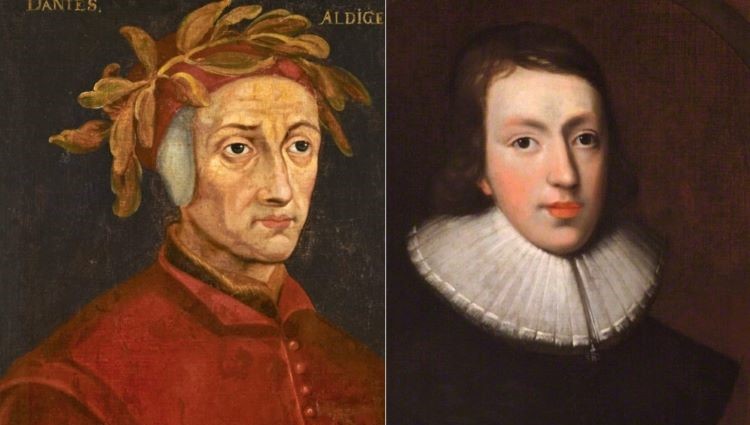
I disagree on certain points with two literary giants, Dante and John Milton. Though unworthy to follow in their literary footsteps, I feel nonetheless that even giants are fallible. Is it possible to argue without quarreling? G.K. Chesterton thought so and did so. He said of his relationship with his brother that they were always [...]

Living at This Hour

By |2021-01-22T09:54:37-06:00January 22nd, 2021|Categories: Glenn Arbery, Government, John Milton, Literature, Poetry, Senior Contributors, Wyoming Catholic College|

Even without the content of the general historical frame, William Wordsworth’s sonnet, “London 1802,” is moving to every generation that reads it, and it is natural to compare our current political situation with the one described in the poem. All of us, of course, remember the dire circumstances of England in 1802. No? Then we [...]

Blaming Adam

By |2020-07-04T01:23:42-05:00July 4th, 2020|Categories: American Republic, Christianity, Glenn Arbery, John Milton, Politics, Senior Contributors, Slavery, Wyoming Catholic College|

The origins of human things are flawed, no question, and inequalities remain. But should we not try to honor the principles of Washington or Jefferson and distinguish them from the prejudices of the day that they shared? The curriculum at Wyoming Catholic College has much wisdom to offer in the current crisis, much that should [...]

Milton’s Erotic Cosmos

By |2020-12-08T15:43:23-06:00February 1st, 2020|Categories: Christianity, Great Books, Imagination, John Milton, Literature, Paul Krause, Poetry, Senior Contributors, Theology, Uncategorized|

John Milton’s “Paradise Lost” is an intense, passionate poem, and erotic poem. From the visual imagery to the descriptive language Milton uses to portray his lively scenes, there is no escaping the reality of the life force that moves his poem. Why, however, did Milton choose to write such a poem, and to whom was [...]

The Postmodern Heroism of John Milton

By |2023-12-08T19:42:52-06:00December 8th, 2019|Categories: Culture, England, Great Books, John Milton, Literature, Politics, Timeless Essays|

Instead of putting John Milton in the context of his own time, scholar David Hawkes proposes to put him in the context of ours, believing that the great poet and political writer’s life and work offer solutions to our own predicament. John Milton: A Hero of Our Time, by David Hawkes (356 pages, Counterpoint, 2010) [...]

“Paradise Lost”: Hidden Meanings?

By |2023-05-21T11:29:45-05:00April 15th, 2019|Categories: E.B., Eva Brann, Great Books, In Honor of Eva Brann at 90 Series, John Milton, Liberal Learning, Senior Contributors, St. John's College, Wisdom|

I keep having the sense that something is going on that runs right counter to the overt text of John Milton’s Paradise Lost. There seems to be a separate, opposed meaning. Should it be called a hidden agenda, a subtext? Milton’s Paradise Lost is a poem of such panoramic grandeur and such human acuteness as [...]

On Studying Imagination

By |2023-05-21T11:30:30-05:00January 30th, 2018|Categories: Aristotle, E.B., Eva Brann, Featured, Great Books, Imagination, John Milton, Plato, Senior Contributors, St. John's College|

Is memory deceptively transformative? Is the original imagination an organ for lying fictions, for deception, or a conduit for revelatory illumination? And so, more generally, how do we explain those images that are apparently not imitations, don’t have an origin in verifiable originals, be they stored in human memory or laid up with the Muses [...]

Go to Top