About Russell Kirk

Russell Kirk (1918-1994) was the author of some thirty-two books, hundreds of periodical essays, and many short stories. Both Time and Newsweek have described him as one of America’s leading thinkers, and The New York Times acknowledged the scale of his influence when in 1998 it wrote that Dr. Kirk’s 1953 book The Conservative Mind “gave American conservatives an identity and a genealogy and catalyzed the postwar movement.” Dr. Kirk's other books include The Roots of American Order, Prospects for Conservatives, Edmund Burke: A Genius Reconsidered, The Sword of Imagination, and Enemies of the Permanent Things.

A Dispassionate Assessment of Libertarians

By |2018-10-16T20:24:40-05:00February 21st, 2015|Categories: Conservatism, Edmund Burke, Featured, Libertarians, Moral Imagination, RAK, Russell Kirk|

The term “libertarianism” is distasteful to people who think seriously about politics. Both Dr. F.A. Hayek and your servant have gone out of their way, from time to time, to declare that they refuse to be tagged with this label. Anyone much influenced by the thought of Edmund Burke and of Alexis de Tocqueville—as are [...]
Remembering the Real Halloween

By |2023-10-31T05:34:13-05:00October 31st, 2014|Categories: Halloween, History, RAK, Russell Kirk|Tags: |

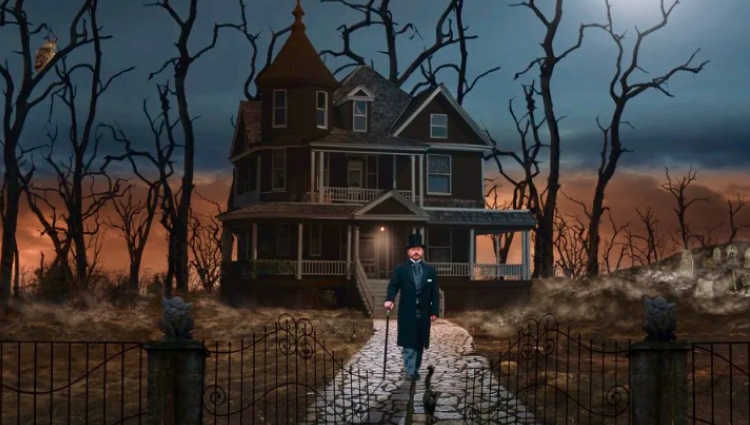
Probably at no other time in the history of mankind have cities been destroyed by the deliberate acts of their inhabitants. A mad world, my masters! Yesteryear’s festive bonfire in the village square, with its half jocular, half fearful notions of ghostly presences, has given way to a diabolical destruction in the core of some [...]

On Academic Freedom

By |2018-10-16T20:24:41-05:00August 13th, 2014|Categories: Quotation, RAK, Russell Kirk|

“To what truths, then, ought the Academy to be dedicated? To the proposition that the end of education is the elevation of reason of the human person, for the human person’s own sake. To the proposition that the higher imagination is better than the sensate triumph. To the proposition that the fear of God, and [...]

The Wise Men Know What Wicked Things Are Written on the Sky

By |2019-08-15T14:32:07-05:00June 3rd, 2014|Categories: Conservatism, Featured, Literature, Moral Imagination, RAK, Russell Kirk|Tags: |

The end of the twentieth century of the Christian era is not far distant, and all about us things fall apart. There comes to my mind the last drawing from the pencil of William Hogarth, who died in 1764: it is a sufficient representation of the state of civilization today. Hogarth’s final drawing is known [...]

Instinct of the Conservative

By |2018-10-16T20:24:43-05:00January 21st, 2014|Categories: Conservatism, Quotation, RAK, Russell Kirk|

To speak of American conservative action…may seem a contradiction in terms. The instinct of the conservative, as Lord Hailsham observes, is to enjoy life as he finds it, not to mold society nearer to his heart’s desire; nor does he think of practical politics as the end and aim of being. Family life, church, literature, [...]

What is Conservatism?

By |2018-11-22T19:37:23-06:00December 4th, 2013|Categories: Conservatism, RAK, Russell Kirk|

A friend of mine, whom we shall call Miss Worth, fell into a conversation with a neighbor—Mrs. Williams, let us say—who, the day before, had sold a fine old building, long in her family, to be demolished that a lot for used-automobile sales might take its place. Mrs. Williams had certain regrets; but, said she [...]

Avarice: Desiring More Wealth Than One’s Soul Can Support

By |2024-12-22T22:23:36-06:00October 25th, 2013|Categories: Quotation, RAK, Russell Kirk|

Avarice, rather, is desiring more wealth than one’s soul can support properly. Avarice sometimes produces present poverty: the miser, proverbially, is ragged and lean. And I am afraid that when our politicians and planners and sociologists talk of output and distribution and real wages, they are not so much intent upon relieving genuine poverty as [...]

The Roots of American Order

By |2018-10-16T20:24:46-05:00October 12th, 2013|Categories: Quotation, RAK, Roots of American Order, Russell Kirk|

Seeking for the roots of order, we are led to four cities: Jerusalem, Athens, Rome, and Lon­don. In Wash­ing­ton or New York or Chicago or Los Ange­les today, the order which Amer­i­cans expe­ri­ence is derived from the expe­ri­ence of those four old cities. If our souls are dis­or­dered, we fall into abnor­mal­ity, unable to con­trol [...]

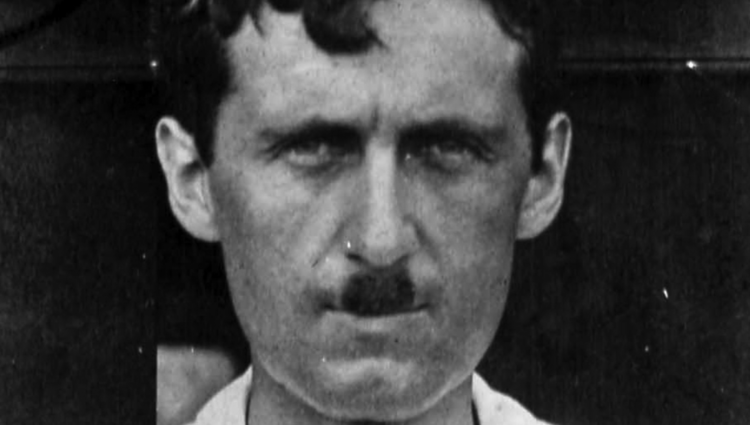
George Orwell’s Despair

By |2021-08-16T09:24:31-05:00September 23rd, 2013|Categories: George Orwell, RAK, Russell Kirk, Socialism|Tags: |

In the twentieth century, no novelist exerted a stronger influence upon political opinion, in Britain and America, than did George Orwell. Also Orwell was the most telling writer about poverty. In a strange and desperate way, Orwell was a lover of the permanent things. Yet because he could discern no source of abiding justice and [...]

Thomas Jefferson and the Faithless

By |2019-03-21T12:04:11-05:00August 9th, 2013|Categories: American Republic, Democracy, RAK, Russell Kirk, Thomas Jefferson|Tags: |

It seems to be a tendency of literary critics to attach to the opinions of contemporary writers a significance unjustified with regard to the effect of such opinions upon current social movements. A Voltaire, an Adam Smith, even a Dickens’ Oliver Twist may change the world, but not so the works of the usual writer [...]

James Fenimore Cooper and the European Puzzle

By |2018-10-16T20:24:48-05:00August 7th, 2013|Categories: Books, RAK, Russell Kirk|

James Fenimore Cooper In these days of confident talk of an American reconstruction of Europe upon democratic principles, in these days of fall-of-France and it-can-happen-here novels by the score, it is more than a little interesting to look at, and even to read, certain stories of European life and politics written by a [...]

No Conservatism Without a Religious Foundation

By |2019-12-12T13:30:37-06:00July 21st, 2013|Categories: Books, Christianity, Conservatism, RAK, Russell Kirk|

Not all religious people are conservatives; and not all conservatives are religious people. Christianity prescribes no especial form of politics. There have been famous radicals who were devout Christians—though most radicals have been nothing of the sort. All the same, there could be no conservatism without a religious foundation, and it is conservative people, by [...]

Go to Top