The Baleful Comet of Boston: Samuel Adams & the Puritan Republic

By |2025-09-26T13:46:05-05:00September 26th, 2025|Categories: American Founding, American Republic, American Revolution, M. E. Bradford, Samuel Adams, Timeless Essays|Tags: |

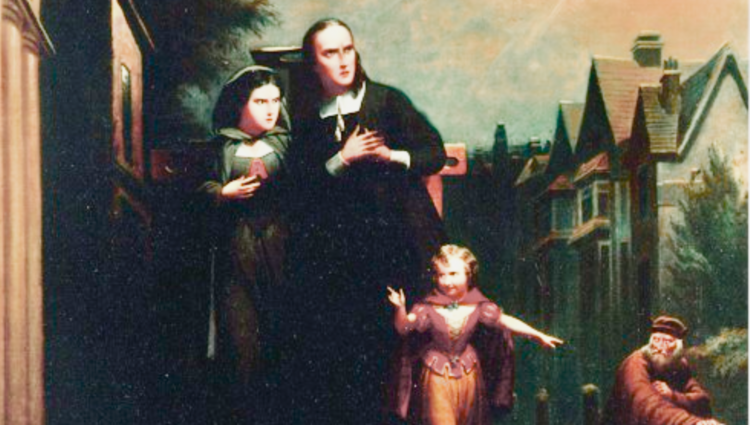
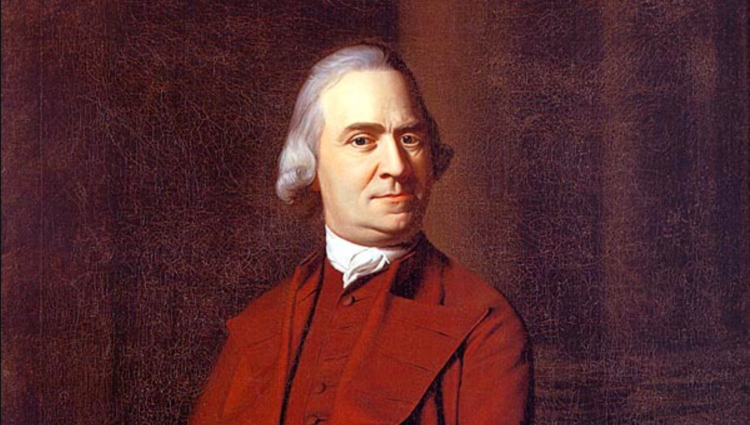
Samuel Adams believed that men are ruled more by fear or other emotions than by reason. And Sam Adams knew how to generate anger and fear. Thus he kept up the flow of propaganda that followed from the town's versions of what had happened in the Boston Massacre. Samuel Adams (September 27, 1722-October 2, 1803), [...]

Wilhelm Röpke’s “A Humane Economy”

By |2024-10-10T17:21:35-05:00October 9th, 2024|Categories: Books, Economics, Political Economy, Timeless Essays, Wilhelm Roepke|Tags: |

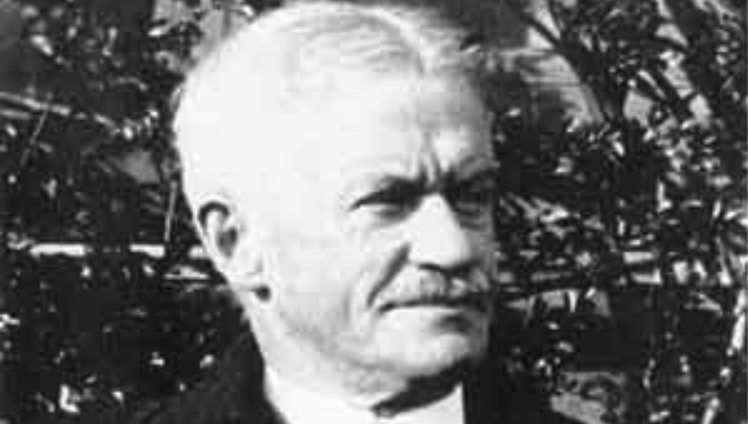
Wilhelm Röpke maintained that freedom depends upon certain social and moral factors, which are essential for a free enterprise system to be successful, enduring, and truly free. A Humane Economy: The Social Framework of the Free Market, by Wilhelm Röpke, Wilmington, DE: Intercollegiate Studies Institute, 1998. 200 pp. Wilhelm Röpke (in some texts spelled “Roepke”), [...]

How to Read the Declaration of Independence

By |2024-07-07T16:00:22-05:00July 7th, 2024|Categories: American Founding, American Republic, Constitution, Declaration of Independence, Featured, M. E. Bradford, Timeless Essays, Willmoore Kendall|Tags: |

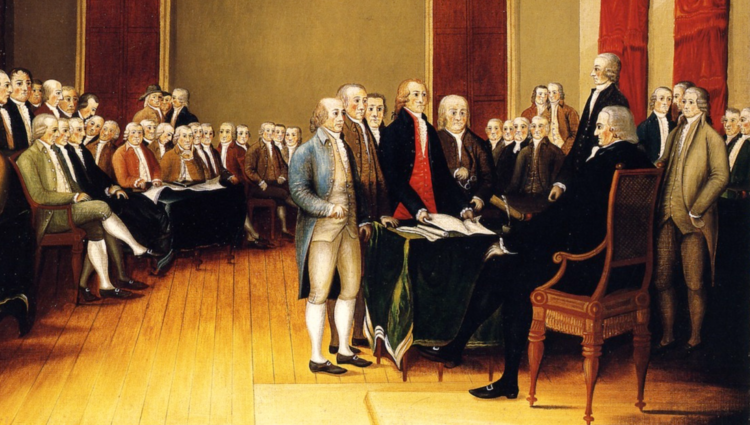
Our collective confusion about the American experience begins at the beginning. Most Americans who think about such questions imagine that they understand the Declaration of Independence, though many of them may be puzzled that it did not (and does not) produce the results one might expect from the commitments which they believe it makes. After [...]

Science and Spirit: Beyond the Wasteland

By |2023-09-17T13:49:25-05:00September 17th, 2023|Categories: Christianity, Communio, David L. Schindler, Featured, Hans Urs von Balthasar, Technology, Timeless Essays|Tags: , , , , |

The burden of Theodore Roszak’s “Where the Wasteland Ends” is to explode the myth that the problems attendant upon the technocratic society can be resolved by technology. Where The Wasteland Ends: Politics And Transcendence In Postindustrial Society, by Theodore Roszak (492 pages, Doubleday, 1972) The burden of this book is to explode the myth that [...]

Individual & Community in “The Scarlet Letter”

By |2023-06-09T15:36:51-05:00June 8th, 2023|Categories: Alexis de Tocqueville, Community, Timeless Essays|Tags: |

Nathaniel Hawthorne does not furnish a plan for reorganizing society according to Scripture or enlightened reason or sociological research, so that all strife will be eliminated. His tale suggests, to the contrary, that tension between the individual and the community can never be resolved, nor should it be. Alexis de Toqueville, a friendlier Frenchman than [...]

Russell Kirk’s “Southern Valor”

By |2022-07-02T21:16:23-05:00July 2nd, 2022|Categories: Clyde Wilson, Conservatism, John Randolph of Roanoke, Russell Kirk, South, Timeless Essays|Tags: , |

American culture and public life are in a perilously low state, but how much worse off we would be if it had not been for Russell Kirk and his valorous life in behalf of the moral imagination that is the essence of our civilization. We have no better example of resourceful defense of unchanging principle, [...]

George Washington: Indispensable Man

By |2024-02-22T06:20:09-06:00February 21st, 2022|Categories: American Founding, American Republic, Forrest McDonald, George Washington, Timeless Essays|Tags: |

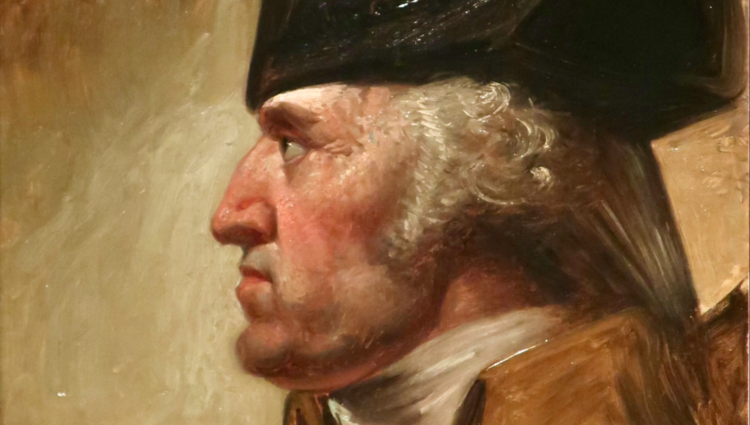
George Washington was respected, admired, even revered by his countrymen, and he was the most trusted man of the age. What is more, and different, he was the most trustworthy man. The question of why this is so must be examined if we are to understand Washington’s true legacy. The men who established the American [...]

Policing the World

By |2021-08-22T13:34:43-05:00August 22nd, 2021|Categories: Constitution, History, Republicanism, Statesman, Timeless Essays|Tags: , , |

Benjamin Harrison insisted America’s truly dangerous enemies were not Great Powers abroad but a lapse of integrity and purity at home. He believed republicanism would spread in the world by “sympathy and emulation” and feared the harm Americans might do to themselves and to others should they undertake to extend their institutions by force: “We [...]

How a Conservative Should Oppose Socialism and Liberalism

By |2020-10-30T09:24:20-05:00October 28th, 2020|Categories: Conservatism, Roger Scruton, Timeless Essays|Tags: |

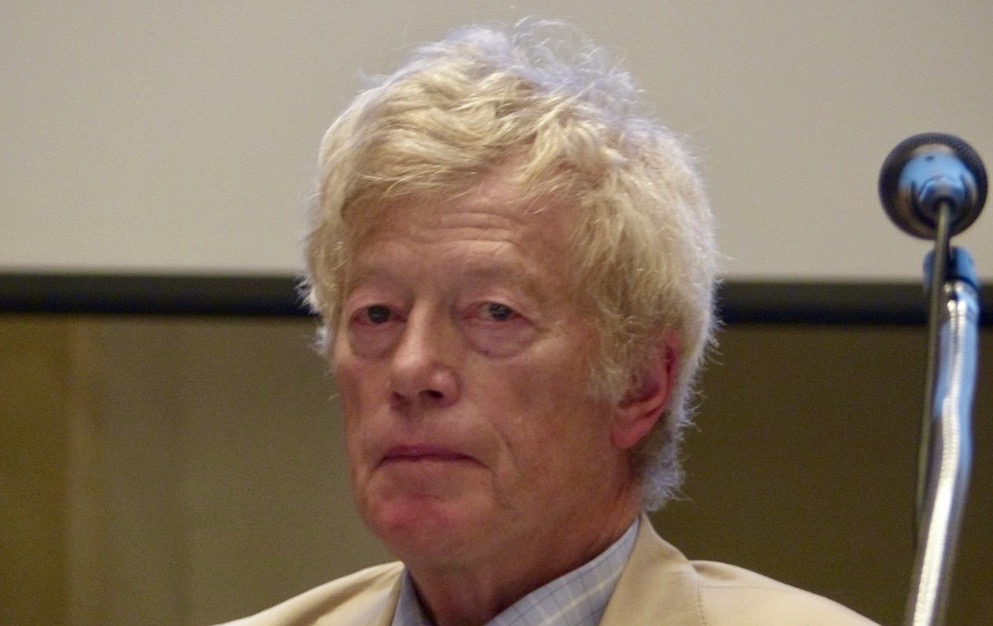
In response to liberalism, it is necessary to work for the restoration of the concrete circumstances of justice. But the concrete law that I have been advocating is very unlike anything that either a socialist or a liberal would approve. It preserves inequalities, it confers privileges, it justifies power. That, however, is also its strength. [...]

The Plague of Multiculturalism: Russell Kirk’s “America’s British Culture”

By |2021-04-30T08:32:44-05:00October 18th, 2020|Categories: Culture, England, Featured, Roger Scruton, Russell Kirk, Timeless Essays|Tags: |

There is so much pertinent history and so much wisdom in Russell Kirk’s “America’s British Culture” that his book would serve as a useful summary of America and its culture for the busy student—even for one who is hard pressed by the demands of a multicultural curriculum. America’s British Culture, by Russell Kirk (New Brunswick, [...]

Decadence in the American University

By |2022-03-30T10:23:35-05:00May 14th, 2018|Categories: Books, Culture, Education, RAK, Russell Kirk|Tags: , |

Increasingly, the university becomes the servant of the public desires of the hour, and correspondingly neglects its old duty of waking the moral imagination and disciplining the liberal intellect. The American University: How It Runs, Where It Is Going by Jacques Barzun (356 pages, University of Chicago Press, 1993) As C.E.M. Joad put it, “decadence is [...]

The Durable Mr. Albert Jay Nock

By |2020-10-13T11:40:30-05:00April 18th, 2018|Categories: Civil Society, Conservatism, Economics, History, Tradition|Tags: , |

Some sound instinct kept Albert Jay Nock from ever becoming a reformer, in the usual sense. He was never a tub-thumper for some system; never an organization man. He was, to the contrary, a lifelong learner. Albert Jay Nock died too soon, but not before he had nailed to the mast several of the paradoxes [...]

Edmund Burke: Champion of Ordered Liberty

By |2020-01-09T10:37:21-06:00October 23rd, 2017|Categories: Conservatism, Edmund Burke, Liberty|Tags: |

Edmund Burke’s greatest service to liberty was to remind the world that freedom is anchored in a transcendent moral order and that for liberty to flourish, social and per­sonal order and morality must exist, and radical innovations must be shunned… Edmund Burke (1729-1797) is rightly renowned as the father of conservatism. In this bicentennial year of [...]

The Glory and Misery of Education

By |2019-09-12T12:05:55-05:00October 16th, 2017|Categories: Christianity, Education, Gerhart Niemeyer, Liberal Learning, St. Augustine|Tags: |

The misery will have to become more sharply unbearable, the suffering personal and yet wide-spread, before people begin to run after a real teacher, seize him by the hem of his overcoat, and beg him to take charge of their children. Let us not say that then it will be too late. It may be [...]

Go to Top