
As we ponder the meaning of history and ethics, we must ask: How do we reach unity without conformity? What should be conserved? And exactly what is freedom for?
 Our beginnings are quite noble and quite heroic. When the Persian god kings looked at the decentralized, myriad Greek City States, they were filled with pride and wrath. In the early fifth century B.C., the Persians waged war on the Greeks. Toward the end of that war, at a place called the Gates of Fire, 300 Spartans stood their ground against 100,000 battle-hardened Persians.
Herodotus described it well:
But Xerxes was not persuaded any the more. Four whole days he suffered to go by, expecting that the Greeks would run away. When, however, he found on the fifth that they were not gone, thinking that their firm stand was mere impudence and recklessness, he grew wroth, and sent against them the Medes and Cissians, with orders to take them alive and bring them into this presence. Then the Medes rushed forward and charged the Greeks, but fell in vast numbers: others now took the places of the slain, and would not be beaten off, though they suffered terrible losses. In this way it became clear to all, and especially to the king, that though he had plenty of combatants, he had but very few” men.
The Greeks—organized in units by their respective towns—continued to fight, despite suffering severe wounds and being greatly outnumbered. After days of battering, the Greeks decided to break up their defense. Some would stay, others would return to their respective city-states to warn them and to help them prepare for a defense. The Spartans, under the leadership of King Leonidas, decided to stay. The Oracle had prophesized either greatness or ruin for them, and they believed they would attain the former through sacrifice. Should they flee to defend their homes, Leonidas believed, all would be lost. Allied with the Thespians, who refused to abandon the Spartans, Leonidas and three-hundred men made their last stand. They drove themselves to the heart of the narrow pass at Thermopylae. There, they freely drove themselves into the Persians, mostly conscripts, being forced to fight by bullwhips at their backs. Leonidas threw himself into the invading force and died quickly.
Drawing back into the narrowest part of the pass, and retreating even behind the cross wall, they posted themselves upon a hillock, where they stood all drawn up together in one close body, except only the Thebans. The hillock whereof I speak is at the entrance of the straits, where the stone lion stands which was set up in honour of Leonidas. Here they defended themselves to the last, such as still had swords using them, and the other resisting with their hands and teeth; till the barbarians, who in part had pulled down the wall and attacked them in front, in part had gone round and now encircled them upon every side, overwhelmed and buried the remnant which was left beneath showers of missiles.
Overwhelmed by the numbers of Persians, the Greeks fell quickly. As they did, they continued to fight, inspired by one officer declaring “If the Medes darken the sun, we shall have our fight in the shade.” The mission at Thermopylae was vital to the defense of Hellas itself. For, as Leonidas and his three-hundred Spartans sacrificed their lives, attempting to hold the pass at Thermopylae against the horde of Persian invaders, Athens had time to prepare a defense.
When the last Greek died, in my opinion, Western Civilization was born.
Summing up this Western tradition, Edmund Burke advised: “Never succumb to the enemy; it is a struggle for your existence as a nation; and if you die, die with the sword in your hand; there is a salient, living principle of energy in the public mind of the English which only requires proper direction to enable her to withstand this or any other ferocious foe; persevere till this tyranny be overpast.”
Philosophically, the Greeks were also fascinated by cycles and will. As they looked at the human person and at air, wind, water, and fire as the primary matter of the universe, they desired to know what was universal and what was specific? Are we trapped in the cycles—birth, middle age, death; spring, summer, fall, and winter—or can we somehow break free through the human will?
For the first great philosopher, Socrates, man could conquer his circumstances and his fate only through the choosing of the Good:
Do we say that one must never willingly do wrong, or does it depend upon circumstances? Is it true, as we have often agreed before, that there is no sense in which wrongdoing is good or honourable? Or have we jettisoned all our former convictions in these last few days? Can you and I at our age, Crito, have spent all these years in serious discussions without realizing that we were not better than a pair of children? Surely the truth is just what we have always said. Whatever the popular view is, and whether the alternative is pleasanter than the present one or even harder to bear, the fact remains that to do wrong is in every sense bad and dishonourable for the person who does it. Is that our view, or not?
Crito: Yes, it is.
Socrates: Then in no circumstances must one do wrong.
Crito: No
Socrates: In that case one must not even do wrong when one is wronged, which most people regard as the natural course.
Crito: Apparently not.
Socrates: Tell me another thing, Crito: ought one to do injuries or not?
Crito: Surely not, Socrates.
Socrates: And tell me: is it right to do an injury in retaliation, as most people believe or not?
Crito: No, never.
Socrates: Because, I suppose, there is no difference between injuring people and wronging them.
Crito: Exactly.
Socrates reminded his students, again, and again: “The really important thing is not to live, but to live well.”
Plato was the student of Socrates, and Aristotle the student of Plato. Not surprisingly, then, Aristotle said much the same: “But such a life would be too high for man; for it is not in so far as he is man that he will live so, but in so far as something divine is present in him: and by so much as this is superior to our composite nature is its activity superior to that which is the exercise of the other kind of virtue. If reason is divine, then, in comparison with man, the life according to it is divine in comparison with human life. But we must not follow those who advise us, being men, to thin of human things, and being mortal, of mortal things, but must, so far as we can make ourselves immortal, and strain every nerve to live in accordance with the best thing in us.”
Such thought, however, was not confined to the Greeks. The Hebraic people understood choice as vital to moral character, too. The Jewish Book of Wisdom, chapter 8, verses 2-8:
Wisdom I loved; I sought her out when I was young and longed to win her for my bride, and I fell in love with her beauty. She adds lustre to her noble birth, because it is given her to live with God, and the Lord of all things has accepted her. She is initiated into the knowledge that belongs to God, and she decides for him what he shall do. If riches are a prize to be desired in life, what is richer than wisdom, the active cause of all things? If prudence shows itself in action, who more than wisdom is the artificer of all that is? If virtue is the object of a man’s affections, the fruits of wisdom’s labours are the virtues; temperance and prudence, justice and fortitude, these are her teaching, and in the life of men there is nothing of more value than these.
In short, this is the essence of the good life—the pursuit of the virtues and of something greater than ourselves.
For the already-mentioned Roman republican Cicero, to live well was to live honorably. In his On Duties, a letter written to his son to encourage the humane virtues, Cicero reminds us that goodness which isn’t freely chosen might still be a good, but it is not the highest good. The highest good is that which we choose, especially when we choose to do good. “Something that is done rightly,” Cicero explained, “is only just if it is voluntary.”
For Cicero, there was nothing more noble than reason, as it connected the gods to man, and man to man—it allowed us to communicate, to choose the Good, the True, and the Beautiful.
This animal—provident, perceptive, versatile, sharp, capable of memory, and filled with reason and judgment—which we call a human being, was endowed by the one supreme god with a grand status at the time of its creation. It alone of all types and varieties of animate creatures has a share in reason and thought, which all others lack. What is there, not just in humans, but in all heaven and earth, more divine than reason? When it has matured and come to perfection, it is properly named wisdom. . . . Reason forms the first bond between human and god.
The Medievals
Following the tradition of the Greeks, the Romans, and the Jews, St. Augustine, in the City of God, also called for us to choose the Good.
Love separates the two cities—the City of Man and the City of God—that is, a proper understanding as well as a prideful, false understanding of the nature and significance of love divides this world from the next. “Two cities have been formed by two loves: the early city by the love of self, even to the contempt of God; the heavenly by the love of God, even to the contempt of self,” St. Augustine argued. “The former, in a word, glories in itself, the latter in the Lord.” This profound dualism—between the City of God and the City of Man—lasts as long as time itself lasts. Each new generation must accept its place in history and fight the good fight. “There is no aspect of human life and no sphere of human action which is neutral or ‘secular’ in the absolute sense,” historian Christopher Dawson believed.
Much of this depends on the draining of one’s will; the acceptance of Grace:
Choose now what you will pursue, that your praise may be not in yourself, but in the true God, in whom there is no error. For of popular glory you have had your share; but by the secret providence of God, the true religion was not offered to your choice. Awake, it is now day; as you have already awaked in the persons of some in whose perfect virtue and sufferings for the true faith we glory: for they, contending on all sides with hostile powers, and conquering them all by bravely dying, have purchased for us this country of ours with their blood; to which country we invite you, and exhort you to add yourselves to the number of citizens of this city.[*]
For the medieval English, liberty could only be maintained by a strict separation of church and state:
Magna Carta: + (1) FIRST, THAT WE HAVE GRANTED TO GOD, and by this present charter have confirmed for us and our heirs in perpetuity, that the English Church shall be free, and shall have its rights undiminished, and its liberties unimpaired. That we wish this so to be observed, appears from the fact that of our own free will, before the outbreak of the present dispute between us and our barons, we granted and confirmed by charter the freedom of the Church’s elections – a right reckoned to be of the greatest necessity and importance to it – and caused this to be confirmed by Pope Innocent III. This freedom we shall observe ourselves, and desire to be observed in good faith by our heirs in perpetuity.
(63) IT IS ACCORDINGLY OUR WISH AND COMMAND that the English Church shall be free, and that men in our kingdom shall have and keep all these liberties, rights, and concessions, well and peaceably in their fulness and entirety for them and their heirs, of us and our heirs, in all things and all places for ever.
The greatest of the medieval, St. Thomas Aquinas, calling us to live for the Good: “The usage of the multitude, which according to the Philosopher is to be followed in giving names to things, has commonly held that they are to be called wise who order things rightly and govern them well. Hence, among other things that men have conceived about the wise man, the Philosopher includes the notion that ‘it belongs to the wise man to order.’ Now, the rule of government and order for all things directed to an end must be taken from the end. For, since the end of each thing is its good, a thing is then best disposed when it is fittingly ordered to its end.”
And, again, Aquinas: “The ultimate end of the universe must, therefore, be the good of an intellect. The good is truth. Truth must consequently be the ultimate end of the whole universe, and the consideration of the wise man aims principally at truth.”
Let’s bring this all back to the American founding, itself shaped and influenced so profoundly by the Greco-Roman inheritance, the Judeo-Christian tradition, and the medieval experience of law. It is worth remembering, as noted earlier, that the Founders, as a group, formed one of the most liberally-educated generations in history.
When a student entered college (usually at age 14 or 15), he would need to prove fluency in Latin and Greek. He would need to
read and translate from the original Latin into English ‘the first three of [Cicero’s] Select Orations and the first three books of Virgil’s Aeneid’ and to translate the first ten chapters of the Gospel of John from Greek into Latin, as well as to be ‘expert in arithmetic’ and to have a ‘blameless moral character.’
Furthermore, Americans who had had any schooling at all had been exposed to eight- and ten-hour days of drilling, at the hands of stern taskmasters, in Latin and Greek. This was designed to build character, discipline the mind, and instill moral principles, in addition to teaching language skills. (Educated French military officers who served in the United States during the Revolution found that even when they knew no English and Americans knew no French, they could converse with ordinary Americans in Latin).” [from Forrest and Ellen McDonald, Requiem: Variations on Eighteenth-Century Themes, pp. 1-2, 5]
No law better represents such culmination of Western thought quite like the Northwest Ordinance of 1787. Intended to serve as the philosophical touchstone of settling the western frontier, it combined Roman experience, English Common Law, and Natural Law. The founders, to be certain, viewed us as moral agents.
Art. 1. No person, demeaning himself in a peaceable and orderly manner, shall ever be molested on account of his mode of worship or religious sentiments, in the said territory.
Art. 2. The inhabitants of the said territory shall always be entitled to the benefits of the writ of habeas corpus, and of the trial by jury; of a proportionate representation of the people in the legislature; and of judicial proceedings according to the course of the common law. . . . And, in the just preservation of rights and property, it is understood and declared, that no law ought ever to be made, or have force in the said territory, that shall, in any manner whatever, interfere with or affect private contracts or engagements, bona fide, and without fraud, previously formed.
Art. 3. Religion, morality, and knowledge, being necessary to good government and the happiness of mankind, schools and the means of education shall forever be encouraged. The utmost good faith shall always be observed towards the Indians; their lands and property shall never be taken from them without their consent; and, in their property, rights, and liberty, they shall never be invaded or disturbed, unless in just and lawful wars authorized by Congress; but laws founded in justice and humanity, shall from time to time be made for preventing wrongs being done to them, and for preserving peace and friendship with them.
Art. 6. There shall be neither slavery nor involuntary servitude in the said territory, otherwise than in the punishment of crimes whereof the party shall have been duly convicted.
These are truly good things: religious liberty; the common law; justice towards ourselves and towards others. Perhaps, as I like to argue, the Northwest Ordinance is the single greatest act of republican liberty in our history.
Conclusion
But, this brings us to 2021, as we ponder the meaning of history and ethics. The liberal must ask, how do we reach unity without conformity? The conservative must ask, what should be conserved? And the libertarian must ask, exactly what is freedom for? As a liberal, I crave true diversity of thought and opinion. I seek debate. As a conservative, I believe we must conserve the dignity of the human person. As a libertarian, I believe our liberty exists for us to do good.
It’s worth remembering, too, though, that liberty is messy—it is, at least by its results, unpredictable. Those who believe that the world always progresses toward some end crave certainty and security. But, to live is to risk. To live means being morally culpable, and it means being morally capable.
Editor’s Note: This is part two of a presentation that Dr. Birzer gave at Dakota State University in Madison, South Dakota, on October 21, 2021. The first essay can be found here. It was the inaugural lecture of the Forum on History and Ethics series. Dr. Birzer would especially like to thank President Griffiths, Provost Hanson, Dean Kenley, Professors Justin Blessinger and Jody Bottum, and Jon Lauck.
The Imaginative Conservative applies the principle of appreciation to the discussion of culture and politics—we approach dialogue with magnanimity rather than with mere civility. Will you help us remain a refreshing oasis in the increasingly contentious arena of modern discourse? Please consider donating now.
[*]St. Augustine, The City of God, Book 2, Section 29.
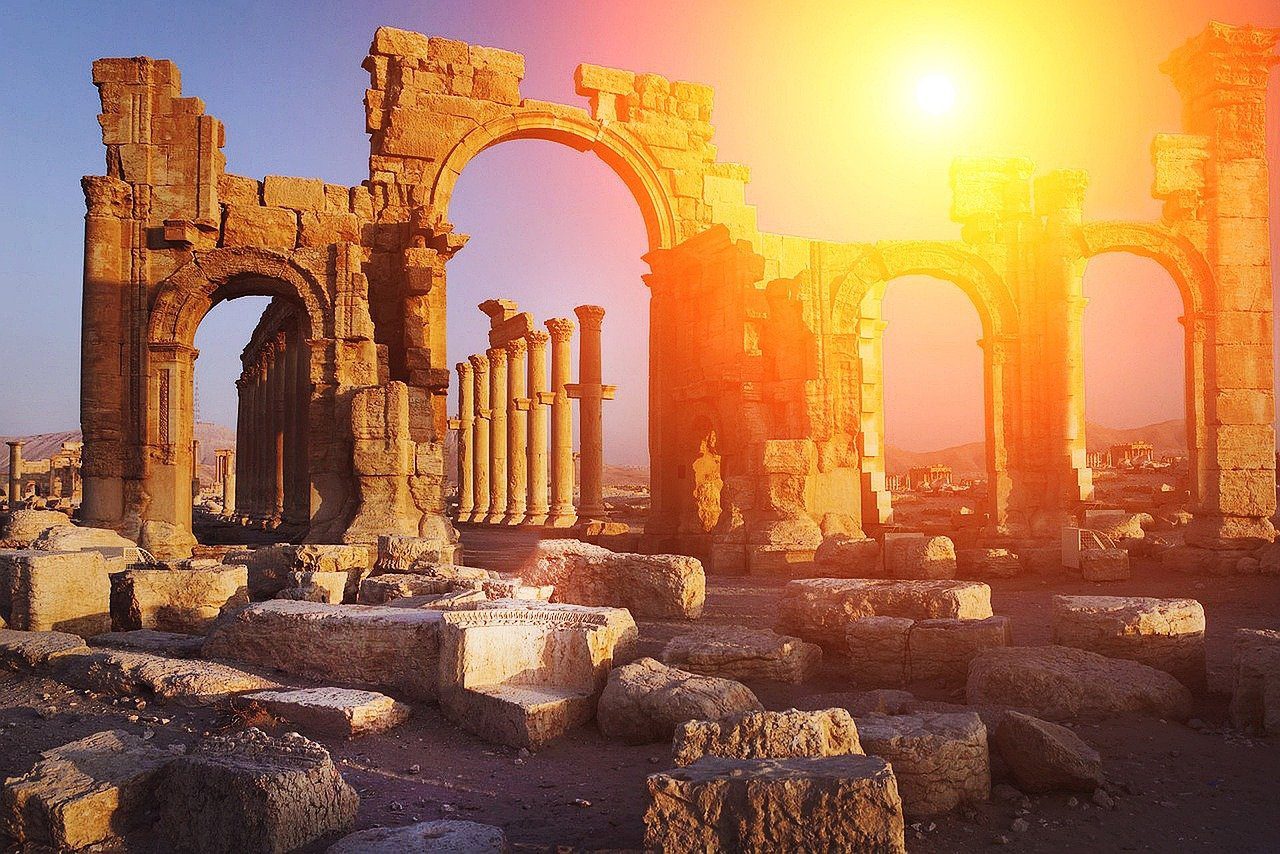
The featured image is courtesy of Pixabay.



Quite as good as Part One.
Thank you.
Dr. Birzer, thank you. Beautifully written. I am struggling to maintain my moral compass in this “brave new world”.
Gratefully,
Ruth Banther