About Bradley J. Birzer

Bradley J. Birzer is the co-founder of, and Senior Contributor at, The Imaginative Conservative. He is the Russell Amos Kirk Chair in History at Hillsdale College and Fellow of the Ronald Reagan Presidential Library. Dr. Birzer is author of In Defense of Andrew Jackson, Russell Kirk: American Conservative, American Cicero: The Life of Charles Carroll, Sanctifying the World: The Augustinian Life and Mind of Christopher Dawson, J.R.R. Tolkien’s Sanctifying Myth: Understanding Middle-Earth, co-editor of The American Democrat and Other Political Writings by James Fenimore Cooper, and co-author of The American West.

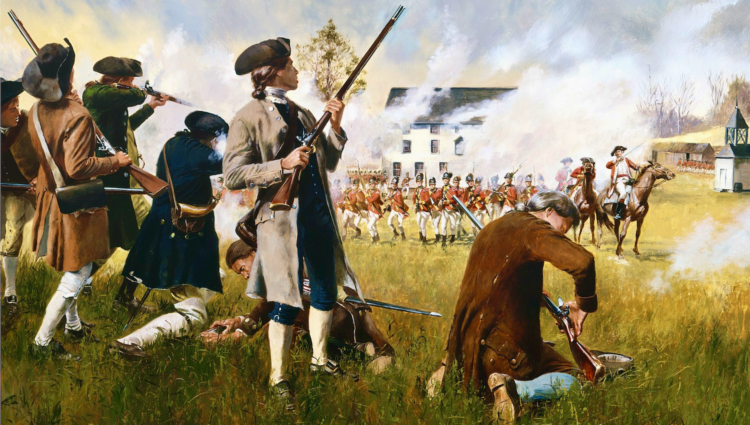
Let Us Remember Lexington and Concord!

By |2026-04-18T21:40:48-05:00April 18th, 2026|Categories: American Founding, American Republic, Bradley J. Birzer, Memorial Day, Timeless Essays|

Outnumbering the Lexington militia nearly ten to one, the British easily won the skirmish. But, symbolically, they lost. For at the moment the first Lexingtonian died, the American Republic was born. British Major Pitcarne took six companies of an advance team to scout out Lexington, Massachusetts, early morning, April 19, 1775. Behind him marched nearly [...]

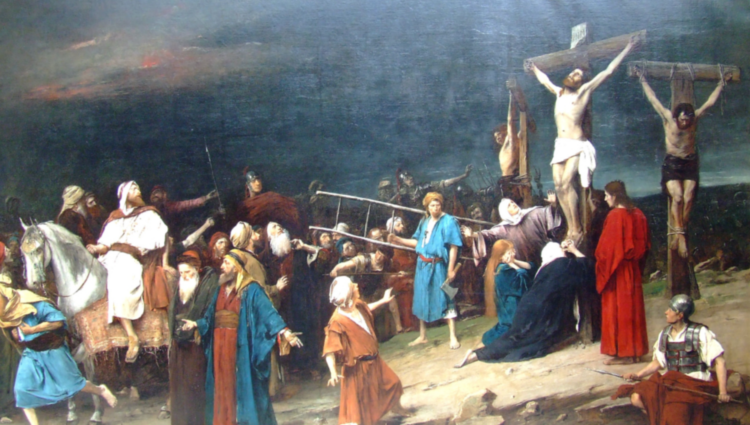
The Brilliant Darkness of a Friday Afternoon

By |2026-04-02T19:24:20-05:00April 2nd, 2026|Categories: Bradley J. Birzer, Christianity, Easter, Friendship, Gospel Reflection, Holy Week, Love, Timeless Essays|

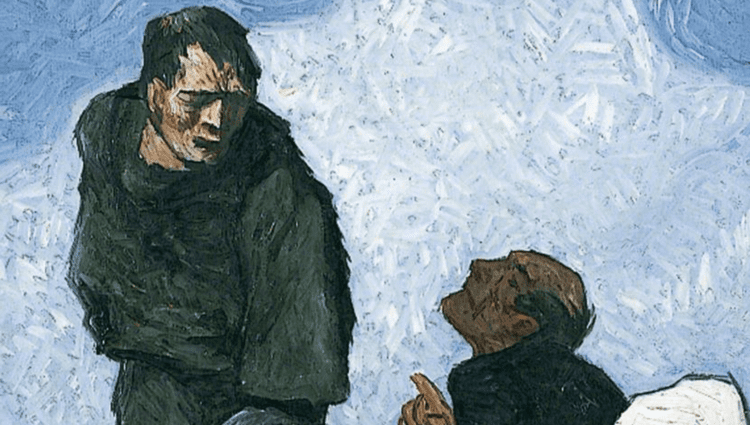
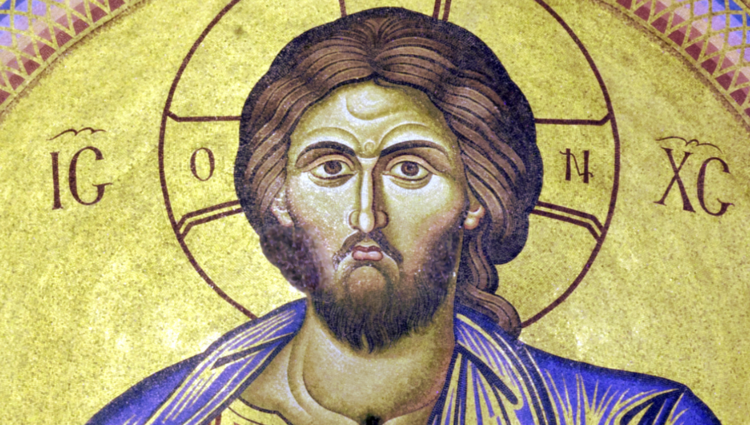
Not only did Jesus manifest Himself as the Logos so long desired in the pagan West on that Friday afternoon, but He also manifested Himself as the Christ, the true and eternal king. In some mysterious way, it was the death on Friday that revealed all of this, not the resurrection on Sunday. As Jesus [...]

History as the Revelation of the Logos

By |2026-03-29T18:16:08-05:00March 29th, 2026|Categories: Bradley J. Birzer, Catholicism, Christian Humanism, Christianity, Classical Learning, Edmund Burke, History, Imagination, J.R.R. Tolkien, Russell Kirk, Senior Contributors, Western Civilization|

Please never forget, we Catholics have a great legacy. We’ve been promoting liberal education since the days of St. Paul. Some of our greatest saints were liberally educated, and promoting all that is good and true and beautiful has been one of our greatest causes. The author recently delivered the address below to the Roman [...]

A Republic, NOT a Democracy

By |2026-03-15T20:52:44-05:00March 15th, 2026|Categories: American Republic, Bradley J. Birzer, Democracy, Senior Contributors, Western Tradition|

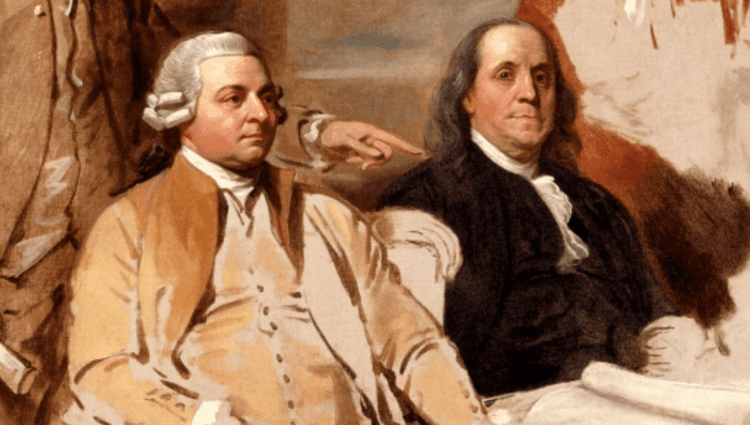
Not only do democracies invade every aspect of life and politicize them, they always and everywhere—from Athens to America—serve as an impetus to imperialism. If the will of the majority is to rule at home, why not enforce such rule the world over? John Adams & Benjamin Franklin “Remember Democracy never lasts long. [...]

The Christian Humanists Challenge the Machine

By |2026-03-11T20:03:46-05:00March 11th, 2026|Categories: Bradley J. Birzer, Catholicism, Christendom, Christian Humanism, Christianity, Culture, Grace, Modernity, Senior Contributors, Timeless Essays|

Only a people who accepts a moral foundation of its culture, a protection of its property, the decentralization of power, and a “national humility” will in the long run survive. Once a people forgets its purpose, it will fall into decadence. The nineteenth century witnessed the flourishing of progressivist thought: in social relations, political relations, [...]

The Evil Empire and Ronald Reagan

By |2026-03-07T21:17:35-06:00March 7th, 2026|Categories: Alexander Hamilton, Bradley J. Birzer, Communism, Ronald Reagan, Timeless Essays|

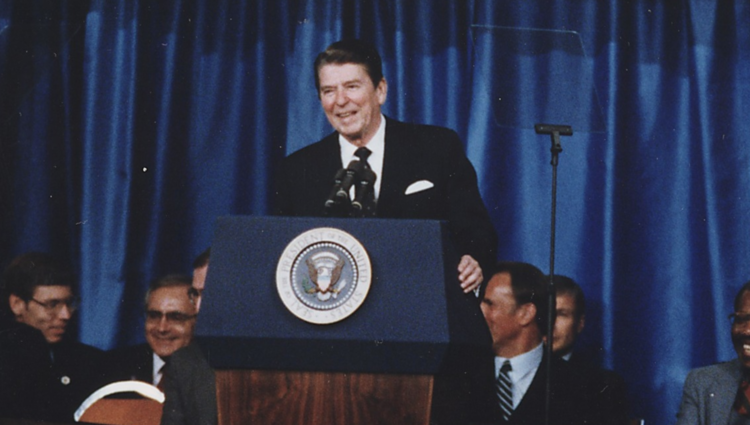
On March 8, 1983, Ronald Reagan delivered a speech that shocked many, amused some, and inspired more. Attending the annual meeting of the National Association of Evangelicals in Orlando, Florida, Reagan decided to address the topic of sin and evil in the modern world. Drawing significantly upon C.S. Lewis’s The Screwtape Letters, Reagan offered a [...]

Mythologizing the Mythmakers: Tolkien’s “The Notion Club Papers”

By |2026-02-27T14:20:38-06:00February 27th, 2026|Categories: Books, Bradley J. Birzer, J.R.R. Tolkien, Senior Contributors|

Not surprisingly, J.R.R. Tolkien never finished "The Notion Club Papers," but they present a critical insight into his own view of the Inklings—not only mythologizing, but celebrating, them. Dear Reader, the following—a discussion of Tolkien’s unfinished novel, The Notion Club Papers, comes from chapter six of my forthcoming book, Tolkien and the Inklings: Men of [...]

Did the Founders Make the Presidency Too Powerful?

By |2026-02-15T19:24:59-06:00February 15th, 2026|Categories: American Founding, American Republic, Bradley J. Birzer, Featured, Timeless Essays|

The American people have, unfortunately, come to see the president as the embodiment of their hopes, their dreams, and their nightmares. It is time to begin a conversation about the nature, goals, and limits of the U.S. Presidency. When it comes to the American Founding, broadly defined, it’s hard for this born-and-bred Kansan not to [...]

The Importance of Marcus Tullius Cicero

By |2026-02-10T15:55:01-06:00February 10th, 2026|Categories: Bradley J. Birzer, Cicero, Classical Education, Classical Learning, Classics, Featured, Liberal Learning, Natural Law, Timeless Essays|

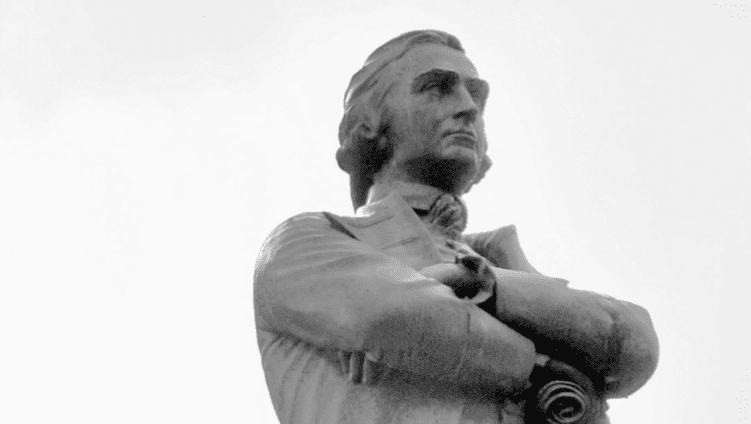
It can be said of Cicero and his role within the West that, in hindsight, he becomes a figure much larger than he himself actually was; he is a touchstone, a fountainhead, a rock upon which we can place our fondest and dearest dreams. How do I define the Natural Law? Taking my cue from [...]

Desperately Needing Thomas More

By |2026-02-06T18:41:11-06:00February 6th, 2026|Categories: Books, Bradley J. Birzer, Christianity, Senior Contributors, St. Thomas More, Timeless Essays|

We live in a world that desperately needs Thomas More’s wisdom. We need his understanding of God, his understanding of virtue, and his understanding of the complexities of the human person. The Essential Works of Thomas More, edited by Gerard B. Wegemer and Stephen W. Smith (1520 pages, Yale University Press, 2020) Though he’s only [...]

Newman & Dawson Against Liberalism

By |2026-01-31T16:36:05-06:00January 29th, 2026|Categories: Bradley J. Birzer, Christianity, Christopher Dawson, Edmund Burke, Liberalism, St. John Henry Newman, Timeless Essays|

Christopher Dawson greatly admired John Henry Newman, for he understood more clearly than any of his contemporaries the coming war of the Church against the ideologues bred by the French Revolution, utilitarianism, and secularization. As Christopher Dawson attempted to discover the sources of the ideological disruptions of the twentieth-century as well as solutions to the [...]

Burke on Monstrous Revolution and Regicide Peace

By |2026-01-11T20:36:13-06:00January 11th, 2026|Categories: Bradley J. Birzer, Edmund Burke, Europe, Government, History, Justice, Politics, Revolution, Senior Contributors, Timeless Essays|

Edmund Burke contended that, far from creating peace, the French Revolution had generated the greatest despotism the world had yet seen, politicizing all things and enslaving the vast majority of the population. Of Edmund Burke’s (1729-1797) four Letters on a Regicide Peace—his final work, written while he rested on his deathbed—the fourth is, by far, [...]

The Idea Machine: How Books Built Our World and Shape Our Future

By |2026-01-06T21:34:27-06:00January 6th, 2026|Categories: Books, Bradley J. Birzer, History, Imagination, Literature, Senior Contributors, Technology|

Joel J. Miller is as much a movement as a man. Of everything his new book "The Idea Machine" has to offer, I most appreciate his argument that books not only reflect our humanity, but they also, in dialogue with one another, teach us to be more humane. Joel J. Miller, The Idea Machine: How [...]

The Monroe Doctrine: Lynchpin of American Foreign Policy

By |2026-01-04T20:08:52-06:00January 3rd, 2026|Categories: American Founding, American Republic, Bradley J. Birzer, Europe, Foreign Affairs, History, John Quincy Adams, Senior Contributors, Timeless Essays|

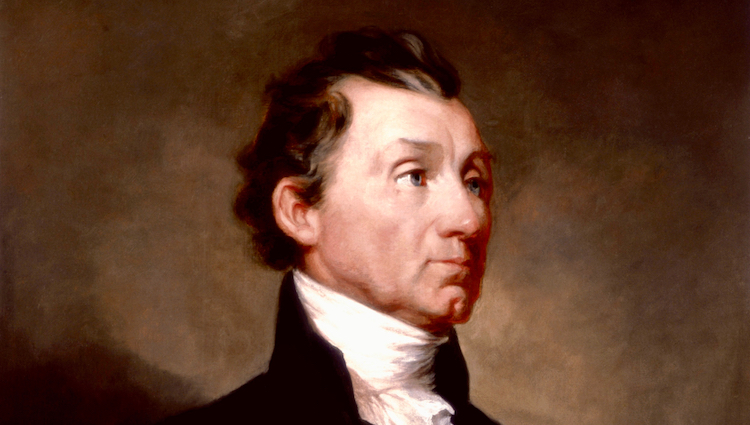
In his ideas regarding American foreign policy, James Monroe echoed both Washington and Jefferson, yet he had to worry about things neither of them did—in particular, European involvement in the affairs of the republics of the Western Hemisphere. His policy needed to follow the diplomatic thought of the previous administrations while also adapting to quickly [...]

Go to Top