
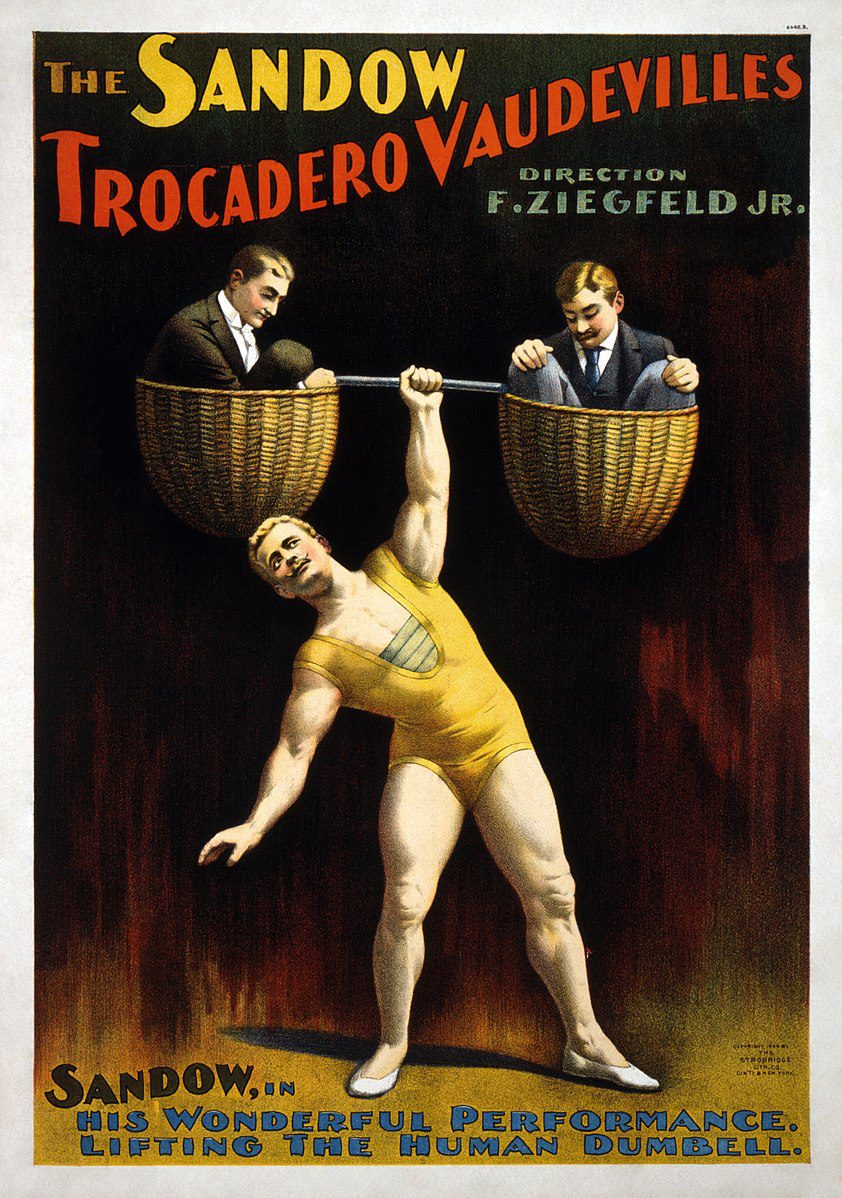
 You remember Hans and Franz, the two bodybuilders depicted as cousins of Ahhhnold Schwarzenegger from Saturday Night Live and played by Dana Carvey and Kevin Nealon? One of their two most famous catchphrases was, “Hear me now, believe me later!” That’s my line for this list of book gift ideas. I’ll be writing fuller reviews over the next month or two, but so that you have time to buy them for your loved ones (or yourself—books are one Christmas item you can legitimately, um, self-gift), you will have to hear me now in a few lines—and believe me later!
The first selection is for mothers. Kathryn Rombs’s Motherhood: An Extraordinary Vocation is designed to help women see their vocation in all its theological, philosophical, and even artistic glory. The daughter of a feminist philanthropist whose friend Gloria Steinem would give the teenage Dr. Rombs feminist pep talks, she became a philosopher specializing in St. Thomas Aquinas and a homeschooling mother of six. Using the writings of great thinkers (especially St. John Paul II and the Angelic Doctor himself), the lives of saints, and works of beautiful art themselves, she lays out why motherhood (including biological, adopted, step-, or spiritual), so often belittled, scorned, and avoided these days, is truly fulfilling in the deepest sense and can be the basis of a truly beautiful life—for herself, her family, and our society—and offers ways of thinking about how to approach it in creative and faithful ways.
The rule is women and children first, so the next one is for kids. Joseph Pearce has called Jake Frost in these pages one of “those who are worthy of particular mention” in “the new generation of Catholic poets.” He is also, however, a teller of tales. His new book, The Light of Caliburn, gives a fast-paced story of Geo, a painter in Michigan’s Upper Peninsula, and his girlfriend, Alette, a scientist at Michigan Tech, who discover that Merlin is real and active when they are caught up in an adventure that blends together the legends of both Arthur’s Court and the Native Americans who dwelt on the shores of Lake Superior. Though the story is perfectly fitting for adults, I read it to Tommy, age 8, who loved this epic battle with the dragon-men called Spartoi and even a modern-day Grendel!
Victor Lee Austin has written an eloquent and persuasive treatise on authority and an account of losing his wife of thirty years and what it meant for his understanding of the strange and terrible goodness of God. In Friendship: The Heart of Being Human, the deep, but never pretentious, theologian and Episcopal priest turns orthodox Christians’ focus away from the necessarily front-and-center topics of marriage and sexuality in order to “see how supremely important friendship is for our flourishing as human beings—and its centrality to our salvation. . . .” God has called us to be friends. Austin’s book helps us think about “ways to practice friendship anew.” It’s an important task, for if he is right, “We just won’t be able to be really human if we do not have real friends.”
The late Fr. Marvin R. O’Connell had a great friendship with his fellow Minnesotan and Notre Dame faculty member Ralph McInerny. The cover of William G. Schmitt’s collection of O’Connelliana in Telling Stories That Matter: Memoirs & Essays `bears a photograph of the historian and philosopher. sitting on a bench, cigarettes and coffee cups in hand. Are they reminiscing about their time in minor seminary in the thirties and forties? Bemoaning the state of or solving the problems in the Catholic Church, the U. S., and Western Civ? Telling jokes or stories? Probably “all of the above.” O’Connell was both priest and historian, with a lot of novelist and raconteur in him that provided delight for both his hearers and his students. This volume includes his sadly unfinished autobiography, giving us depictions not only of Minnesota and priestly life during the time chronicled in fiction by J. F. Powers, but also his relationship with the legendary English Catholic historian Msgr. Philip Hughes and his time at Notre Dame when the Catholicity was as golden as the famous dome on campus. It also includes essays and lectures, including one 1990 address that laid out the history of the Catholic Church in the United States and recommended that her bishops take up an approach that looks a lot like what Rod Dreher would later call the Benedict Option. The book includes a marvelous foreword and afterword by two other Notre Dame friends of Fr. O’Connell’s: Fr. Wilson Miscamble and David Solomon.
Like Fr. O’Connell, my colleague Philip A. Rolnick saw that things were changing a long time ago, and knew that this would require of Christians a new way of thinking about their place in the world. His past work includes volumes helping us understand the concept of analogical thinking and also how to understand modern science and Christian faith. His new, big project is a trilogy titled A Post-Christendom Faith, and the first volume of it is available. The Long Battle for the Human Soul is an intellectual history of modernity’s alternatives to the traditional Christian vision. Some were offered by rank unbelievers, some by Christians wishing to combine the Spirit of the Age and the Holy Spirit. These movements have, as Dr. Rolnick puts it, “formed and deformed our self-understanding,” so it is best that we understand what are the dogmas and attitudes from them we have taken in consciously or unconsciously. The goal is not merely historical or sociological but existential, for, as he quotes C. S. Lewis: “Christianity is a statement, which, if false, is of no importance, and, if true, is of infinite importance. What it cannot be is moderately important.” Examining these alternatives will help readers see again how radical, how true, and how infinitely important is the Christian teaching about the image of God we bear and the friendship with God promised in Jesus Christ.
Hear me now and believe me later. Or, to borrow Hans and Franz’s other most famous phrase, take a look at these volumes and they will [clap] “pump you up.”
The Imaginative Conservative applies the principle of appreciation to the discussion of culture and politics—we approach dialogue with magnanimity rather than with mere civility. Will you help us remain a refreshing oasis in the increasingly contentious arena of modern discourse? Please consider donating now.
The featured image is “The Sandow Trocadero Vaudevilles, Sandow lifting the human dumbell, 1894,” and is in the public domain, courtesy of Wikimedia Commons.





Leave A Comment