
Why is St. Augustine’s conviction of his own sinfulness the true path? Because he acknowledges that his misery is his own fault—in other words, that he had real agency in his turn away from what was truly good and beautiful.
 A few days ago, I happened upon a review of Deepak Chopra’s latest book, Living in the Light, and I must say, it was one of the most amusing things I have read in months. The reviewer, Bill Heavey (identified only as a writer living in Bethesda, Maryland), has some sympathy with the emphasis on yoga, having done some yoga himself, but his sympathy dies young as he gets into all the affirmations urged upon the reader: “a constant stream of vague injunctions to vibrate in the light as you focus on the continual bliss that is your birthright.”
Promulgating bliss has made Mr. Chopra very rich over the past several decades. The question is not so much what makes people susceptible to such stuff as what it takes to rake in profits from the susceptibility. It’s pretty clear that Mr. Chopra, like many a religious entrepreneur before him, has discovered how to address a desire for spiritual affirmation in a way that increases his own material well-being. As Mr. Heavey puts it, “Mr. Chopra’s teaching is at once supremely accessible, unfailingly reassuring, and utterly opaque.” The most salient question that emerges when Mr. Heavey reads certain statements in the book is “What does that even mean?”
Mr. Chopra has many competitors, and their appeals correspond to profitable areas of human discontent. This week I came upon a demonstrably slenderized physician (photos appear in the background) who left his amazingly successful mainstream practice in order to enlighten the world about the danger of lectins. Reader, if you do not know what lectins are, you are in grave danger of thinking that oatmeal is good for you! Can’t lose weight? Feeling bloated? Subject to fatigue? It’s not your fault! What you need is this special lectin-free diet to restore your youth and, as Mr. Heavey put it, “the continual bliss that is your birthright.” Just click here. (You will find the CVV code on the back of your card.)
Most of us have believed in some new regimen based on a “discovery” that shatters all the conventional wisdom and promises to reissue our best selves, whose loss was definitely not our fault. Similarly, most of us have succumbed at one point or another to ideologies that simplify everything (yes or no?) and promise to make real judgment unnecessary, which means you can’t make a mistake. But real judgment, as Aristotle emphasizes in the Ethics, always has to deal with the complications and particularities that make each situation unique, and our own faults are never irrelevant to any decision.
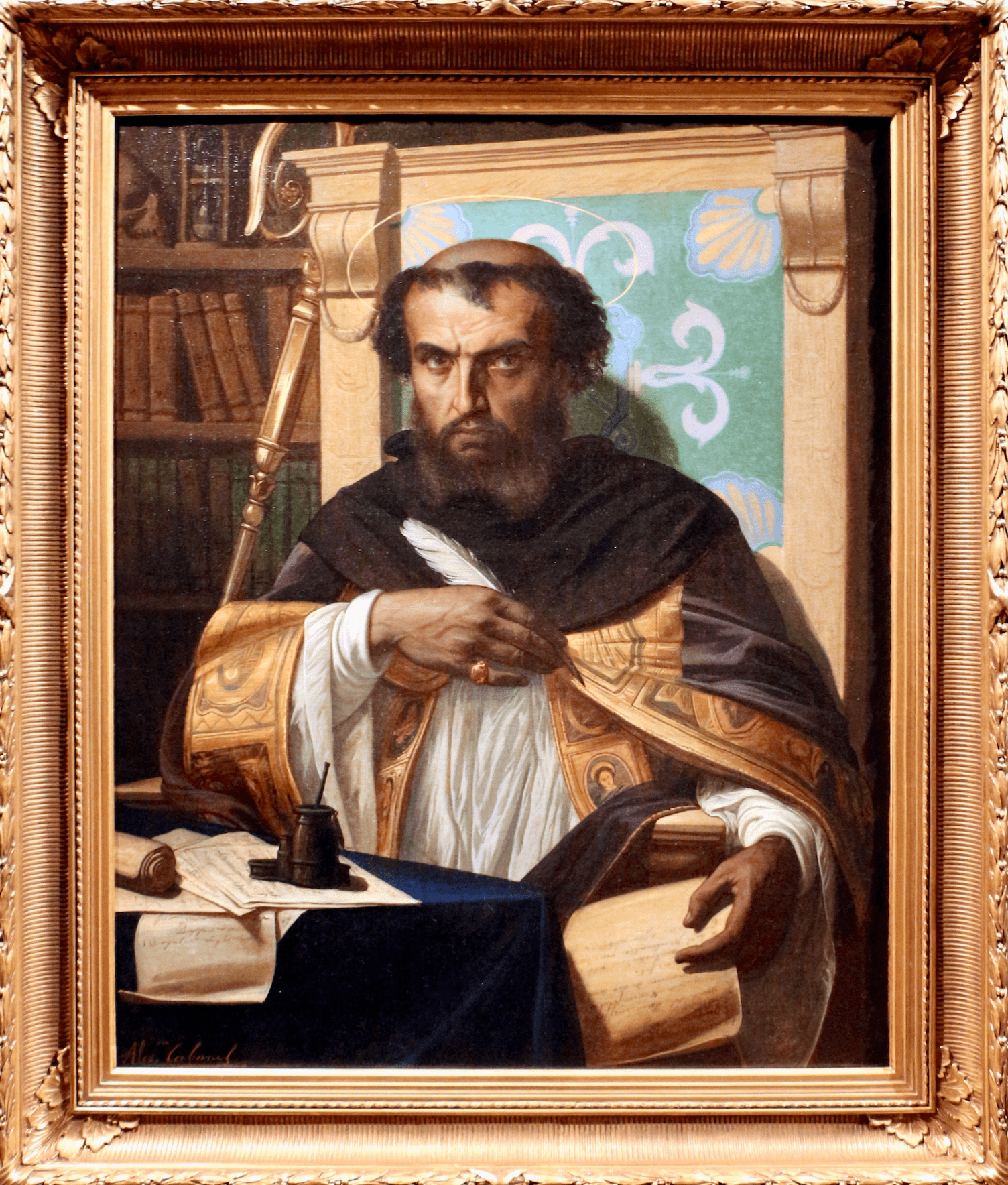
In the first paragraph of his Confessions, St. Augustine writes, “Thou hast made us for Thyself and our hearts are restless until they rest in thee.” What that means for Augustine himself is a long story, because in his restlessness as a young man, he strayed into many errors, none more deadly than Manichaeanism. This now absurd-sounding set of mythologies and practices had convinced him “that it was not we that sinned, but some other nature sinning in us; and it pleased my pride to be beyond fault, and when I did any evil not to confess that I had done it.” The state of being “beyond fault” characterizes our own age when one assumes high moral ground not by virtue but by victimhood. Yesterday, for example, a director not nominated for an Oscar bitterly complained, “We live in a world and work in industries that are aggressively committed to upholding whiteness and perpetuating an unabashed misogyny towards black women.” Well, that must be it, not the comparative merit of the film (which becomes irrelevant).
Earlier this week, my sophomore Humanities class at Wyoming Catholic College read the famous conversion scene in Book VIII of the Confessions, which includes a passage almost unthinkable in our self-affirming age. As he listens to a story about the conversion of other men, Augustine sees himself in a new light:
You, Lord, while [Ponticianus] was speaking, turned me back towards myself, taking me from behind my own back where I had put myself all the time that I preferred not to see myself. And You set me there before my own face that I might see how vile I was, how twisted and unclean and spotted and ulcerous. I saw myself and was horrified; but there was no way to flee from myself.
What a crisis of self-esteem! In Mr. Chopra’s world, “seeing yourself” would surely be a marvelous moment full of overbrimming effervescence and wonderful vibrations as you behold the radiant marvel that you really are.
Why is St. Augustine’s conviction of his own sinfulness the true path? Because he acknowledges that his misery is his own fault—in other words, that he had real agency in his turn away from what was truly good and beautiful. Of course, there are some things that are not his fault, but at this point in his life, he ardently seeks, not his fittest and best-looking and most famous self, but God, his source and end. It is a beautiful turn, world-changing (given St. Augustine’s importance) and extraordinary both in its difficulty and its simplicity. Those who have never read the Confessions or read it long ago might find time to “Take and read” (Book VIII.12. 29) this unsparing book. It really does shatter the conventional wisdom.
Republished with gracious permission from the Wyoming Catholic College Weekly Bulletin.
The Imaginative Conservative applies the principle of appreciation to the discussion of culture and politics—we approach dialogue with magnanimity rather than with mere civility. Will you help us remain a refreshing oasis in the increasingly contentious arena of modern discourse? Please consider donating now.
The featured image is Saint Augustine in His Study (1845) by Alexandre Cabanel, and is in the public domain, courtesy of Wikimedia Commons.



Leave A Comment