
I enjoyed Peter Jackson’s film version of “The Lord of the Rings” and accept that a film adaptation is just that: an adaptation. However, my objection to the film rests at a more fundamental level: I object because filmic versions of fantasy fiction serve to abolish the imagination.
 Most Imaginative Conservative readers are fans of J.R.R Tolkien’s great masterpiece The Lord of the Rings. However, debates erupt and bubble over Peter Jackson’s film adaptation:
“It was a mistake to omit Tom Bombadil”
“It was right to omit Tom because it would be impossible to convey Bombadil’s underlying profound and mysterious character. He would simply have come across as a dancing, prancing country bumpkin… a Tolkienesque version of the scarecrow from The Wizard of Oz.”
“I hated that Jackson used Gimli for comic relief.”
“Do you understand drama and the serious use of comic relief? It’s not simply to make you giggle you know!”
“How could Jackson simply cut the Scouring of the Shire? Doesn’t he know part of the hero’s quest is to return home and save his people?”
“The Scouring of the Shire is extraneous. It would have added an extra half-hour to an already over-long movie.”
“He made Galadriel into a witch.”
“The orcs were turned into slapstick villains. That was dumb.”
“Shelob’s Lair wasn’t terrifying enough.”
“Why didn’t Gandalf just give the ring to the eagles and tell them to drop it into the Cracks of Doom?”
And so forth and so on ad infinitum.
I enjoyed Mr. Jackson’s film version of The Lord of the Rings and accept that a film adaptation is just that: an adaptation. That means the story is adapted for a new medium.
However, my objection to the film version of The Lord of the Rings is at a more fundamental level, and one which applies to the filmic versions of any work of fiction—but especially fantasy. I object because filmic versions of fantasy fiction serve to abolish the imagination.
Here’s why: When an author creates a fantasy story, he creates an alternative world out of his imagination. That world is, of necessity, constructed from the ingredients of the author’s mind, his lived experience and the realities of his material world. If you have any doubt about this, take a week-long hiking vacation in the Welsh borders—one of the most beautiful and evocative regions of rural Britain. Tolkien hiked those windswept hills with C.S. Lewis, and when you stomp across those mountain tracks and breathe that fresh Welsh air, you can visualize the long trek of Frodo and his friends through Middle Earth.
There are the groves of trees, the barren hills, the mysterious ruined towers. There the low clouds roll across the horizon, and there is an ancient long barrow where they found bones and buried treasure. If you camp out there you will dream of a barrow wight and may feel that Tom Bombadil will dance you awake in the bright morning.
That was the world of Tolkien, and it became a main ingredient of his story. This, combined with his love of languages, Norse mythology, Catholic spirituality, and a whole range of other experiences and influences contribute to the creation of his great saga.
But then as you read his story you interpret it through the filter of your experiences, memories, literature, and learning. The world Tolkien puts on the page lives in your mind through your unique imagination. Frodo and his friends march through Tolkien’s Middle Earth, but the way you see it must be your Middle Earth, not Tolkien’s.
This is the powerful covenant between the sub-creator of a fantasy world and the reader. It is an especially powerful covenant because through the imagination the mind is engaged and opened, and when as it is opened through imagination it is also opened to truth. The truth, beauty, and goodness within the story are also exchanged in the covenant between author and reader.
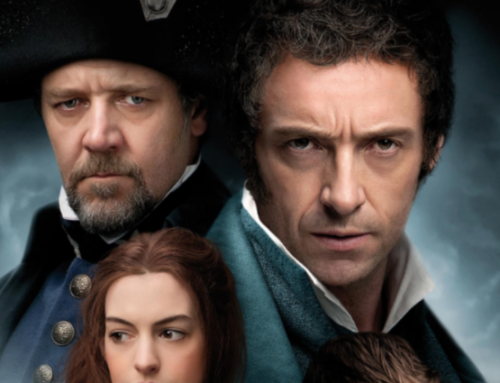
When the story makes its way to the screen the imagination is abolished. Peter Jackson and his crew have made Middle Earth visible and in doing so, have abolished the imagination. Now, whenever I read Lord of the Rings I do not envision Tolkien’s Middle Earth or my own Middle Earth: I envision Peter Jackson’s Middle Earth.
Does this mean I must be a film Luddite and movies are “bad”? Of course not, but film adaptations—especially of fantasy fiction—will always be unsatisfactory. Better for writers to develop their own fantasy stories specifically for film, and to use that technology to spin fantastic tales of their own. Good examples of original fantasy and science fiction developed for film are Minority Report, Star Wars, The Matrix, and any number of original tales specifically written for cinema. While they may not nurture and spark the imagination the way reading does, when well crafted, they will still take the viewer on a dramatic journey that could be enlightening, inspiring, and revelatory.
The Imaginative Conservative applies the principle of appreciation to the discussion of culture and politics—we approach dialogue with magnanimity rather than with mere civility. Will you help us remain a refreshing oasis in the increasingly contentious arena of modern discourse? Please consider donating now.
The featured image is courtesy of Pixabay.





Two things: Because “seeing the book in terms of the movie” (even when you don’t want to) becomes almost inevitable, I’ve refused to watch the much-touted “The Chosen.”
Second, my own “but they left out” regarding the movie version of LOTR was the destruction of the Palantir, one of my favorite scenes in the book. (Perhaps I should be grateful.) Afficianoados of the film tell me it’s in the 18.5-hour “director’s cut,” but I’m not dedicated enough to sit through that.
(Another side note for anyone who cares: Technically speaking, LOTR is not a trilogy; it’s a three-volume novel. In a true trilogy, each book is self-contained and can be read independently of the others. Think of Lewis’s “Space Trilogy.” Though it’s literature of a completely different order, DH Lawrence’s “Women in Love” is the second volume of a trilogy, but to read it, one doesn’t first have to have read “The Rainbow” and then go to read “Aaron’s Rod” to “find out how the story ends.”)
Absolutely correct….have watched, over the decades, numerous filmic adaptations of fantasy/science fiction novels, all of them unsatisfactory in some ways….film reduces complexity and nuance, and contracts events to a time frame by the very nature of the medium, the latest being Denis Villanueve’s adaptation of Frank Herbert’s Dune…..
“Minority Report” was originally a novella.
One’s imagination does not need to be “ruined” after seeing a video or image. If that were the case, we should remove all images and statues from our beautiful churches. I do not think my internal image of Christ has been profaned by the countless images I have viewed since childhood, but rather enriched by them.
I agree! And I agree also with the analogy between movies and visual iconography in general.
I recently re-read LOTR 30 years after my last reading which was probably the 10th time I had read it then. I was pleasantly surprised to realize that in my mind I was seeing the characters as I had always envisioned them before seeing the movies. I had to stop and “make” myself see the movie characters while reading and came to nice mixture of the two – keeping the characteristics I liked from the movie (and many of the settings) and using my imagination to fill in the gaps. I “got” to keep my own Tom Bombadil, but my Pippin, Merrie and Sam were enhanced. I suppose this happens when you’ve read a work so many times that you are very familiar with your own imagination.
This is exactly why I choose not to see “The Chosen”
This is one of the reasons why I won’t watch The Chosen. I don’t want images of actors in my imagination when I read the gospels, especially not Jesus.
But for LoTR, it was actually the films that prompted me to read the books, and I started with Silmarillion, so I did use my own imagination. I think that generally speaking it’s okay to watch a movie after reading the book because at least you experienced it first in your own imagination. And it doesn’t even necessarily supplant it.
I appreciate the commentary and discussion of these ideas, but this seems hastily done and not fully-wrought.
Your own point about hiking the Welsh countryside militates against your position…if you take those hikes, you replace your own imagination with that of Tolkien’s. I feel you’ve failed to demonstrate that this, or the experience with another’s embodied imagination through film, does necessitate a closing of the mind. You’ve stated, but not really demonstrated, your conclusion that seeing abolishes the imagination. Unless you are mostly speaking as an observation of your own experience, which I have not found to be my own.
But I want to, for the sake of argument, extend your ideas to dust jackets and illustrations. My first image of Strider and of Bilbo were deeply informed by cover art. Would you say my imagination was abolished in those cases? How is my experience with art different than with film? Is it simply a matter of degree?
Thanks for considering my objections lodged in the spirit of positive dialogue.
I think movies are not necessarily bad, but watching the movie before the book is not a good idea. when we read the book before watching we are able to judge the movie through the eyes of the book
I think being inspired by the image on the cover on the book is not bad, we need something to get or imagination going like an authors desrciption of a character. But if, when we read the LOTR all we see is P. Jackson’s depiction of things there is something wrong