
This past September, scholars at the Leipzig municipal library announced that they had discovered a previously unknown string trio (for two violins and cello) by the young Wolfgang Amadeus Mozart. The unearthed manuscript was not in the composer’s hand but was deemed to be a copy made a decade or so after it was penned. The scholars nicknamed the piece “Ganz Kleine Nachtmusik” (“Quite Little Night Music”), an overt nod to Mozart’s famous “Eine Kleine Nachtmusik,” to which it is also a worthy companion.*
Though not a major work—it lasts only some twelve minutes and was likely written by Mozart when he was between ten and fourteen years old—the trio is a major find: a delightful and memorable piece that possesses typical Mozartian energy, elegance, and tunefulness. This is not a trifling nugget of juvenilia. “Ganz Kleine Nachtmusik” begins with a march, punctuated to great effect by the use of repeated chords; next is a wonderful allegro that is at once happy and yet tinged by a spirit of yearning; a gentle menuet & trio follows; then a brief, stately polonese; a lovely adagio; a second, more saucy menuet & trio; and then a raucous finale… with a little surprise to boot.
The discovery of such lost works by great composers is always a cause for celebration. In the case of Mozart, this particular find reminds the present author that “the miracle which God let be born in Salzburg” remains unique in his ability to touch one’s very soul with music which on the surface seems to be intended merely as a light divertissement. See if it doesn’t bring a tear to your eye, as it did to mine, within its first few moments.
*The German word ganz is difficult to translate precisely. See Your German Daily for a full explanation of the word’s meaning and use.
The Imaginative Conservative applies the principle of appreciation to the discussion of culture and politics—we approach dialogue with magnanimity rather than with mere civility. Will you help us remain a refreshing oasis in the increasingly contentious arena of modern discourse? Please consider donating now.
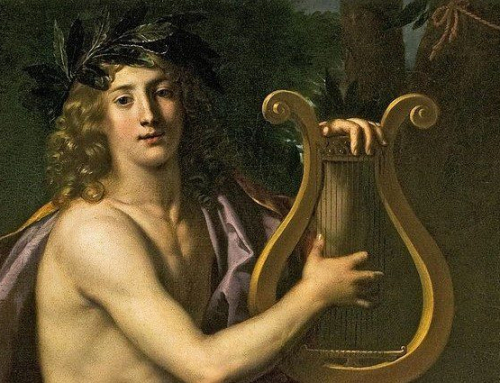
The featured image is “Wolfgang Amadeus Mozart after the portrait by Joseph Lange (c. 1840), and is in the public domain, courtesy of Wikimedia Commons.





Leave A Comment