Are the Great Books Still Alive?

By |2021-05-19T12:30:53-05:00June 29th, 2015|Categories: Adam Smith, Featured, Great Books, St. John's College|

I swore never to read again after ‘To Kill A Mockingbird’ gave me no useful advice on killing mockingbirds.  — Homer J. Simpson I’ve sometimes been surprised by how few ordinary Americans read important books—even texts that underpin widely held beliefs about our economy and society. Then at a cocktail party last year, I got into [...]

Don’t Make Me Love My Work!

By |2024-08-30T09:08:45-05:00June 18th, 2015|Categories: Capitalism, Economics, Featured, Labor/Work, Peter A. Lawler, Steve Jobs|

Miya Tokumitsu writes* with incisive elegance about our altogether elitist and self-indulgent view that our experts have these days about the relationship between love and work. That view, of course, originates mainly from Silicon Valley: Your great work, which you love, is so creative and productive that it makes you fabulously rich, as well. You don’t have [...]

Adam Smith: Imaginative Communitarian

By |2023-06-09T22:17:45-05:00June 2nd, 2015|Categories: Adam Smith, Featured, Morality, Philosophy|

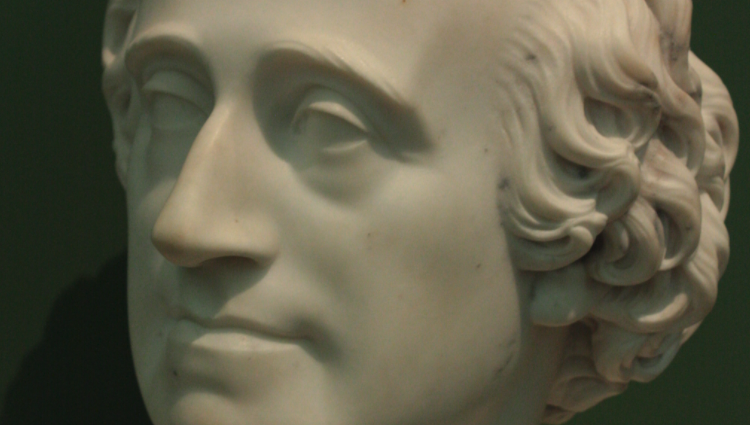
Adam Smith is too often positioned as the godfather of “unfettered markets, libertarian governments, interactions solely for the purpose of satisfaction, and atomistic cosmopolitanism.” What has been lost is Smith’s “clarion call for personal relationships” as the basis for human society. Legend has it that at the age of four, Adam Smith was kidnapped from [...]

The False God of Economic Growth

By |2020-01-14T11:42:36-06:00May 23rd, 2015|Categories: Economics, Featured, Political Economy, Ralph Ancil, Wilhelm Roepke|

Let us be clear on one point: the usual defenders of the free market—the Friedmans, Hayeks and Mises—are not primarily concerned with private property or liberty. They are firstly concerned with economic growth which mainly means continuous economic, technical and social change. For example, when airplanes became popular, air travel would have been very difficult [...]

Good Work and Good Works

By |2025-08-29T19:28:43-05:00May 13th, 2015|Categories: C.S. Lewis, Christianity, Featured, Labor/Work, Religion, Steven Jonathan Rummelsburg|

One of C.S. Lewis’ lesser-known essays, “Good Work and Good Works” was published in the Catholic Arts Quarterly close to Christmas, 1959. Lewis’ assertions in the essay are a testimony to the prescience achieved by authors whose thought is grounded in principles of truth combined with the right use of reason. Over half-a-century ago, Lewis lamented the divorce between [...]

The Radical Roepke

By |2016-12-30T09:16:41-06:00May 12th, 2015|Categories: Economics, Morality, Wilhelm Roepke|

The Moral Foundations of Civil Society by Wilhelm Roepke, with a new introduction by William F. Campbell. The Social Crisis of Our Time by Wilhelm Roepke, with a foreword by Russell Kirk and an introduction by William F. Campbell. Without a vision the people perish. So says the writer of Proverbs. In both The Moral [...]

Time for a Real Flat Tax?

By |2015-05-14T10:29:30-05:00May 11th, 2015|Categories: Bruce Frohnen, Featured, Politics, Taxes|

One does not hear much about the “flat tax” any longer. The idea lost its steam when people pointed out that, in order for it to significantly lower most people’s effective tax rate, it would have to include (that is, eliminate) some very well-entrenched tax breaks we all love. Most prominent among these is the [...]

A New Take on Economic Substitution

By |2019-04-02T16:01:47-05:00May 3rd, 2015|Categories: Economics, Political Economy, Wilhelm Roepke|

The concept of “substitution” is a familiar one in economics. Many products are used as substitutes for others such as margarine for butter and tea for coffee. If the price of one becomes too high the other product may be used even though it isn’t perfect. Economic substitution provides people with alternative options which make [...]

Roepke and von Mises: The Difference

By |2019-07-18T11:08:48-05:00April 25th, 2015|Categories: Economics, Ludwig von Mises, Political Economy, Ralph Ancil, Wilhelm Roepke|

Some writers link the names of Ludwig von Mises and Wilhelm Roepke as if there were no important differences between them. Roepke is co-opted into the camp of more or less libertarian thinkers whose position is further enhanced by whatever weight or prestige his name may give. Since Roepke was an Austrian economist and former [...]

A Return to Classical Monetary Policy?

By |2020-01-09T11:01:42-06:00April 22nd, 2015|Categories: Economic History, Economics|

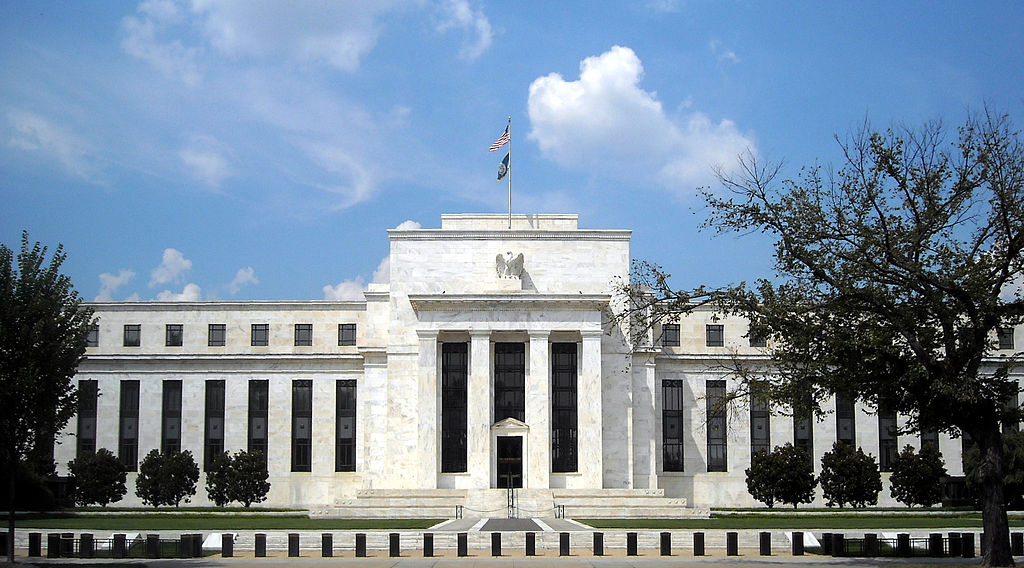
Recently, I numbered among the twenty-some self-styled conservatives, organized by Steve Lonegan, who gathered at the headquarters of the Federal Reserve to meet with Chair Janet Yellen and governor Lael Brainard. (Steve is Director of Monetary Policy for American Principles in Action.) We met for an hour, with a selection of us giving remarks for [...]

The Ideologies of Capitalism and Socialism

By |2020-06-10T00:17:22-05:00April 19th, 2015|Categories: Capitalism, Conservatism, Economics, Essential, Featured, RAK, Russell Kirk, Socialism|

What defenders of the permanent things should seek is not a league with some set of old-fangled or new-fangled ideologues, but the politics of prudence, enlivened by imagination. “Capitalism” and “socialism” both are 19th century ideological tags; they delude and ensnare, as do all ideologies. Zealots for “democratic capitalism” seem to have forgotten that it [...]

Taming the Beast of Economics and Trade

By |2019-07-23T14:02:23-05:00April 10th, 2015|Categories: Economics, Political Economy, Ralph Ancil, Wilhelm Roepke|

Wilhelm Roepke The brass mouth trumpeting the virtues of the General Agreement on Tariffs and Trade (GATT) is Ben Wattenburg. His views display the kind of thick-headedness that Wilhelm Roepke fought against so valiantly. What’s this impenetrable cloud made of that compels him and his kind to stumble along like the proverbial blind [...]

Rights Fallout: “Economic Rights” and the Undevelopment of Poor Countries

By |2019-04-23T16:07:20-05:00March 31st, 2015|Categories: Bruce Frohnen, Economics, Modernity, Rights|

The good intentions of the UN Universal Declaration of Human Rights took place in stages. Drafted in large measure as a response to the horrors of World War II and in the face of the continuing horrors of communism, the 1948 Declaration sought to “transcend” political, religious, and ethnic differences in the name of an [...]

Go to Top