
T.S. Eliot’s “Dry Salvages” & the Christian Philosophy of A.E. Taylor

By |2021-04-23T16:33:50-05:00July 27th, 2018|Categories: Books, Christianity, Conservatism, Great Books, History, Inklings, Plato, Poetry, T.S. Eliot|

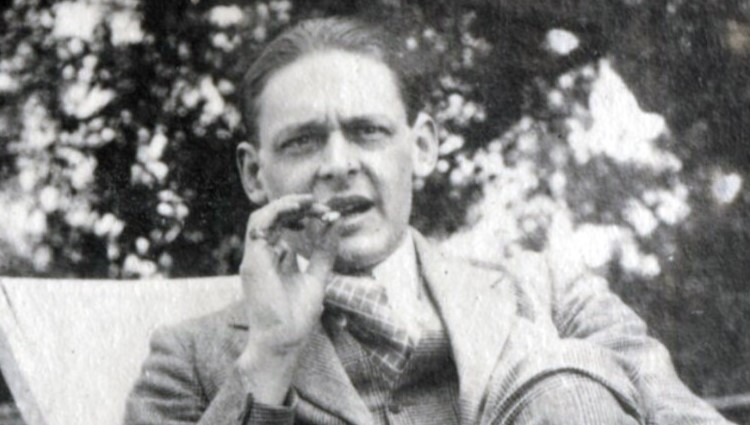
Jesus saved a hurting T.S. Eliot. And Eliot, the greatest poet of the twentieth century, thought Jesus could save us as well. A person can hate the conclusion, but if English is your mother tongue, then you cannot ignore Eliot or his ideas. He shaped the twentieth-century imagination through his poetry and use of language. [...]

How Coherent Were the Inklings?

By |2019-01-07T13:56:29-06:00June 30th, 2017|Categories: Books, Bradley J. Birzer, C.S. Lewis, Christianity, Featured, Inklings, J.R.R. Tolkien|

Religion shaped the Inklings as much or even more than did whatever generational zeitgeist one might want to attribute to the group… Though not the best-known Inkling, Adam Fox had the privilege of being the first of the group to arrive in this world. Through no choice of his own, he appeared on July 13, [...]

Tolkien’s War

By |2016-02-12T15:27:54-06:00November 3rd, 2015|Categories: Books, Bradley J. Birzer, C.S. Lewis, Christianity, Inklings, J.R.R. Tolkien, World War I|

Since the appearance of John Garth’s excellent Tolkien and the Great War in 2003, a number of scholars and writers have explored the role and influence of war on the fiction of J.R.R. Tolkien, C.S. Lewis, and other members of the Inklings. In reviewing Mr. Garth’s book when it came out, I noted that the [...]

A Ring of Fellowship

By |2016-02-12T15:27:54-06:00October 22nd, 2015|Categories: Books, C.S. Lewis, Christianity, Featured, Inklings, J.R.R. Tolkien, Joseph Pearce|

The Fellowship: The Literary Lives of the Inklings, by Philip Zaleski & Carol Zaleski (New York: Farrar, Straus and Giroux) “Every great man nowadays has his disciples,” wrote Oscar Wilde, “and it is always Judas who writes the biography.” Even conceding that Wilde was writing for effect and with his usual affectation, it is nonetheless true [...]

The Inklings: A Primer

By |2022-02-03T12:06:00-06:00September 29th, 2015|Categories: Books, Bradley J. Birzer, C.S. Lewis, Christianity, Featured, Inklings, J.R.R. Tolkien|

While anyone who knows anything about C.S. Lewis, J.R.R. Tolkien, Charles Williams, or Owen Barfield knows of the existence of the Inklings, the group remains nearly impossible to define. Even the members of the group could not identify exactly what it was or what it meant. By the mid 1940s, Lewis defined it as a [...]

How Did Lewis and Tolkien Defend the Old West?

By |2019-05-09T10:31:40-05:00July 1st, 2015|Categories: Books, Bradley J. Birzer, C.S. Lewis, Christendom, Christianity, Featured, Inklings, J.R.R. Tolkien, Literature, Senior Contributors|

In 1958, at a Dutch bash held in his honor, J.R.R. Tolkien told his audience: I look East, West, North, South, and I do not see Sauron. But I see that Saruman has many descendants. We Hobbits have against them no magic weapons. Yet, my gentle hobbits, I give you this toast: To the Hobbits. [...]

The White City: Why The Inklings Matter

By |2019-02-25T13:38:32-06:00June 25th, 2013|Categories: Books, Bradley J. Birzer, C.S. Lewis, Christendom, Christianity, Inklings, J.R.R. Tolkien|Tags: |

The White City, in its pride and presumption, lay under siege. Having gathered “his most cunning smiths and sorcerers,” Melko, the twisted one, had directed the creation of organic machines, through “iron and flame” to attack. Led by the leader of the demonic balrogs, Gothmog, and armed with such unholy weapons, Melko’s forces breached the [...]

Owen Barfield: Effective Approach to Social Change (part I)

By |2018-12-10T17:34:34-06:00February 10th, 2012|Categories: Bradley J. Birzer, Conservatism, Inklings, Literature, Moral Imagination|Tags: |

Few conservatives–with the notable exception of John Lukacs–remember or cite Owen Barfield any longer. This is a shame, and Barfield should really stand with the great Christian Humanists of the previous century. Perhaps his best work is his first, Poetic Diction, originally his undergraduate thesis at Oxford (1922). Published commercially in 1928, it has never [...]

Go to Top